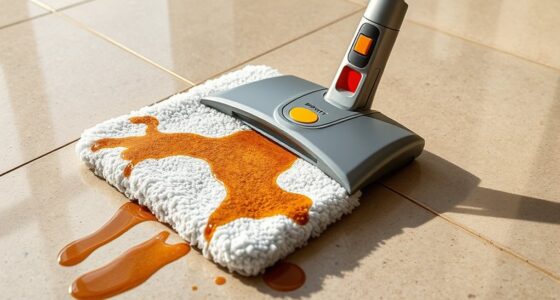
Oscillating mop pads use materials like microfiber to maximize cleaning. Microfiber’s high surface area and electrostatic properties help lift dirt and trap debris more effectively. When combined with adjustable oscillation frequencies, these pads provide deep cleaning or gentle sweeps, protecting delicate surfaces. Higher frequency movements dislodge stubborn grime, while lower speeds prevent damage on fragile floors. Understanding how material choices and movement speeds work together can boost your cleaning results—keep exploring to discover how it all connects.
Key Takeaways
- Oscillating mop pads utilize motor-driven movements to enhance cleaning by increasing pad motion speed and coverage.
- Microfiber materials improve dirt trapping and dirt lifting efficiency, especially when combined with high-frequency oscillation.
- Higher oscillation frequencies generate more vigorous movements, dislodging stubborn dirt and grime from surfaces.
- Proper calibration of oscillation speed and material choice optimizes cleaning effectiveness while protecting delicate floors.
- The integration of material properties and oscillation mechanics results in more efficient, thorough, and longer-lasting cleaning performance.
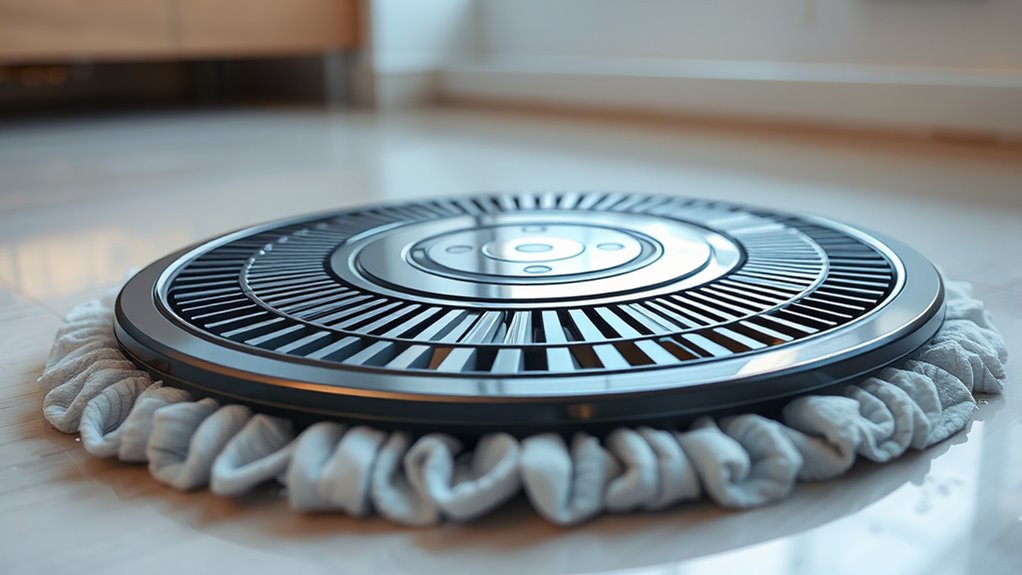
Oscillating mop pads have revolutionized floor cleaning by harnessing the power of motion to enhance efficiency. At the heart of this innovation are the materials used for the mop pads and the oscillation frequency that drives their cleaning performance. When choosing mop pad materials, you want something durable yet gentle enough for different floor types. Common materials include microfiber, which excels at trapping dirt and absorbing liquids, and foam, which offers a softer touch for delicate surfaces. Microfiber is especially popular because of its high surface area and electrostatic properties, allowing it to lift dust and debris more effectively than traditional cloths. The quality and composition of these materials directly impact the mop’s ability to clean thoroughly, resist wear, and withstand repeated use and washing. The right material ensures that your oscillating mop performs consistently over time, maintaining its cleaning power without degrading quickly. Additionally, advancements in material technology continue to improve the effectiveness and longevity of mop pads, making them an indispensable part of modern cleaning tools.
Equally important is the oscillation frequency—the rate at which the mop pad moves back and forth or in circular motions. This frequency determines how aggressively the mop interacts with the floor. A higher oscillation frequency means faster, more vigorous movements that can dislodge stubborn dirt and grime from surfaces. Conversely, a lower frequency offers gentler cleaning, ideal for sensitive floors like hardwood or delicate tiles. Manufacturers carefully calibrate this frequency to strike a balance: too high, and you risk damaging fragile surfaces; too low, and the cleaning might be ineffective. By adjusting the oscillation frequency, devices can optimize cleaning performance for different environments and floor types. This is why many modern oscillating mops come with adjustable settings, allowing you to tailor the motion to your specific needs. Understanding the oscillation mechanics behind these devices can help users better appreciate how they work and how to optimize their use.
The efficiency of an oscillating mop isn’t just about the motion but how well the materials work with that motion. Microfiber pads, for example, can maximize the benefits of high-frequency oscillation by enhancing dirt pickup and retention. Meanwhile, the oscillation frequency influences how deeply the mop penetrates dirt and how quickly it covers the surface area. When you combine quality mop pad materials with an ideal oscillation frequency, you get a cleaning tool that’s not only effective but also efficient. It reduces the need for multiple passes and minimizes your effort. Understanding these two elements helps you select the right equipment and settings, ensuring you get the most out of your oscillating mop and keep your floors spotless with less time and effort.
Frequently Asked Questions
How Long Does an Oscillating Mop Pad Typically Last?
An oscillating mop pad typically lasts about 3 to 6 months, depending on your usage and maintenance. You can expect durability to decline gradually, especially with frequent use or heavy cleaning. To maximize lifespan, clean the pad regularly and avoid harsh chemicals. Replacement frequency varies, but keeping an eye on wear and tear helps you know when it’s time for a new pad to guarantee ideal cleaning performance.
Can Oscillating Mop Pads Be Used on All Floor Types?
Yes, you can use oscillating mop pads on many floor types, including floor tile and hardwood. Just make sure you select the right pad for each surface. For floor tile, use a gentle, non-abrasive pad to avoid scratching. For hardwood maintenance, choose a soft, microfiber pad that cleans effectively without damaging the finish. Always check manufacturer guidelines to prevent any damage and guarantee peak cleaning performance.
Are There Environmentally Friendly Options for Oscillating Mop Pads?
Yes, you can find environmentally friendly oscillating mop pads made from biodegradable materials that break down naturally, reducing waste. Look for options produced through eco-friendly manufacturing processes, which minimize environmental impact. These pads are designed to clean effectively while being gentle on the planet. By choosing biodegradable and sustainably made mop pads, you contribute to reducing plastic pollution and supporting greener cleaning alternatives.
How Do Oscillating Mop Pads Compare to Traditional Mops in Cleaning Efficiency?
You might think traditional mops are king, but oscillating mop pads win in cleaning efficiency thanks to microfiber technology. They cover more surface faster and reach tricky spots better. Plus, with a good battery lifespan, you won’t be stuck plugging and unplugging all day. So, if you want a cleaner space with less effort and more tech, these pads outshine the old-school mop every time.
What Maintenance Is Required to Keep Oscillating Mop Pads Effective?
To keep your oscillating mop pads effective, you should regularly clean the pads after each use to remove dirt and debris. Pay attention to pad cleaning instructions, often involving rinsing or machine washing. Replace the pads as needed, typically every few months or when they show signs of wear and tear. Proper maintenance ensures maximum cleaning performance and prolongs the lifespan of your oscillating mop pads.
Conclusion
Now that you understand how oscillating mop pads dance with dirt, you’re equipped to turn cleaning into a graceful routine. Think of your mop as a rhythmic partner, swirling and twirling through grime with precision and ease. With science on your side, each swipe becomes a symphony of spotless surfaces. So, embrace the rhythm, let the oscillation do the work, and watch your cleaning routine transform into a smooth, effortless melody.