To prevent streaks and water marks on your hard floors, use a microfiber mop and make certain it’s well-wrung to avoid excess moisture. Choose pH-neutral or mild cleaning solutions and work in small sections with smooth, overlapping strokes. After mopping, dry the surface thoroughly with a microfiber cloth or allow it to air-dry. Regularly inspecting your technique will help keep your floors spotless; explore more tips to perfect your cleaning routine.
Key Takeaways
- Use well-wrung microfiber mops to prevent excess water and avoid streaks during cleaning.
- Choose pH-neutral, diluted cleaning solutions and test on small areas to minimize residue.
- Work in sections with smooth, overlapping strokes to ensure even coverage and reduce streak formation.
- Dry floors thoroughly with a microfiber cloth or allow air drying to prevent water marks.
- Rinse floors with plain water if streaks or residues appear, and avoid harsh chemicals that cause discoloration.
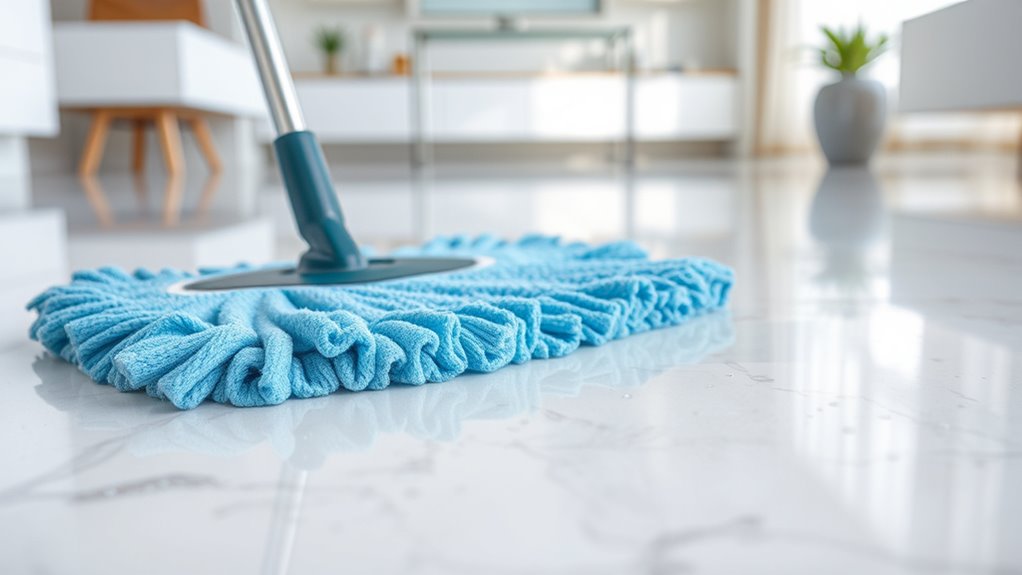
Keeping your hard floors spotless doesn’t have to be complicated. When it comes to preventing streaks and water marks, the key lies in your mop techniques and the cleaning solutions you choose. The way you approach mopping can make all the difference in achieving a pristine finish without unsightly streaks. Start by selecting a mop that’s suitable for your type of flooring—microfiber mops are usually the best because they trap dirt effectively and leave fewer streaks behind. Before you begin, make sure your mop is well-wrung; excess water is the main culprit behind streaks and water marks. When you dip your mop into the cleaning solution, squeeze out as much liquid as possible so you’re using just enough to clean without leaving puddles on the floor.
Choosing the right cleaning solutions is also essential. Avoid harsh chemicals that can leave residues or cause streaks when they dry. Instead, opt for a mild, pH-neutral cleaner or a mixture of warm water and a few drops of dish soap. For natural cleaning, a solution of vinegar and water works well—just remember to dilute the vinegar properly, as concentrated vinegar can damage certain floor finishes. Always test a small, inconspicuous area first to ensure your cleaning solution doesn’t cause discoloration or damage. When mopping, work in sections, moving your mop in smooth, overlapping strokes. This technique minimizes the chances of missed spots or streaks caused by uneven cleaning. Remember to rinse your mop frequently to prevent dirt from spreading or redepositing onto cleaned areas.
Additionally, integrating AI-powered cleaning tools can help optimize your mopping process by providing real-time feedback and ensuring consistent results. After mopping, don’t rush to walk over the floor while it’s still wet. Instead, allow the floor to air-dry or dry it with a clean microfiber cloth, which helps eliminate water marks and streaks. When drying, use gentle, even pressure, and avoid wiping with a circular motion, which can push water around and cause streaks. If you notice streaks forming, double-check your cleaning solutions—sometimes, residue from overly concentrated solutions or soap buildup can leave a film that dries into streaks. In these cases, a second rinse with plain water can help remove any leftover residues.
Frequently Asked Questions
Can Using Vinegar Damage My Hardwood Floors?
Using vinegar on your hardwood floors can be safe if diluted properly, but you should be cautious. Vinegar safety depends on its concentration; undiluted vinegar might cause hardwood damage over time, especially if it’s too acidic. Always dilute vinegar with water and avoid excessive use. This prevents potential hardwood damage and keeps your floors looking their best, without risking streaks or water marks.
How Often Should I Reseal My Tiled Floors?
Ever wonder how often you should reseal your tiled floors? Generally, sealing frequency depends on foot traffic and tile type, but most experts recommend tile resealing every 1 to 3 years. Keep an eye on the grout’s appearance—if it starts to stain or look dull, it’s time for another round of sealing. Regular resealing maintains your floor’s durability and keeps it looking fresh longer.
Are Steam Mops Safe for All Hard Floors?
Steam mops can be safe for hardwood floor care, but you should check the manufacturer’s instructions first. Not all hardwood floors tolerate moisture well, so using a steam mop on sealed or well-maintained floors is generally safe. Be sure to use the lowest steam setting and avoid leaving water standing. Proper steam mop safety guarantees you clean effectively without causing damage or streaks, keeping your floors looking their best.
What’s the Best Way to Remove Stubborn Water Stains?
To remove stubborn water stains, start by gently wiping the area with a mixture of equal parts white vinegar and water. For tough stains, let the solution sit for a few minutes, then scrub lightly with a soft cloth or sponge. To prevent future water stains, always dry your floors thoroughly after cleaning and avoid excess water during stain removal. Regular stain removal and water stain prevention keep your floors spotless.
Should I Avoid Certain Cleaning Products on Specific Floors?
You should avoid harsh cleaning products, especially abrasive cleaners, on delicate floors like hardwood or laminate. Instead, opt for mild cleaning solutions that won’t damage the surface or leave streaks. Using strong chemicals can cause discoloration or scratches, making your floors look worse over time. Always check manufacturer recommendations before using any product, and stick to gentle, non-abrasive cleaners to keep your floors looking their best.
Conclusion
To keep your hard floors spotless and streak-free, always use a damp mop and avoid excessive water. Regular cleaning reduces mineral deposits that cause water marks, and drying the surface immediately prevents streaks. Did you know that using too much water can increase water spots by 30%? By following these simple tips, you’ll maintain gleaming floors that look as good as new, making your space more inviting and easier to enjoy every day.