
To plan cleaning paths for wet and dry tasks, focus on efficient route design that covers the entire area without overlap. For wet cleaning, choose routes that ensure even water distribution and avoid excess moisture, while dry cleaning routes should be straightforward for quick coverage. Use obstacle detection sensors to adapt routes in real-time and split large areas into zones for systematic cleaning. Keep these principles in mind to optimize your process—more tips await if you continue exploring.
Key Takeaways
- Tailor route strategies to task type, ensuring even coverage for wet cleaning and efficiency for dry vacuuming.
- Divide large or complex areas into zones for systematic and thorough cleaning coverage.
- Use obstacle detection sensors for real-time route adjustments during both wet and dry tasks.
- Optimize paths to minimize overlaps and missed spots, balancing thoroughness and speed.
- Adapt navigation algorithms to handle environmental changes, ensuring consistent cleaning quality across tasks.
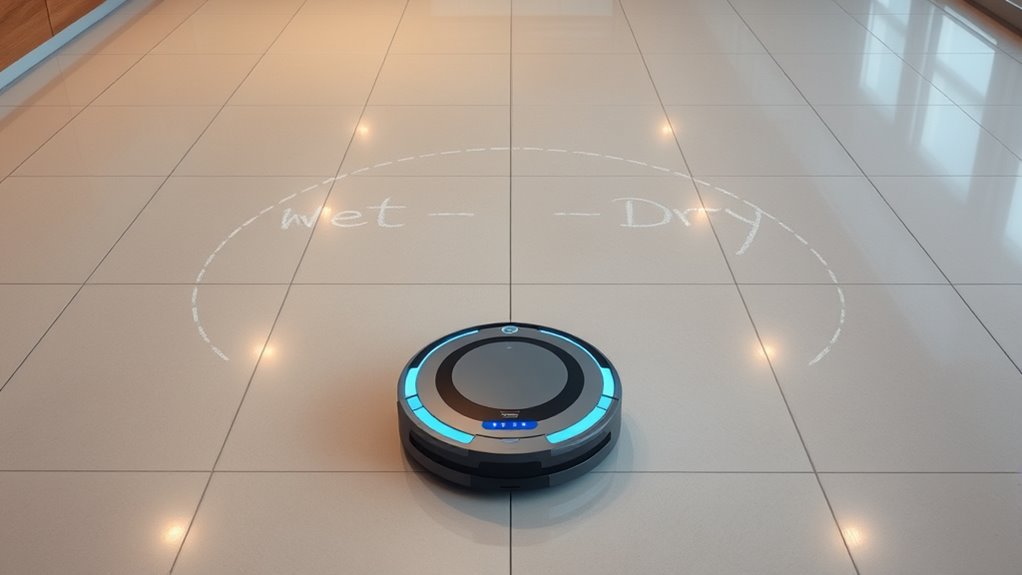
Cleaning path planning involves determining the most efficient route for autonomous devices to cover a designated area completely. When you’re setting up a cleaning robot, whether for wet or dry tasks, it’s essential that the device can navigate seamlessly through the space. Robotic navigation becomes your key focus, ensuring the robot moves smoothly and efficiently while covering every inch of the area. To achieve this, you need to program the robot to follow an efficacious path that minimizes overlap and missed spots. This requires understanding the layout, including furniture, walls, and other obstacles that could hinder movement.
Obstacle avoidance is critical in this process. As your robot moves through the space, it must detect and circumvent obstacles in real time to prevent collisions. Advanced sensors like lidar, cameras, or ultrasonic detectors help the device identify objects and adapt its route dynamically. This real-time obstacle avoidance ensures the cleaning process isn’t interrupted by unexpected furniture, cords, or clutter. The robot’s navigation system should integrate these sensors to create a holistic map of the environment, allowing it to adjust its path on the fly while maintaining thorough coverage.
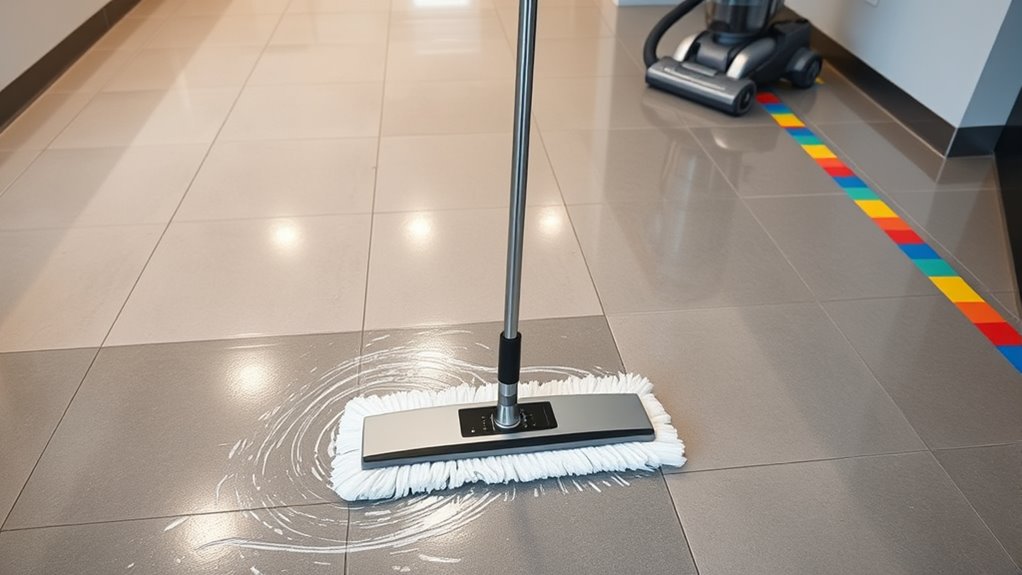
In planning your cleaning route, consider the area’s layout and the type of task—wet or dry. Wet cleaning, such as mopping, demands careful path planning to avoid excess moisture and ensure even coverage. Dry cleaning, like vacuuming, can often follow more straightforward routes but still needs precise navigation to avoid missing spots or wasting time on unnecessary overlaps. The route should be ideal for efficiency, balancing thoroughness with speed. For complex spaces, you might need to break the area into zones and assign specific paths to each zone, ensuring full coverage without retracing steps unnecessarily.
You also want your robot to adapt to the environment. If a new obstacle appears mid-cleaning, it should recognize and navigate around it without losing coverage. This adaptability depends on the robustness of its robotic navigation system and obstacle avoidance algorithms. The more sophisticated these systems are, the better your robot can handle cluttered or changing environments, maintaining consistent cleaning quality.
Furthermore, implementing a systematic cleaning path can help optimize coverage and reduce the chances of missed areas, especially in large or complex spaces. Finally, integrating these elements—robust navigation, obstacle detection, and efficient path planning—ensures your autonomous device performs its task effectively, whether it’s wet or dry cleaning. Properly planning the route beforehand and enabling real-time adjustments make your cleaning process faster, more thorough, and less stressful. With effective path planning, your device will cover every corner, avoid mishaps, and deliver spotless results every time.
Frequently Asked Questions
How Do Different Floor Types Affect Cleaning Path Strategies?
Different floor types substantially impact your cleaning path strategies. Consider floor surface considerations like texture and material, which influence cleaning equipment compatibility. For smooth surfaces such as tile or laminate, use efficient, wide-path equipment like sweepers or mops. For delicate or textured floors, opt for gentle methods to prevent damage. Tailoring your approach ensures effective cleaning while protecting the floor, making your path planning more precise and efficient.
What Safety Considerations Are Essential During Wet Cleaning Path Planning?
During wet cleaning path planning, you should prioritize safety by identifying slip hazards and ensuring electrical safety. You need to mark wet areas clearly, use slip-resistant footwear, and avoid walking through wet zones unnecessarily. Also, check that electrical outlets and equipment are protected from water exposure to prevent shocks. By taking these precautions, you minimize risks and maintain a safe environment for yourself and others.
Can Automation Adapt to Real-Time Obstacles During Cleaning?
Automation can adapt to real-time obstacles like a superhero dodging flying debris, thanks to advanced sensor integration. When a dynamic obstacle appears, your cleaning system detects it instantly, adjusting its path smoothly without missing a beat. This real-time responsiveness ensures efficient cleaning, minimizes disruptions, and keeps safety top priority. With sensor integration, your automated cleaner becomes a vigilant guardian, always aware and prepared to adjust to unexpected obstacles.
How Does Cleaning Path Planning Vary for Large Versus Small Areas?
You’ll find that cleaning path planning differs for large versus small areas mainly through area segmentation and obstacle mapping. For large spaces, you break the area into segments to optimize coverage, ensuring efficiency. In small areas, you focus on detailed obstacle mapping to navigate tight spots precisely. This approach helps your cleaning device adapt to size differences, reducing missed spots and improving overall cleaning effectiveness.
What Are the Environmental Impacts of Various Cleaning Path Approaches?
You should consider that different cleaning path approaches impact the environment by affecting chemical residues and water use. Efficient paths minimize chemical residues left behind and reduce water consumption, making cleaning more eco-friendly. Conversely, inefficient routes may lead to excessive chemical runoff and higher water use, harming ecosystems. By choosing optimized paths, you help protect the environment while maintaining effective cleaning, aligning with sustainable practices.
Conclusion
Just like a well-planned route turns a messy room into a swift, efficient cleanup, thoughtful cleaning paths save you time and effort. I once watched a janitor cut his cleaning time in half simply by mapping out his steps first. It’s a reminder that good planning, whether for wet or dry tasks, transforms chaos into clarity. When you organize your path, you’re not just cleaning—you’re mastering the art of efficiency.