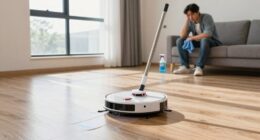
Hybrid robots shift seamlessly between mopping and vacuuming by using advanced sensor calibration and intelligent software that adapts to your home’s changing surfaces and obstacles. They automatically detect when a switch is needed, adjusting settings like suction power and water flow for each task. Battery management ensures the robot works efficiently without interruptions. If you want to discover how these systems optimize cleaning and make the process effortless, keep exploring further.
Key Takeaways
- Hybrid robots automatically detect surface types and switch between mopping and vacuuming modes accordingly.
- They recalibrate sensors during mode transitions to ensure accurate environment mapping and obstacle detection.
- Advanced software adjusts hardware settings like suction power and water flow for each cleaning task.
- Battery management systems prioritize power distribution, enabling seamless task switching and recharging when needed.
- The transition process is automated, providing users with a hands-free, efficient cleaning experience without manual mode changes.
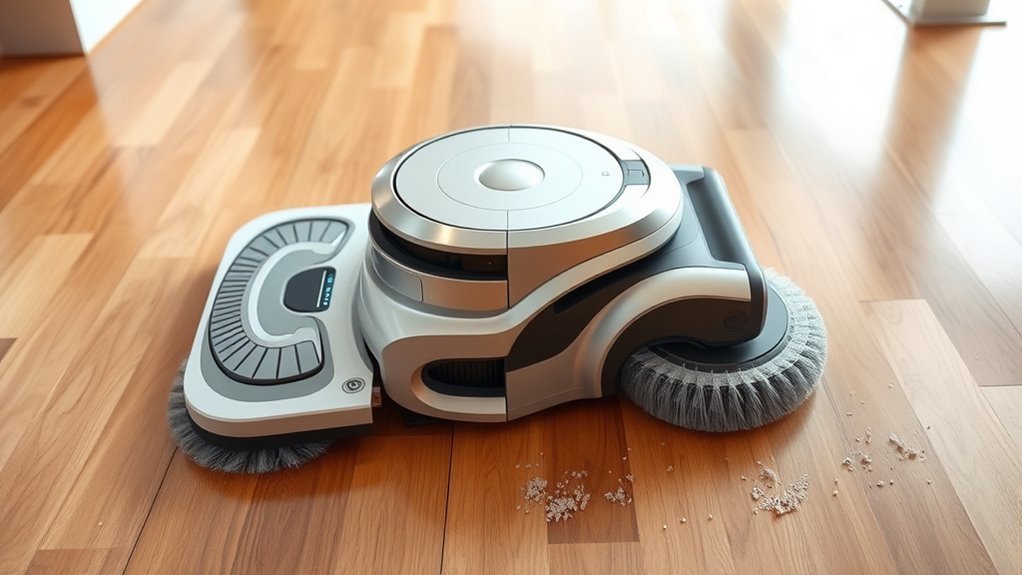
Hybrid robots are revolutionizing home cleaning by seamlessly switching between mopping and vacuuming, making chores more efficient and convenient. When you set your robot to clean, it intelligently determines whether to vacuum or mop based on the floor type and the area’s needs. This process involves precise robot sensor calibration, which is essential for the robot to accurately detect surfaces and obstacles. Proper sensor calibration ensures the robot recognizes different floor types—like hardwood, tile, or carpet—and adjusts its cleaning method accordingly. This calibration also helps prevent mishaps, such as the robot slipping on wet floors or missing spots on carpets, giving you a reliable cleaning experience.
Hybrid robots optimize cleaning by calibrating sensors to adapt to different surfaces, ensuring efficient and reliable home chores.
Battery management plays an important role in this transition process. Hybrid robots are designed to optimize power consumption, so they switch tasks efficiently without draining the battery unnecessarily. When switching from vacuuming to mopping or vice versa, the robot assesses its remaining charge and plans its route accordingly. If the battery level is low, it may return to its charging dock before completing the full cleaning cycle, making sure it can recharge and finish the job later. Some models even feature smart power management systems that allocate energy based on the floor’s dirtiness or the size of the area, maximizing cleaning time without sacrificing performance.
The transition between mopping and vacuuming isn’t just a simple toggle; it involves sophisticated programming and hardware adjustments. For example, your robot might vacuum first to remove loose debris, then switch to mopping for a deeper clean. This process requires the robot to recalibrate its sensors for each mode, adjusting suction power and water flow. During these transitions, sensor calibration plays a key role in confirming the robot’s position and making sure it doesn’t miss spots or repeat areas unnecessarily. It constantly updates its map of the environment, adapting to changes in layout or obstacles, which helps maintain thorough cleaning. Additionally, some advanced models are now integrated with Kia Tuning techniques to optimize their motor performance and efficiency during transitions, ensuring smoother operation.
In terms of user experience, these features work behind the scenes to make your cleaning routine effortless. You don’t need to manually switch modes or worry about battery life—your robot manages these aspects automatically. It detects when a switch is needed, calibrates its sensors for the next task, and manages its energy supply efficiently. This combination of sensor calibration and battery management allows hybrid robots to provide a seamless, effective cleaning process that adapts to your home’s unique environment. The result is a smarter, more reliable cleaning companion that handles multiple tasks without fuss, giving you more time to focus on what matters.
Frequently Asked Questions
Can Hybrid Robots Detect Different Floor Types Automatically?
Yes, hybrid robots can detect different floor types automatically. They use advanced sensors for floor detection, allowing for seamless automatic switching between mopping and vacuuming modes. When the robot encounters hardwood, tile, or carpet, it adjusts settings accordingly to optimize cleaning efficiency. This automatic switching feature guarantees you don’t have to manually change modes, saving you time and effort while ensuring thorough cleaning on various surfaces.
How Long Does the Battery Last During Combined Mopping and Vacuuming?
Your hybrid robot’s battery lasts about 60 to 90 minutes during combined mopping and vacuuming, like a marathon runner pacing through a race. Thanks to smart power management, it conserves energy, ensuring efficient cleaning without running out unexpectedly. Battery efficiency varies by model and usage, so you might find some robots stretching their legs a bit longer. Keep an eye on battery levels for uninterrupted cleaning adventures.
Are Hybrid Robots Suitable for Pet Hair and Allergen Removal?
Yes, hybrid robots are suitable for pet hair removal and allergen filtration. You can depend on their powerful suction and specialized brushes to pick up pet hair effectively, while their advanced filters trap allergens and dust particles. This makes them a great choice for allergy sufferers. Plus, their ability to switch seamlessly between mopping and vacuuming ensures a thorough clean, keeping your home fresh and allergen-free with minimal effort.
Do Hybrid Robots Require Manual Switching Between Functions?
Hybrid robots typically do not require manual switching between functions, but some models need user intervention to change modes. You might need to manually switch or activate specific settings for mopping or vacuuming, especially in older or less advanced models. Modern hybrid robots often have automatic changeover features, but always check if your device needs manual switching to guarantee it performs as intended without constant user intervention.
How Do Hybrid Robots Handle Uneven or Cluttered Surfaces?
Hybrid robots handle uneven or cluttered surfaces through advanced surface adaptability and obstacle navigation. You’ll notice they automatically adjust their cleaning modes to suit different surfaces, whether it’s hardwood, tile, or carpet. Their sensors detect obstacles and uneven terrain, allowing the robot to navigate smoothly without getting stuck. This seamless adaptation guarantees thorough cleaning, even in complex environments, so you don’t have to worry about manual adjustments or missed spots.
Conclusion
So, here you are, marveling at how hybrid robots seamlessly switch from mopping to vacuuming, making spotless floors seem effortless. Ironically, while they handle your messes, you might still be the one cleaning up your coffee spill—proof that even the smartest robot can’t always save you from your own clumsiness. But hey, at least now, you can sit back and pretend you’re in a futuristic home, while your robot does all the dirty work.