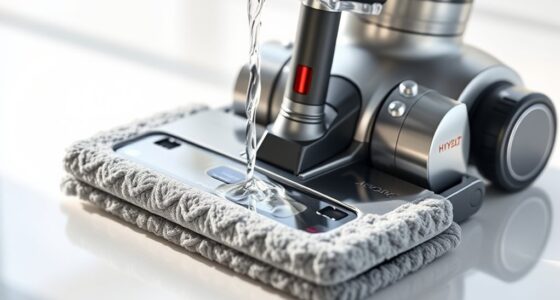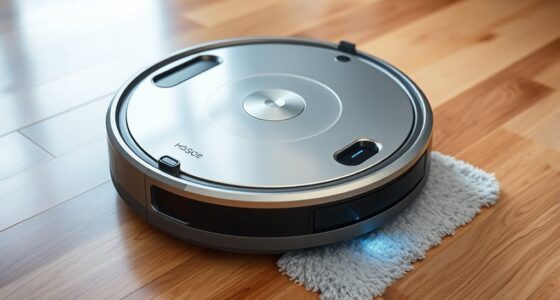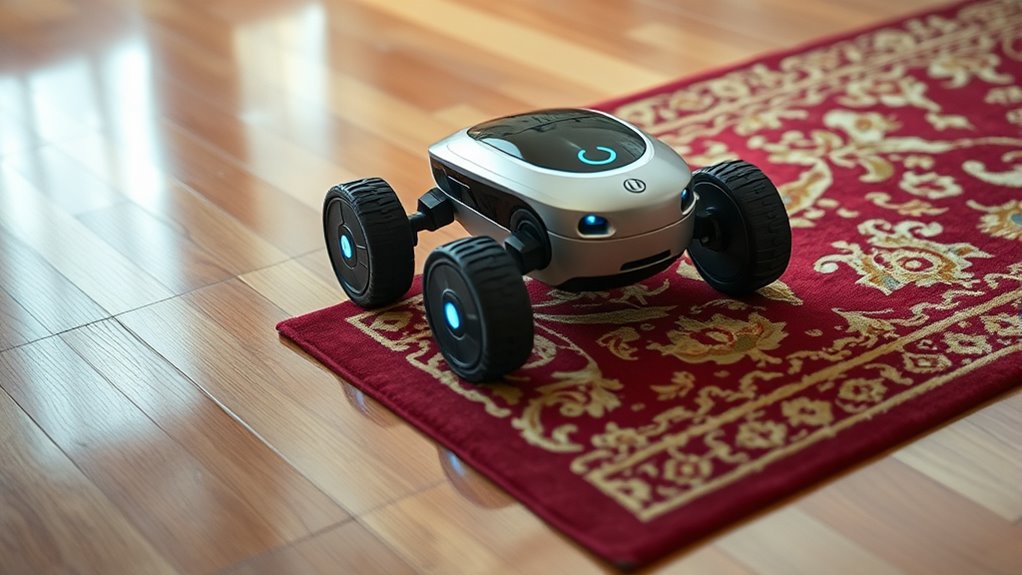

Hybrid robots avoid carpets during mopping by using advanced sensors like infrared, ultrasonic, or lidar to detect surface changes in real-time. These sensors identify thresholds between hard floors and carpets and help the robot adjust its cleaning modes automatically. They reduce suction or stop the mop to protect carpets, ensuring efficient cleaning without damage. To discover how these sensors work together and improve your cleaning experience, keep exploring the details below.
Key Takeaways
- Hybrid robots use surface sensors like infrared, ultrasonic, or lidar to detect carpets and prevent mopping on them.
- They differentiate surfaces by analyzing reflectivity or texture changes during navigation.
- Real-time sensor data triggers mode switching, reducing suction or stopping the mop when a carpet is detected.
- Sensor fusion enables accurate obstacle and surface transition detection, ensuring effective area-specific cleaning.
- The robots adjust their path dynamically to avoid pushing debris onto carpets or causing damage.
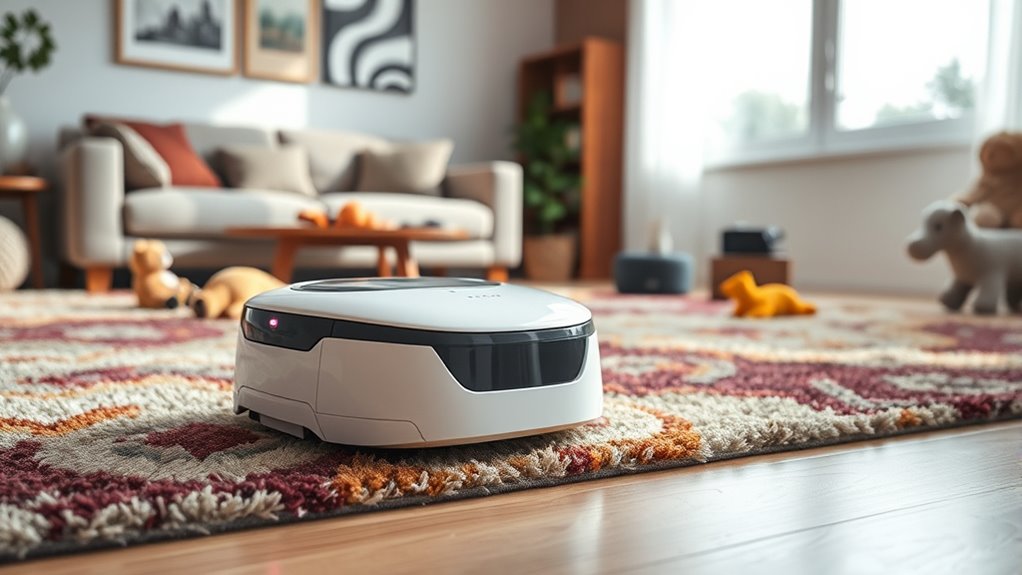
Hybrid robots are now equipped with advanced sensing and navigation systems that enable them to effectively avoid carpets. When you set your robot to clean, it uses a combination of sensors and algorithms to navigate your space without getting stuck or causing damage. A key part of this process is sensor calibration. Properly calibrated sensors ensure the robot accurately perceives its environment, distinguishing between different surfaces like hardwood floors and carpets. When sensors are correctly calibrated, the robot can better detect changes in texture or height, allowing it to recognize a carpeted area early enough to adjust its behavior.
Obstacle detection plays a vital role in avoiding carpets during cleaning. As your hybrid robot moves, it constantly scans the environment with infrared, ultrasonic, or lidar sensors. These sensors identify obstacles and surface transitions, alerting the robot to the presence of a carpeted area. Once detected, the robot can switch from vacuuming mode to mopping mode, or vice versa, depending on its programming. This prevents the mop from soaking carpets or the vacuum from attempting to clean where it shouldn’t, which could lead to inefficient cleaning or damage.
The process begins with the robot’s initial calibration phase, where it learns the characteristics of your floors. During setup, it measures distance and surface properties to fine-tune obstacle detection parameters. This calibration allows it to differentiate between objects like rugs, thresholds, or uneven surfaces. When the robot encounters a carpet, its sensors recognize the difference in reflectivity or texture. The robot then makes real-time adjustments, such as reducing suction power or stopping the mop, to avoid unintended contact with the carpet.
Additionally, many hybrid models use multiple sensors working in tandem for better accuracy. This sensor fusion improves obstacle detection, ensuring the robot responds appropriately to different surfaces. If the robot’s sensors detect a transition from hard floor to carpet, it quickly adjusts its operation—either stopping the vacuum or switching to a mode suitable for carpets. This precise detection prevents the robot from wasting energy on areas that don’t require cleaning, and it minimizes the risk of pushing debris onto carpets or soaking them with liquid.
In essence, your hybrid robot’s ability to avoid carpets hinges on meticulous sensor calibration combined with robust obstacle detection. These systems work together to create a seamless cleaning experience, allowing the robot to navigate intelligently around your home’s various surfaces. As a result, you get thorough cleaning without the hassle of manually intervening, and your carpets stay protected from unnecessary wear or damage. This smart navigation makes hybrid robots a reliable and efficient addition to your cleaning routine, ensuring your floors are well taken care of with minimal effort on your part.
Frequently Asked Questions
Can Hybrid Robots Detect Different Types of Carpets Automatically?
Yes, hybrid robots can detect different types of carpets automatically. They rely on advanced sensor accuracy to identify various surfaces, including carpets, rugs, and hard floors. When the sensors pick up a carpet, the robot adjusts its cleaning mode or avoids mopping altogether. This intelligent carpet detection guarantees efficient cleaning without damaging delicate surfaces, making your cleaning experience smoother and more effective.
How Do Hybrid Robots Prioritize Cleaning Hard Floors Over Carpets?
You might notice your hybrid robot naturally prioritizes hard floors over carpets because its advanced navigation and cleaning algorithms detect surface types instantly. When it encounters a carpet, it adjusts its path, focusing on hard floors first, thanks to sensors that identify different textures. This coincidence of smart robot navigation and tailored cleaning algorithms guarantees efficient cleaning, so your hard floors get attention first, leaving carpets for later without you having to manually intervene.
What Sensors Do Hybrid Robots Use to Identify Carpeted Areas?
You’ll find hybrid robots use infrared sensors and pressure sensors to identify carpeted areas. Infrared sensors detect differences in surface reflectivity, helping the robot distinguish carpets from hard floors. Pressure sensors measure resistance, alerting the robot when it encounters a soft surface. By combining these sensors, the robot efficiently recognizes carpets and switches to appropriate cleaning modes, ensuring thorough cleaning without unnecessary mopping on carpets.
Are Hybrid Robots Capable of Adjusting Cleaning Settings on Carpets?
Yes, hybrid robots can adapt cleaning settings on carpets. They typically detect carpeted areas using sensors and modify their cleaning schedule accordingly, such as increasing suction or slowing down. This helps optimize battery use and ensures effective cleaning. You can usually customize these adjustments, enabling the robot to prioritize battery optimization and maintain a consistent cleaning schedule, even on different surfaces.
How Effective Are Hybrid Robots on Thick or Shaggy Carpets?
They’re often like a fish out of water on thick or shaggy carpets, despite improvements. Hybrid robots use advanced robot navigation and obstacle avoidance to handle these surfaces, but deep piles can still challenge them. You know what they say—”Practice makes perfect.” Their effectiveness depends on the model’s sophistication, but thicker carpets may require manual cleaning or specialized equipment for thorough results.
Conclusion
As you watch these hybrid robots glide effortlessly across your floors, it’s like they have a sixth sense for avoiding carpets, gracefully sidestepping obstacles with the precision of a dancer. Their clever sensors act as vigilant sentinels, guiding them through your home’s maze without a stumble. With each sweep, they paint a picture of seamless harmony between technology and everyday life, transforming cleaning into a smooth, almost artistic performance—making your chores feel like a walk in a well-choreographed garden.