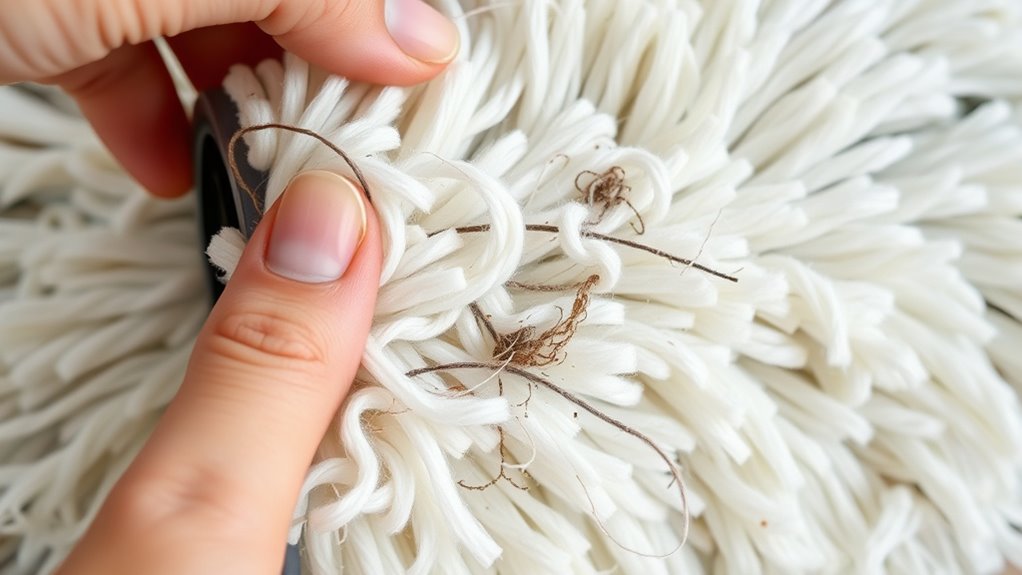

To effectively detangle mop roller brushes, focus on regularly inspecting and removing hair, fibers, and debris immediately after use. Choose rollers with flexible, smooth materials like silicone or rubber, which resist tangles and make cleaning easier. Opt for designs featuring textured or open surfaces that prevent debris from wrapping around the roller. Proper maintenance and gentle cleaning with warm water help reduce buildup. Keep these tips in mind, and you’ll discover more ways to keep your roller tangle-free and working smoothly.
Key Takeaways
- Use warm water and mild soap to gently clean the roller, removing hair, fibers, and debris buildup.
- Regularly inspect and promptly remove tangled hair or threads to prevent knot formation.
- Opt for rollers with textured or ribbed surfaces to reduce hair wrapping and facilitate easier detangling.
- Consider replacing rollers with improved, more flexible designs to minimize tangles and improve cleaning efficiency.
- Maintain proper roller material choice—prefer flexible, smooth materials like silicone or rubber for easier detangling.

If you’ve ever struggled with tangled mop roller brushes, you know how frustrating it can be to keep them clean and functioning properly. Tangling often comes from a combination of brush material and roller design, which directly affects how easily debris gets caught and how smoothly the brush spins. Understanding these factors can help you choose and maintain your mop roller more effectively, saving you time and effort. Using the right cleaning techniques can also significantly reduce tangles and prolong the life of your brushes.
Tangled mop rollers result from brush material and design, impacting cleaning ease and effectiveness.
The brush material plays a significant role in preventing tangles. Brushes made from softer, more flexible materials tend to resist snagging on hair, threads, or fibers that can cause knots. For example, nylon bristles are durable but can sometimes become stiff over time, making them prone to tangles. Conversely, silicone or rubber bristles offer greater flexibility, reducing the chances of hair or string wrapping around the brush. These materials also tend to be easier to clean because they don’t trap debris as easily, which means less buildup that could cause tangles. When shopping for a replacement or deciding on cleaning tools, focus on brushes with smooth, pliable materials that can withstand repeated use without becoming stiff or brittle.
The roller design is equally important in detangling efforts. A well-designed roller typically features a shape and surface pattern that minimizes areas where debris can lodge. For example, rollers with a slightly textured or ribbed surface help prevent hair or threads from wrapping tightly around the brush. Additionally, rollers that have a wider or more open design facilitate easier cleaning and reduce the chances of debris getting trapped deep inside. Some rollers incorporate removable or replaceable brushes, making it easier to clear tangles without disassembling the entire unit. Keep an eye out for rollers with streamlined, ergonomic shapes that allow for effortless spinning and cleaning. A roller that spins smoothly without resistance is less likely to accumulate tangles, and the better the design, the easier it is to keep your mop working efficiently.
To prevent tangles, regularly inspect your roller during and after use. Clear out any hair, fibers, or debris immediately to avoid buildup. When cleaning, opt for gentle methods that preserve the integrity of the brush material and roller design. Using warm water and mild soap can help remove stubborn residues without damaging flexible brush materials. If tangling persists, consider replacing your roller with a model that features improved brush material and design, making your cleaning process quicker and less frustrating. By paying attention to these details, you’ll extend the life of your mop roller and keep it functioning smoothly, making your cleaning tasks much more manageable.
Frequently Asked Questions
Can Detangling Brushes Be Used on All Hair Types?
Yes, detangling brushes can be used on all hair types because of their brush versatility. Whether you have straight, curly, thick, or fine hair, these brushes help gently detangle without causing damage. They work well for wet or dry hair, making them suitable for everyone. Just choose a brush designed for your specific hair type to guarantee ideal results and minimal breakage.
How Often Should I Replace My Mop Roller Brush?
You should replace your mop roller brush every 3 to 6 months, depending on its brush longevity and how often you use it. Regular replacement guarantees it remains effective and prevents buildup of dirt and hair that can damage your scalp or hair. Keep an eye on the brush’s condition, and if you notice frayed bristles or decreased detangling performance, it’s time for a new one.
Are Detangling Mop Brushes Suitable for Children?
This is the best news ever — detangling mop brushes are designed with child safety in mind, making them suitable for children. You’ll appreciate their ergonomic design, which guarantees a comfortable and secure grip, reducing the risk of accidents. Always supervise children during use, but rest assured, these brushes are crafted to be safe, gentle, and effective for young users, making cleaning a safer and more enjoyable experience for everyone.
What Are the Best Cleaning Methods for These Brushes?
To keep your detangling mop roller brushes clean, you should regularly perform brush sanitization by rinsing them with warm water and a gentle soap or disinfectant. Use your hands or a cleaning tool to remove tangled hair or debris from the brush bristles. Avoid harsh chemicals that could damage the brush. Proper cleaning not only prolongs the life of your tools but also guarantees effective and hygienic performance.
Do Detangling Brushes Cause Hair Breakage?
Detangling brushes can cause hair damage if their design isn’t gentle enough, especially with aggressive brushing. However, when you choose a brush with soft, flexible bristles and use it gently, it minimizes hair breakage. Always brush from roots to tips and avoid tugging. Proper brush design plays a key role in preventing hair damage, so pick one suited to your hair type for the best results.
Conclusion
By mastering how to detangle mop roller brushes, you guarantee they work efficiently and last longer. Imagine a cleaning enthusiast who struggled with frequent brush replacements until they learned a simple detangling technique—now, their brushes stay smooth and effective for months. Applying these tips not only saves you money but also makes your cleaning routine more effective. Take a moment to maintain your brushes regularly, and you’ll enjoy cleaner floors with less hassle every time.