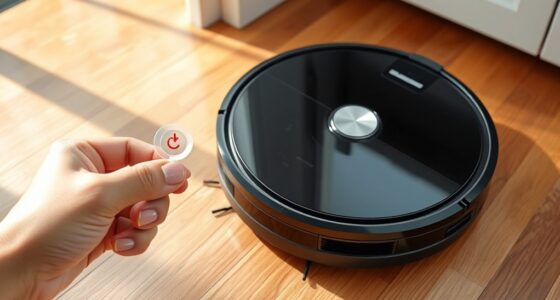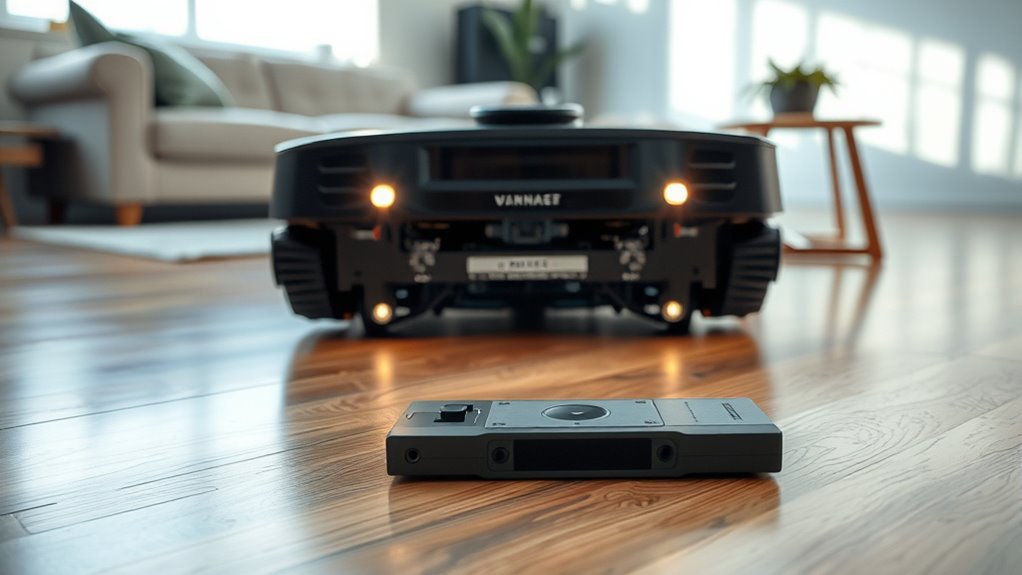

To keep your robot vacuum accurate, regular sensor calibration is key. It ensures sensors interpret your home environment correctly, improving obstacle detection and navigation. Cleaning the sensors and using built-in calibration routines help prevent dirt buildup and drift over time. Proper calibration reduces bumps, missed spots, and unnecessary collisions, making your device more efficient and long-lasting. Continuing with these tips will give you a clearer understanding of how to maintain ideal sensor performance.
Key Takeaways
- Regularly clean sensors to prevent dust and debris from causing measurement errors.
- Follow manufacturer calibration routines via app or control panel for optimal accuracy.
- Proper sensor calibration enhances obstacle detection and navigation within your home.
- Maintaining calibrated sensors extends their lifespan and reduces the risk of collisions.
- Consistent calibration ensures reliable mapping, cleaning efficiency, and overall device performance.
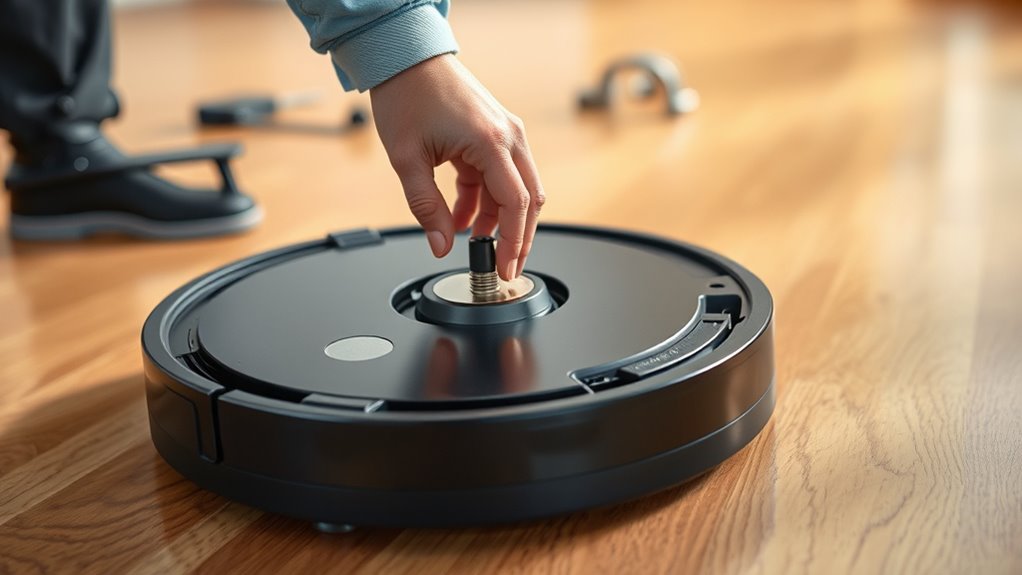
Sensor calibration is a critical process that guarantees your sensors provide accurate and reliable measurements. When your robot vacuum is properly calibrated, it can navigate your home more effectively, making cleaning more efficient and thorough. One of the main benefits of calibration is improving mapping accuracy, which allows your vacuum to create detailed floor plans of your space. When sensors are correctly calibrated, they can detect walls, furniture, and other obstacles with precision, reducing the chances of missed spots or collisions. This leads to a more thorough clean and minimizes the risk of damaging your belongings or the device itself.
If your robot vacuum’s sensors aren’t calibrated properly, you might notice it struggling with obstacle detection. It could bump into furniture more often or get stuck in tight corners because it misjudges distances. Proper calibration ensures that the sensors interpret their environment accurately, enabling your device to identify obstacles and navigate around them smoothly. This not only enhances the cleaning process but also prolongs the lifespan of your vacuum by preventing unnecessary collisions and wear. When sensors are calibrated correctly, your vacuum’s internal map of your home becomes more precise, allowing it to optimize its cleaning path and reduce redundant coverage.
Calibrating your sensors involves a few straightforward steps, but the key is understanding that this process directly impacts your robot’s ability to perform its tasks effectively. Regular calibration helps maintain consistent mapping accuracy over time, especially as sensors can drift or get dirty. Cleaning the sensors before calibration is essential since dust or debris can interfere with measurements. Many robot vacuums come with built-in calibration routines that you can initiate through the app or control panel. Following these instructions carefully ensures your sensors are aligned correctly and functioning at their best. Additionally, understanding the industrial manufacturing process of sensors can help you better appreciate how precise calibration can extend their lifespan and accuracy.
Frequently Asked Questions
How Often Should I Calibrate My Robot Vacuum Sensors?
You might wonder how often you should calibrate your robot vacuum sensors to maintain sensor accuracy. Generally,, it’s best to do it every few months or after any major bump or collision. Regular calibration ensures your vacuum navigates properly and cleans efficiently. Keep an eye on performance; if your device starts missing spots or bumping into obstacles more often, it’s time for a calibration. This keeps sensor accuracy at its best and your cleaning seamless.
Can Sensor Calibration Improve Navigation in Dark or Cluttered Spaces?
Think of your robot vacuum as a lighthouse guiding ships through fog. Proper sensor calibration acts as the lighthouse’s beam, illuminating dark environment navigation and cluttered space detection. When you calibrate sensors regularly, your vacuum can better recognize obstacles and navigate tricky spaces, even in darkness. This ensures thorough cleaning, prevents collisions, and keeps your home spotless. Calibration is your vacuum’s way of sharpening its senses, making every cleaning mission more precise and reliable.
What Signs Indicate My Robot Vacuum Needs Sensor Recalibration?
If your robot vacuum shows unusual navigation errors or misses spots, it might be time for sensor recalibration. Look out for signs of sensor malfunction, like inconsistent mapping or repeated collisions. When your vacuum struggles in dark or cluttered spaces, recalibrating sensors can restore accurate navigation. Regularly checking for these signs guarantees your device operates efficiently, preventing future navigation errors and maintaining thorough cleaning performance.
Does Sensor Calibration Affect the Vacuum’S Battery Life?
You might think calibration affects only cleaning performance, but it also impacts battery life. When your robot vacuum’s sensors aren’t accurate, it can cause unnecessary navigation errors, increasing energy consumption. This means your vacuum uses more battery power, reducing runtime. Regular sensor calibration helps maintain sensor accuracy, leading to efficient navigation and conserving energy. So, yes, calibration directly influences your vacuum’s battery life by optimizing energy consumption.
Are There Specific Calibration Tools Recommended for Different Robot Models?
You should use custom calibration tools recommended by your robot vacuum’s manufacturer to guarantee accuracy. Different models often require specific calibration methods, so following the manufacturer’s guidelines helps you get the best results. Avoid generic tools, as they might not suit your device. By adhering to these recommendations, you’ll maintain ideal sensor performance, ensuring your vacuum cleans effectively and efficiently without risking damage to your device.
Conclusion
Keep your robot vacuum running perfectly by regularly calibrating its sensors. Think of it as giving your trusty cleaning companion a superpower upgrade—without it, your robot might get lost in a tiny corner or miss dirt like a blindfolded detective. Don’t let poor calibration turn your spotless home into a chaotic battlefield. Stay vigilant, recheck those sensors, and watch your vacuum conquer dust with the precision of a laser-guided missile—your home deserves nothing less!