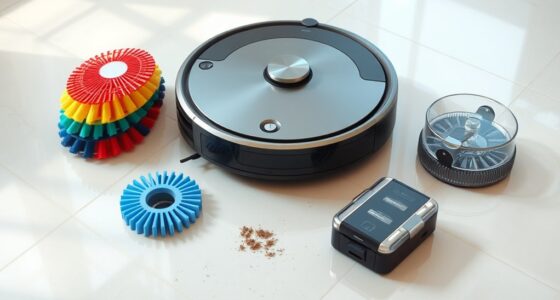
Before your vacation, turn off your robot vacuum, empty and clean the dust bin, and inspect the filters. Guarantee it’s completely dry, then store it upright in a cool, dry place away from direct sunlight and humidity. Disconnect the charging station and keep it nearby for easy setup later. Consider using a cover for added protection. Proper storage keeps your vacuum ready for quick use when you return, and more details await if you keep going.
Key Takeaways
- Fully charge the vacuum and disconnect it from the charging station before storage.
- Empty and clean the dust compartment, filters, and brushes to prevent mold and debris buildup.
- Store the vacuum in a cool, dry, and dust-free environment, upright and away from direct sunlight or humidity.
- Cover the vacuum with a protective cover or storage bag to shield it from dust and scratches.
- Keep the charging station disconnected and in a safe, accessible location for easy setup upon return.

Storing your robot vacuum properly guarantees it stays in good condition and performs well when needed. If you’re heading out for an extended vacation, it’s essential to prepare your device carefully to prevent damage and assure it’s ready for use upon your return. The first step involves inspecting your vacuum’s charging station. Make sure the charging dock is clean, free of dust, and positioned on a flat, stable surface. If your charger has a power switch, turn it off to avoid unnecessary power drain during storage. Disconnect the vacuum from the charging station to prevent any accidental activation or damage while stored. If your model has a dedicated app, check for firmware updates before storing it away to ensure top performance when you start it up again.
Next, focus on the dust compartment. Empty the dust bin completely and clean out any debris or residue. Leaving dust and dirt inside can lead to mold or unpleasant odors during storage, which might damage the vacuum or make it less effective when you restart it. Wipe down the dust compartment with a slightly damp cloth to remove any stubborn dust or dust mites. Allow the dust bin to dry fully before storing the vacuum; moisture can cause parts to corrode or develop mold. If your model has filters, remove them and check if they need cleaning or replacement. Storing a vacuum with clean filters helps maintain its suction power and prolongs the lifespan of the components.
After cleaning and inspecting the dust compartments, consider the overall storage environment. Find a cool, dry place away from direct sunlight or extreme temperature fluctuations. Avoid areas with high humidity, which can cause internal components to rust or degrade. When storing the vacuum, place it in a safe spot where it won’t be knocked over or damaged by other objects. If your vacuum has a charging dock, store it nearby but disconnected from power, so it’s ready for quick setup when you return. If possible, keep the vacuum in an upright position to prevent damage to brushes or wheels. Some models come with a storage bag or cover—using one can protect your vacuum from dust and accidental scratches. Additionally, be aware that automation technologies can help streamline maintenance routines by reminding you when to clean or inspect your device.
Frequently Asked Questions
Can I Store My Robot Vacuum Outside Temporarily?
Storing your robot vacuum outside temporarily isn’t recommended. Outdoor storage exposes it to moisture, dirt, and weather damage. If you must, consider removing the battery to prevent leaks or corrosion and store the robot in a dry, sheltered spot. Always guarantee the vacuum is clean and dry before storage. However, indoor storage remains the safest option to maintain your vacuum’s performance and longevity.
Should I Remove the Batteries Before Storage?
Before extended storage, it’s best to remove the batteries from your robot vacuum. Battery removal prevents potential problems like leakage, corrosion, or damage during long periods of inactivity. This simple step secures your device’s longevity, avoiding accidental activation or battery-related issues while stored. So, yes – removing the batteries is a smart, safe, and straightforward strategy to safeguard your robot vacuum during extended storage, ensuring it’s ready to go when you return.
How Often Should I Check on the Vacuum During Long Storage?
You should check on your robot vacuum every few weeks during long storage to guarantee proper battery maintenance and prevent issues. Keep an eye on the storage environment, making sure it’s cool, dry, and free from dust or humidity. Regular checks help you spot any battery or device problems early and keep your vacuum in good shape, ready for use when you return from your vacation.
Is It Safe to Store the Vacuum in a Garage or Shed?
Got questions about garage storage or outdoor safety for your robot vacuum? Generally, storing your vacuum in a garage or shed isn’t ideal. Exposure to extreme temperatures, humidity, and dirt can damage the device, reducing its lifespan. If you must, make sure it’s stored in a dry, cool, and protected space. Always double-check manufacturer guidelines to prevent potential problems, and consider bringing it indoors for the safest, longest-lasting storage.
What Cleaning Routine Is Recommended Before Storage?
Before storing your robot vacuum, you should run a cleaning cycle to remove dust and debris, ensuring it’s fresh for your return. Also, perform battery maintenance by charging it fully and then letting it discharge slightly, which helps preserve battery life. Clean the brushes and filters, and wipe down the exterior. These steps keep your vacuum in good shape, ready for use after your vacation.
Conclusion
Now that you know how to store your robot vacuum safely, imagine coming back from vacation to find it in perfect condition, ready to clean. But what if you overlooked a vital step? The tiniest mistake could lead to surprises you’d rather avoid. So, follow these tips carefully, double-check everything, and stay prepared. Your robot vacuum’s next adventure depends on your attention to detail—are you ready to keep it in top shape?