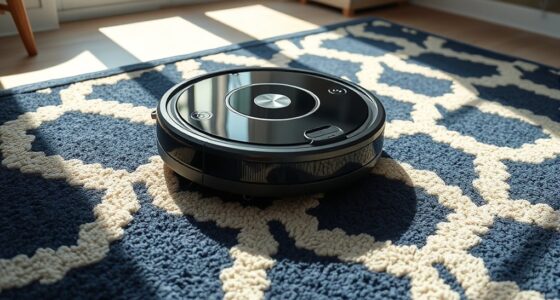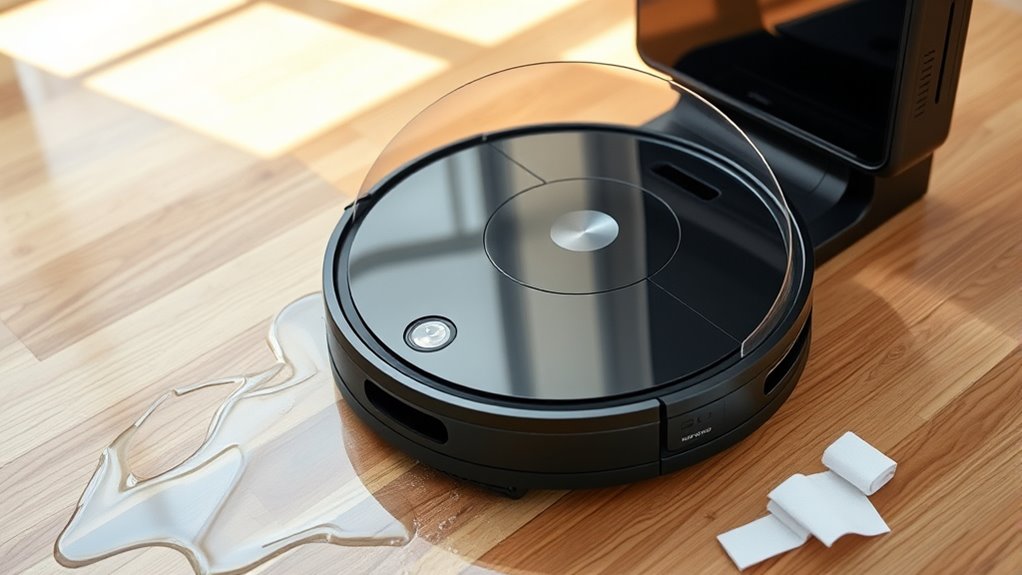
To protect your robot vacuum from liquids, keep it away from spill-prone areas like kitchens or pet water bowls, and clear floors of wet objects before cleaning. Turn off the vacuum immediately if a spill occurs and wipe the area thoroughly before restarting. Regularly inspect for water damage and choose models with water resistance if possible. Staying cautious around liquids extends your device’s life; learn more tips to keep your vacuum safe and functioning well.

Get cleaning gear delivered free with Prime
- Fast, free delivery on millions of items
- Prime Video, Amazon Music and more included
- Member-only deals all year
Key Takeaways
- Keep vacuums away from wet areas like kitchens and pet water bowls.
- Turn off and wipe the vacuum immediately if a spill occurs before restarting.
- Store the vacuum in dry, humidity-free environments to prevent water damage.
- Check manufacturer guidelines for water resistance levels and avoid heavy moisture exposure.
- Regularly inspect the vacuum for signs of water damage or corrosion after use in damp conditions.
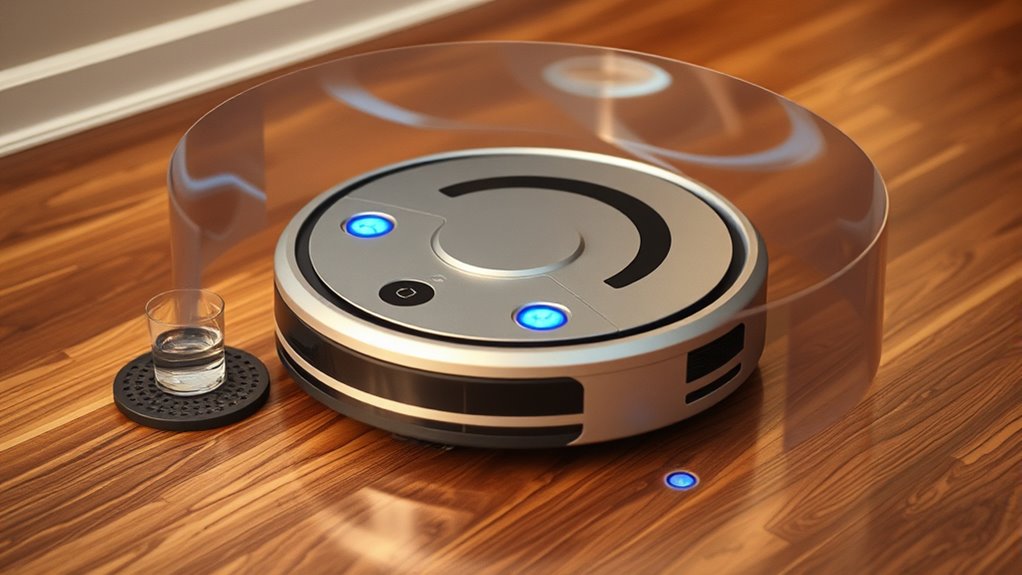
Robot vacuums have become essential tools for maintaining clean floors, but liquids can pose a serious threat to their functionality. While some models boast water resistance, many are still vulnerable to liquid spills, which can cause internal damage or short circuits. Understanding how to protect your robot vacuum from these hazards is pivotal to ensuring it works effectively over time. If your vacuum lacks water resistance, you need to be especially cautious around any liquids, including spills from mopping, spilled drinks, or wet surfaces. Even small amounts of liquid can seep into sensitive components, leading to malfunctions that might require costly repairs or replacements.
To minimize risks, always keep your robot vacuum away from areas prone to spills, like kitchens or near pet water bowls. When cleaning, clear the floor of any liquids or wet objects beforehand. If you do notice a liquid spill, turn off the vacuum immediately and wipe the area thoroughly before restarting it. This prevents the liquid from being drawn into the device’s intricate parts. If your model has some level of water resistance, check the manufacturer’s guidelines to understand its limits. Not all water-resistant vacuums can handle large spills or heavy moisture, so don’t assume they’re invincible. Instead, treat them with care, especially around liquids. Additionally, be aware that water resistance levels vary among models and may not provide full protection against all types of spills.
When storing your robot vacuum, keep it in a dry spot away from humidity and accidental spills. Regularly inspect the device for any signs of water damage or corrosion, particularly if you’ve used it in damp environments. Some newer models come with enhanced water resistance, which can offer added protection against minor splashes or damp conditions. However, even these models shouldn’t be exposed to significant amounts of liquid. To further safeguard your investment, consider using physical barriers like doors or mats to contain potential spills. If you have pets or children, be extra vigilant, as their actions can inadvertently create liquid hazards for your vacuum.
Products Worth Considering

Roborock Qrevo S Pro Robot Vacuum and Mop with 18,500 Pa Suction

Roborock Q7 M5+ Robot Vacuum and Mop with Self-Emptying Dock

iRobot Roomba 105 Combo Robot Vacuum and Mop with AutoEmpty Dock
As an affiliate, we earn on qualifying purchases.
Frequently Asked Questions
Can Robot Vacuums Detect Spilled Liquids Automatically?
Yes, many robot vacuums can detect spilled liquids automatically. They use advanced sensor technology designed for liquid detection, which alerts you when the vacuum encounters a spill. When the sensor detects liquid, it usually stops cleaning to prevent damage. You should check your specific model’s features, but generally, liquid detection with sensor technology helps protect your vacuum and keeps your floors safe from further messes.
Are There Specific Liquids That Are More Damaging to Robot Vacuums?
Certain liquids pose a greater threat to your robot vacuum, especially water, alcohol, and thick liquids like coffee or juice. These can cause significant damage if spilled on sensitive components. To prevent damage, avoid exposing your vacuum to these liquid types, and consider installing sensors or protective measures. Staying vigilant helps guarantee your device’s longevity and prevents costly repairs, so always be cautious around liquids during your cleaning routine.
How Long Should I Wait Before Using My Vacuum After a Spill?
You should wait at least 24 hours before using your robot vacuum after a spill. Start with spill cleanup by blotting the liquid gently with a dry cloth, avoiding spreading it. Use proper drying techniques, like placing the vacuum in a dry, well-ventilated area or near a fan, to guarantee complete dryness. Only restart the vacuum once you’re confident it’s thoroughly dry to prevent damage from residual moisture.
Do Robot Vacuums Have Built-In Sensors to Prevent Liquid Damage?
Yes, robot vacuums do have built-in sensors that detect liquids. These advanced sensor technologies swiftly spot spills, stopping the vacuum to prevent liquid damage. With alert alerts, you stay informed, safeguarding your smart cleaning companion. This liquid detection technology guarantees your device stays dry and damage-free, giving you peace of mind. So, when spills happen, trust your vacuum’s sensors to step in, safeguard, and serve without slipping into liquid trouble.
What Maintenance Is Required After Exposure to Liquids?
After your robot vacuum encounters liquids, you should inspect the battery for any damage and verify it’s dry before recharging. Next, clean the brushes thoroughly to remove any debris or residue left by the liquid. Check for corrosion or corrosion signs on electronic parts. Allow the vacuum to dry completely in a well-ventilated area. Regular maintenance like this helps keep your device functioning properly and extends its lifespan.
Conclusion
To keep your robot vacuum safe from liquids, always stay vigilant and act quickly. Avoid spills, use barriers, and clean up messes immediately—think of it as your modern-day shield against chaos. Remember, even in this age of automation, a little human caution goes a long way. So, treat your device like a trusty steed, and it’ll serve you well. After all, a dry vacuum is a happy vacuum—simple as that.