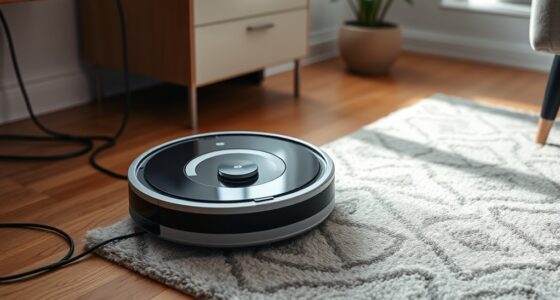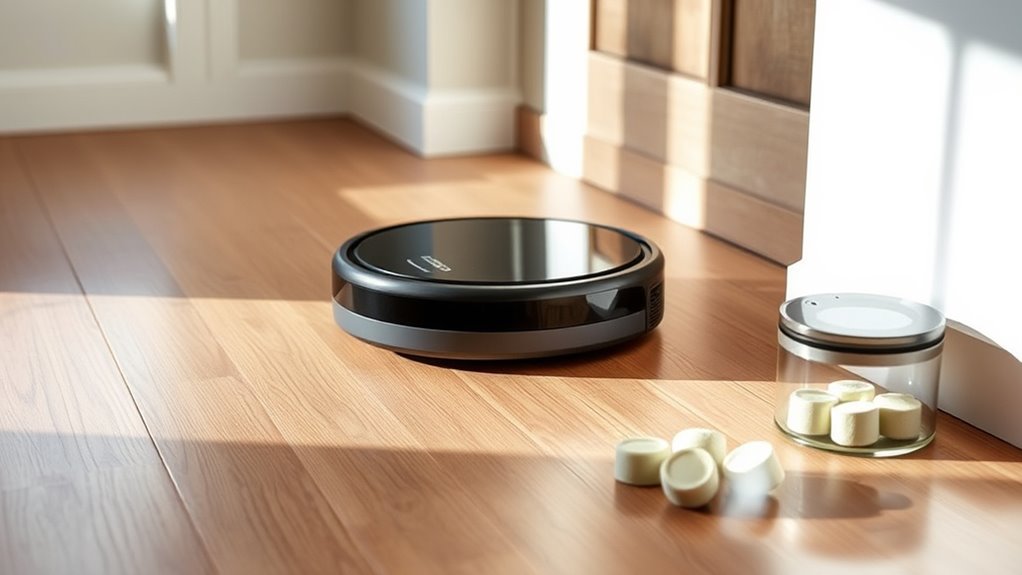

To keep your robot vacuum odor-free, regularly clean or replace the filters as recommended, since dirty filters trap odors and reduce effectiveness. Use built-in deodorizer compartments or place natural absorbers like baking soda or activated charcoal in the dustbin to neutralize smells. Combining consistent filter upkeep with natural deodorizing methods ensures your device stays fresh and odorless. If you want more tips on maintaining a clean, fresh-smelling vacuum, there’s more you can do beyond the basics.
Key Takeaways
- Regularly clean or replace filters every few weeks to prevent odor buildup.
- Use built-in deodorizer compartments or scent cartridges to mask residual smells.
- Place natural odor absorbers like baking soda or activated charcoal in the dustbin or filter area.
- Ensure proper filter maintenance to prevent musty or stale odors from emitting.
- Combine consistent filter upkeep with deodorizer use for comprehensive odor control.

Have you ever noticed your robot vacuum developing an unpleasant odor over time? If so, you’re not alone. As your trusted cleaning companion, it’s easy to overlook that this device works tirelessly to keep your floors spotless, but it can also harbor smells that become more noticeable with each use. The good news is that maintaining your vacuum’s odor-free performance isn’t complicated. One of the most effective ways to do this is by paying attention to filters maintenance. Your vacuum’s filters are essential for trapping dust, dirt, and pet dander, but they can also trap odor-causing particles if not cleaned or replaced regularly. When filters get clogged or dirty, they can start to emit a musty or stale smell, which then spreads throughout the device and into your living space. To prevent this, check your vacuum’s user manual for recommended filter maintenance schedules. Typically, cleaning or replacing filters every few weeks keeps odors at bay and ensures your vacuum runs efficiently. Regular maintenance not only prolongs the life of your device but also keeps the air in your home fresher. Additionally, filter maintenance plays a crucial role in maintaining overall device hygiene and preventing odors from developing.
In addition to filters maintenance, exploring deodorizer options can notably help in managing odors. Many robot vacuums now come with built-in deodorizer compartments or allow for attachment of scent cartridges. These options enable you to add a pleasant fragrance during cleaning, masking any residual smells. If your vacuum doesn’t have a dedicated deodorizer feature, you can place a small, breathable bag with baking soda or activated charcoal inside the dustbin or filter compartment. Baking soda is a natural odor absorber and can neutralize smells effectively. Activated charcoal is another excellent choice, as it adsorbs odors without leaving a scent behind. Using these options regularly ensures that your vacuum not only cleans your floors but also leaves your living space smelling fresh afterward. Remember to replace deodorizing agents as recommended to maintain their effectiveness and prevent the buildup of stale smells.
Combining consistent filters maintenance with the use of deodorizer options provides a simple yet powerful strategy to keep your robot vacuum odor-free. Making these small adjustments can make a big difference in how your device performs and how your home smells. With just a little effort, you’ll prevent unpleasant odors from lingering and ensure your vacuum remains a helpful, odorless cleaning companion. Maintaining your vacuum’s filters and selecting the right deodorizer options are straightforward steps that protect your investment and contribute to a healthier, fresher home environment.
Frequently Asked Questions
Can Replacing the Vacuum Filter Eliminate Odors Completely?
Replacing the vacuum filter can considerably reduce odors, but it might not eliminate them completely. Regular filter maintenance guarantees your robot vacuum absorbs odors effectively and prevents smell buildup. Choose filters with odor absorption features for better results. Remember, even with a new filter, cleaning the vacuum’s brushes and compartments helps control persistent odors. Consistent upkeep is the key to keeping your robot vacuum smelling fresh and functioning at its best.
Are There Specific Cleaning Schedules That Prevent Odor Buildup?
Yes, maintaining a regular cleaning schedule helps prevent odor buildup. You should clean your robot vacuum’s brushes and empty the bin frequently, ideally once a week or more if needed. Regularly replacing filters also aids in odor prevention. By sticking to this cleaning frequency, you keep your vacuum fresh and odor-free, ensuring it operates efficiently and maintains a clean environment for your home.
Do Certain Flooring Types Cause More Odor Issues in Robot Vacuums?
Certain flooring types, like carpets, tend to cause more odor issues in robot vacuums because they trap dirt, dust, and bacteria, which can produce unpleasant carpet bacteria odors. Hard floors, on the other hand, usually don’t cause as much odor buildup. To keep your vacuum odor-free, regularly clean your robot, especially if you have carpets, and consider using odor-neutralizing filters to manage carpet bacteria odors effectively.
How Often Should I Perform Deep Cleaning on My Robot Vacuum?
Imagine your robot vacuum starts to smell after a few months. You should perform a deep cleaning every 1 to 3 months, depending on usage. During this process, focus on battery maintenance and dust compartment cleaning. Regularly empty the dustbin, clean filters, and check the battery for peak performance. This keeps your vacuum odor-free, prolongs its lifespan, and guarantees it works efficiently in your home.
Are Odor-Neutralizing Sprays Safe to Use With Robot Vacuums?
Odor-neutralizing sprays can be safe for your robot vacuum if you choose spray compatibility products specifically designed for electronics and vacuums. Always read the label carefully to make certain the odor neutralizers won’t damage your device. Use sprays sparingly and avoid applying directly onto the vacuum’s sensors or motor. Instead, spray a small amount onto a cloth and wipe the vacuum’s exterior to keep it smelling fresh without risking damage.
Conclusion
Think of your robot vacuum as a trusted garden tool—if you neglect its care, it can become a source of unwanted scent. By regularly cleaning and maintaining it, you’re tending to a delicate bonsai, ensuring it stays fresh and vibrant. With a little effort, your vacuum remains a pristine guardian of your home, not an unwelcome guest. Keep it odor-free, and it’ll serve you faithfully, just like a well-cared-for masterpiece in a quiet gallery.