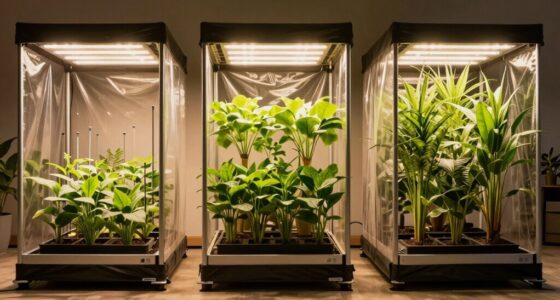
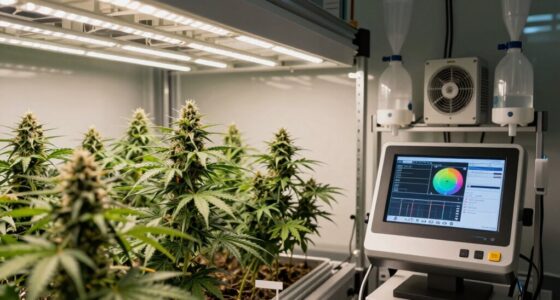
Stale air in your indoor garden limits the exchange of oxygen and carbon dioxide, slowing plant growth and causing dull, weak leaves. It also promotes mold and pests by creating humid, poorly ventilated patches. Proper airflow helps regulate temperature, humidity, and gas exchange, ensuring your plants stay healthy and vibrant. If you keep neglecting air circulation, your plants will suffer. Keep going to discover how to design the perfect airflow blueprint for thriving indoor gardens.
Key Takeaways
- Stale air limits essential gas exchange, reducing photosynthesis and leading to weak, dull, and unhealthy plant growth.
- Poor airflow creates humid, stagnant conditions that promote mold, pests, and root diseases in indoor gardens.
- Inadequate air circulation hampers temperature and humidity regulation, increasing disease risk and inhibiting plant respiration.
- Restricted airflow causes moisture buildup, fostering fungal growth and reducing oxygen availability for healthy root development.
- Proper ventilation and gentle fans ensure fresh air, prevent stagnation, and promote vibrant, resilient indoor plants.
Why Stale Air Harms Your Indoor Plants and How It Affects Growth

Stale air can considerably hinder the health of your indoor plants because it limits the exchange of oxygen and carbon dioxide, which are essential for photosynthesis and respiration. When airflow is restricted, plant respiration slows down, depriving your plants of the oxygen they need to produce energy. This can cause weak growth and dull leaves. Additionally, stagnant air creates a perfect environment for fungal growth, which thrives in humid, poorly ventilated spaces. Fungi can attack roots and leaves, leading to diseases that stunt your plants’ development. Without proper airflow, your plants struggle to stay healthy and vibrant. Ensuring fresh air helps maintain active plant respiration and prevents fungal problems, promoting stronger, more resilient indoor plants.
Assess Your Indoor Garden Space for Airflow Problems

To effectively improve airflow in your indoor garden, you need to evaluate your space carefully. Start by checking for lighting issues that might cause plants to cluster, blocking air circulation. If plants are too close or unevenly spaced, airflow becomes restricted, leading to stagnant air. Also, assess your watering techniques; overwatering can increase humidity and promote mold, while uneven watering creates damp spots that hinder airflow. Make sure your plants are spaced appropriately to allow for proper movement of air around them. Achieving optimal airflow is essential for plant health and removing any dead or crowded foliage that could trap moisture. Additionally, consider the placement of fans or vents to enhance circulation. By addressing these lighting and watering concerns, you create a healthier environment that promotes ideal airflow and plant growth. Incorporating plants like Shasta daisies can also help improve air quality, benefiting your indoor garden. Understanding the importance of airflow is crucial for optimizing plant health and creating a thriving indoor ecosystem.
How Airflow Impacts the Health of Your Indoor Plants

Proper airflow is essential for maintaining healthy indoor plants because it helps regulate temperature, humidity, and the exchange of gases. When air circulates well, it prevents the build-up of excess moisture and stale air, which can lead to mold, pests, and disease. Good air quality ensures that your plants receive fresh CO₂ for photosynthesis, boosting overall plant health. Without proper airflow, plants may become stressed, showing signs like yellowing leaves or slowed growth. Consistent movement of air also discourages fungal infections and pest infestations by reducing humidity and damp spots. Additionally, effective soundproofing techniques can be beneficial in creating a quieter environment that supports plant health. Ultimately, airflow influences your plants’ ability to thrive by maintaining an environment that mimics natural conditions, giving them the oxygen and fresh air they need to stay vibrant and healthy. Moreover, proper ventilation is key in avoiding stagnant air, which can exacerbate issues related to humidity and temperature fluctuations. Additionally, microchipping pets can help ensure that your plants are cared for even during stormy weather, as this technology allows for easy tracking and care arrangements.
Design an Effective Air Circulation Plan for Your Garden

Sure! Here’s the revised content:
Start by placing vents strategically to promote even airflow throughout your garden. Keep the air moving consistently to prevent stagnant spots and control humidity levels to reduce mold and pests. High-quality monitors can help you observe changes in your plants’ health, aiding in adjustments to your air circulation plan. Incorporating Milky Way shooting techniques can inspire you to create a balanced environment that supports healthy plant growth. Adjust these elements as needed to create a balanced environment that supports healthy plant growth. Additionally, incorporating native plants can improve air quality and enhance the overall ecosystem within your indoor garden. Consider using composting toilets to reduce waste and enrich the soil, further benefiting your plants and promoting sustainability. To further enhance your indoor garden, implementing proper ventilation techniques can significantly improve air circulation and contribute to healthier plant growth.
Optimize Vent Placement
Have you ever wondered why some indoor gardens thrive while others struggle? Proper vent placement is key to creating effective airflow patterns. To optimize, consider these steps:
- Position vents near the ceiling and floor to promote vertical airflow.
- Guarantee vents are spaced evenly to avoid dead zones.
- Use adjustable vents to control airflow direction and volume.
Additionally, maintaining good airflow can help reduce fabric pollution impact on plants, ensuring a healthier growing environment. Moreover, understanding the importance of kitchen gear care can significantly contribute to a cleaner indoor environment, which is beneficial for your plants. Furthermore, ensuring adequate humidity levels can complement airflow strategies, making your indoor garden even more vibrant. Remember, effective airflow can also enhance the performance of air exchangers by improving air quality in your space. Utilizing a battery inverter generator can provide a reliable power source for fans or air circulators, ensuring consistent airflow throughout your indoor garden.
Maintain Consistent Airflow
To guarantee your indoor garden thrives, maintaining consistent airflow is essential for healthy plant growth and disease prevention. Proper airflow improves air quality by reducing stagnation, which can trap humidity and promote mold or pests. It also supports plant respiration, ensuring that leaves and stems receive fresh carbon dioxide and release oxygen efficiently. An effective circulation plan includes strategically placed fans that create gentle, continuous movement without causing drafts. Avoid sudden gusts that stress plants. Regularly monitor airflow patterns to ensure even distribution, preventing pockets of stale air. Consistent movement keeps the environment fresh, helping plants absorb nutrients better and stay resilient against diseases. Additionally, incorporating self-watering planters can further enhance plant health by maintaining optimal moisture levels. Sound vibrations are believed to enhance cellular regeneration and overall health, which can further support the vitality of your indoor plants. With steady airflow, your indoor garden will flourish with vibrant, healthy plants. Furthermore, regular gear inspection can help ensure that all components of your indoor garden setup are functioning properly, creating an optimal environment for growth. Additionally, just like foam rolling techniques enhance recovery in athletes, they can similarly benefit plant health by creating a balanced environment for growth. Implementing effective air circulation strategies, such as using fans, is crucial for maintaining a thriving indoor garden.
Control Humidity Levels
Controlling humidity levels is essential for maintaining a healthy indoor garden, as excessive moisture can lead to mold, mildew, and other diseases that threaten plant health. Proper humidity regulation improves air quality and helps plants thrive. To achieve this, consider these steps:
- Use a dehumidifier or humidifier to maintain ideal levels based on plant needs.
- Increase ventilation to promote air exchange and prevent stale, humid air from lingering.
- Monitor humidity regularly with a hygrometer, adjusting your system accordingly. Additionally, home safety products can help ensure that your indoor gardening space is free from hazards. Maintaining optimal indoor air quality is crucial for plant vitality, as smart thermostat systems can assist in regulating temperature and humidity effectively.
Maintaining the right humidity balance prevents issues like fungal growth and ensures your plants get the air quality they need for healthy growth. Additionally, using eco-friendly craft materials can enhance your indoor gardening experience while supporting sustainability. Proper humidity control supports a vibrant, disease-free indoor garden environment.
Simple Tips to Improve Air Movement With Fans and Vents

Improving airflow in your indoor garden is essential for healthy plant growth and maintaining a fresh environment. To optimize airflow patterns, position fans so they gently circulate air without creating strong gusts that stress plants. Use oscillating fans to promote even movement across your space, preventing stagnation. Ventilation strategies, like installing exhaust vents or adjustable vents, help remove stale air and bring in fresh air. Make sure vents are placed to encourage continuous airflow, especially near plant canopy levels. Keep fans and vents clean and functioning properly to prevent buildup of dust or blockages. Consistent, gentle air movement reduces humidity pockets and prevents mold, creating a healthier environment that supports your plants’ growth.
Common Mistakes That Cause Stale Air and How to Avoid Them

Even with fans and vents in place, common mistakes can still lead to stale air lingering in your indoor garden. One mistake is neglecting regular plant pruning, which restricts airflow around dense foliage and traps humidity. Second, poor soil aeration can cause compacted soil, limiting oxygen exchange for roots and promoting stagnant air pockets. Finally, ignoring the importance of soil drainage can result in excess moisture that fosters mold and reduces overall air quality. To avoid these issues, prune plants to maintain open growth, loosen soil with aeration tools, and ensure proper drainage. These simple steps help keep air circulating effectively, preventing stale air from building up and creating a healthier environment for your plants.
Monitor and Maintain Good Airflow for a Thriving Indoor Garden

Maintaining good airflow is essential for a healthy indoor garden, as it helps prevent issues like mold, pests, and stagnant air that can harm your plants. To monitor airflow effectively, check for uneven air distribution and signs of poor soil aeration, which can affect plant nutrition. Use fans or open vents to promote circulation, ensuring fresh air reaches all plants. Regularly observe plant health and soil conditions to catch problems early. Keep in mind, proper airflow encourages soil aeration, boosting nutrient uptake.
| Action | Purpose |
|---|---|
| Use oscillating fans | Improve air circulation |
| Adjust vent placement | Prevent stagnant air |
| Check soil aeration | Enhance root health and plant nutrition |
| Monitor plant response | Detect airflow-related issues early |
| Maintain consistent airflow | Support overall plant thriving |
Frequently Asked Questions
How Often Should I Check Indoor Air Quality for My Plants?
You should check your indoor air quality at least once a week to guarantee ideal conditions. Pay attention to CO2 levels, especially if you’re using air purifiers or CO2 enrichment systems. Regular checks help you detect stale air or poor ventilation early, allowing you to adjust fans or open windows. Maintaining fresh airflow keeps your plants healthy, encourages growth, and prevents issues caused by low oxygen or high humidity.
Can Certain Plants Improve Indoor Airflow Naturally?
Absolutely, certain plant species can dramatically boost your indoor air circulation—think of them as tiny, leafy air purifiers! Plants like spider plants, peace lilies, and bamboo palms are natural airflow heroes, moving air around with their lush leaves and vigorous growth. By choosing these species, you create a vibrant, dynamic indoor environment where fresh air circulates freely, preventing stale air buildup and keeping your garden thriving.
What Are Signs of Poor Air Circulation in My Indoor Garden?
If your indoor garden shows signs of poor air circulation, you might notice wilted or yellowing leaves, mold or mildew growth, and a stagnant smell. These indicate compromised plant health and insufficient airflow. You may also see slowed growth or pests thriving. Improving air circulation helps prevent disease and keeps your plants healthy. Regularly ventilate your space, use fans, and avoid overcrowding to maintain ideal plant health and airflow.
How Do Temperature and Humidity Affect Airflow Needs?
Temperature fluctuations and humidity levels heavily influence airflow needs. When temperatures change quickly, plants produce more moisture, increasing humidity and risking mold or mildew. Conversely, dry air can cause dehydration, requiring better airflow to maintain balance. You should adjust your ventilation accordingly—enhancing airflow during high humidity or when temperature swings are sharp—to keep your indoor garden healthy, harmonious, and humidity-happy.
Are There Specific Ventilation Systems Best for Small Indoor Gardens?
For your small indoor garden, choose compact ventilation options like oscillating fans or small exhaust fans that fit easily into tight spaces. These systems promote fresh air circulation without overwhelming your setup. You could also consider passive ventilation by installing vents or using window gaps. These options effectively prevent stale air buildup, ensuring your plants get the airflow they need to thrive while fitting seamlessly into your small space.
Conclusion
Imagine your indoor garden as a vibrant dance floor where fresh air gracefully sweeps through, carrying away the stale and inviting in essentiality. When you prioritize proper airflow, your plants breathe easier, their leaves glistening like emeralds under the gentle breeze. With every mindful adjustment—fans, vents, and space—you create a harmonious environment where growth blossoms. Keep the air moving, and watch your indoor paradise flourish like a lush, thriving oasis in the heart of your home.