
TL;DR
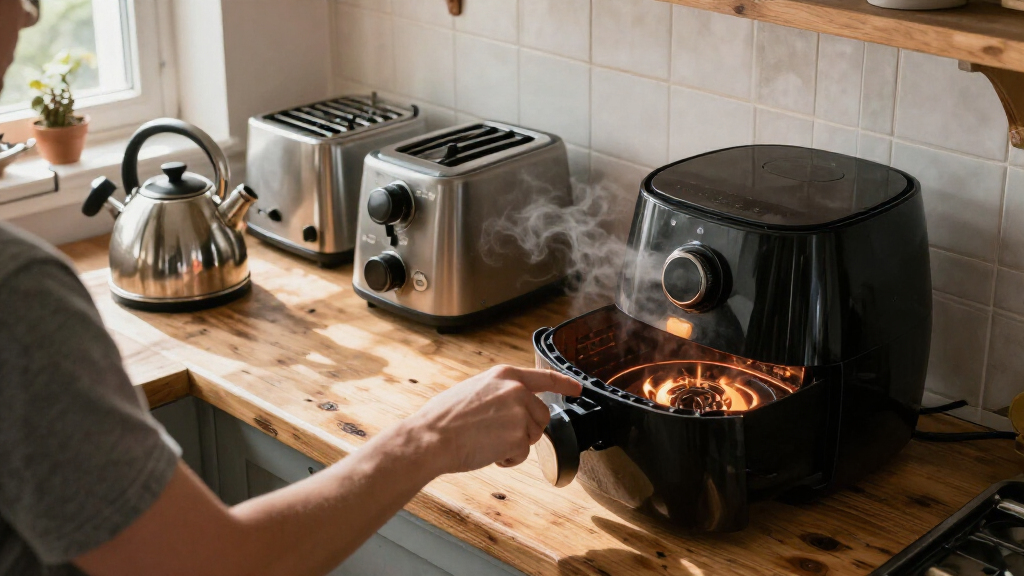
An Ideal Home report identifies tumble dryers, electric ovens, washing machines and dishwashers among appliances that can use substantial electricity, with heat-producing devices generally costing more to run. Experts quoted in the report say usage time and appliance efficiency matter, and recommend measures such as using eco settings and choosing a heat-pump dryer. The article does not provide a like-for-like cost ranking for kitchen appliances.
Ideal Home has published a guide identifying heat-producing appliances, including tumble dryers and electric ovens, as among the household devices that can use substantial amounts of electricity. The report draws on appliance power ranges and comments from two renewable-energy specialists, but it does not establish a single ranking of kitchen appliances by annual cost.

Get cleaning gear delivered free with Prime
- Fast, free delivery on millions of items
- Prime Video, Amazon Music and more included
- Member-only deals all year
The report lists tumble dryers at roughly 2 to 5.5 kilowatts, electric ovens at about 2 to 4 kilowatts, washing machines at 0.3 to 2.1 kilowatts and dishwashers at around 0.5 to 1.5 kilowatts. These figures describe power use, not the electricity consumed by every cycle or the cost of operating a particular model. Actual use depends on appliance design, settings, cycle length and frequency.
Manan Shah, co-founder of UK solar and battery installer Solar4Good, told Ideal Home that devices which make heat tend to drive bills, pointing to tumble dryers, electric ovens, electric showers and immersion heaters. He said a kettle draws considerable power but is typically used for only a short time, so boiling only the required amount can matter more than avoiding it.
Martyn Fowler, founder of Elite Renewables, gave a heating example rather than a kitchen-appliance comparison: a 2,000-watt electric heater operating for five hours uses 10 kilowatt-hours. He estimated that repeating this every evening could cost about £75 a month, based on the rate assumptions in his example. Fowler also said phone charging generally costs little over a year and that a 10-watt LED bulb used for five hours consumes 0.05 kilowatt-hours.
How Appliance Use Affects Bills
The report’s main practical point is that power rating alone does not determine running cost. A high-powered appliance used briefly may consume less electricity than a lower-powered device operating for hours. For households trying to reduce bills, how often and how long an appliance runs can matter as much as the appliance category.
That distinction can help readers prioritize changes. Shah’s kettle example and Fowler’s electric-heater calculation show why duration and routine matter: a short burst of high power is not directly comparable with repeated or prolonged use. The article also advises looking first at frequently used equipment rather than focusing on small loads such as phone chargers.
The guidance is relevant as households prepare for winter, when heating and laundry needs can rise. But the report does not calculate savings for a typical household or show that replacing any specific appliance will reduce a bill by a particular amount. Its recommendations are general and depend on the existing model, household habits and electricity tariff.
Products Worth Considering

Shark Pet Cordless Stick Vacuum, 40-Minute Runtime, Lightweight, IX141

Coway Airmega AP-1512HHS Smart Air Purifier, Black

TCL 55-Inch T7 Series 4K QLED Smart Google TV, 55T7
As an affiliate, we earn on qualifying purchases.
The Report’s Price-Cap Reference
Ideal Home frames its advice around winter household spending and refers to predictions from British Gas, EDF and E.ON that the January 2027 energy price cap could rise by 28%. That figure is presented as a forecast in the source article, not as an announced or confirmed price-cap change. The report does not give the underlying forecast details or establish how the potential change would affect individual bills.
The article asks industry experts about which appliances use energy and what households can do to limit consumption. It groups devices by approximate power ranges and adds advice on operating habits. Those figures are not a controlled comparison: they do not specify a common usage period, model, tariff or test method for each appliance.
Fowler recommends using washing-machine and dishwasher eco settings, which he says typically use less electricity and water despite taking longer. For tumble dryers, he advises spinning more water out of laundry before drying and says heat-pump models are generally cheaper to run. The report also suggests investigating a cold room’s underlying heat loss if an electric heater is being used regularly.
“A 2,000-watt heater running for five hours will use 10kWh of electricity.”
— Martyn Fowler, founder of Elite Renewables, quoted by Ideal Home
What the Figures Do Not Show
The listed kilowatt ranges do not show the cost of a typical cycle or rank appliances by annual household spending. The report does not specify the models, test conditions, usage frequency or electricity price behind each range, so readers cannot use the figures alone to calculate their own costs.
The predicted 28% price-cap rise is also not confirmed in the source; it is attributed to supplier predictions, with no supporting methodology or timing details beyond January 2027. The report does not establish whether that forecast has since changed.
Actual consumption and savings from eco settings or heat-pump dryers will vary by appliance and household. The article supplies general expert advice, not measured results for named products or a guarantee of lower bills.
Practical Steps for Households
For readers acting on the report, the suggested first step is to identify appliances used often or for long periods, then check their energy labels, manuals and available consumption information. Comparing models on a consistent basis—such as energy use per cycle—would be more useful than relying on power ranges alone.
Fowler’s advice is to use washer and dishwasher eco programmes, remove more water from laundry before drying and consider a heat-pump dryer when replacing an old machine. Households using portable electric heaters frequently can also examine why a room stays cold, while taking appropriate professional advice for building work or heating-system changes.
The source article does not announce a new government decision or a scheduled follow-up. The price-cap forecast remains a prediction in the report; any actual cap change would need to be confirmed through official announcements. Readers should base immediate bill calculations on their own tariff and appliance use.
Key Questions
Which kitchen appliances does the report identify as high energy users?
Ideal Home lists tumble dryers, electric ovens, washing machines and dishwashers among appliances with notable power ranges. It says heat-producing appliances generally use more energy, but does not provide a definitive ranking by annual cost.
Do the kilowatt figures show what an appliance costs per use?
No. The figures describe approximate power ranges, not the cost or total electricity used for a typical cycle. Cost depends on duration, settings, appliance efficiency, frequency of use and the household’s tariff.
What does the report recommend for reducing appliance use?
Martyn Fowler recommends using eco settings on washing machines and dishwashers, spinning more water out of clothes before tumble drying, and considering a heat-pump dryer when buying a replacement. He says eco cycles usually use less electricity and water, although they take longer.
Is a 28% energy price-cap rise confirmed?
No. Ideal Home describes a 28% rise for January 2027 as a prediction based on energy-supplier forecasts. The source does not present it as an official, confirmed change.
Source: idealhome.co.uk