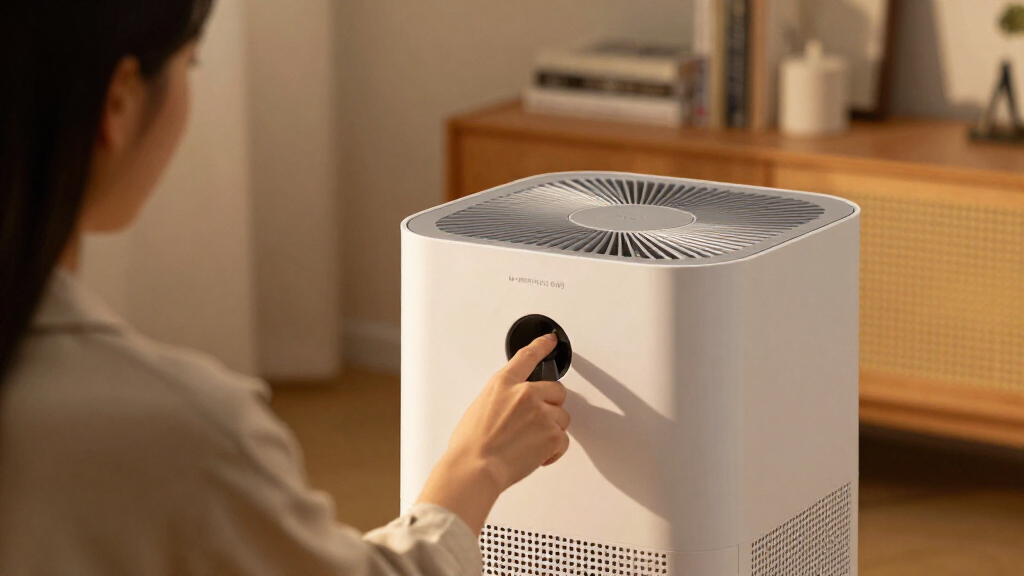

WESTHEY AP02 H13 HEPA Air Purifier for Rooms up to 1,650 Sq
- ✔ Model: AP02
- ✔ Filter: H13 HEPA
- ✔ Particle capture: 99.98% of 0.3-micron particles

Get cleaning gear delivered free with Prime
- Fast, free delivery on millions of items
- Prime Video, Amazon Music and more included
- Member-only deals all year
Why This Product Stands Out
The AP02 stands out through its combination of filtration, feedback, and automation. An H13 HEPA filter is its central air-cleaning feature, while the PM2.5 display gives users a visible reference for current air quality. Auto mode links that information to fan adjustment, which can reduce the need to change settings whenever conditions shift. This package is more informative and hands-off than a basic purifier with only manual speed controls. Its stated coverage reaches up to 1,650 square feet, an ambitious figure for a home unit. That number should not be read as proof of fast, thorough cleaning across a space of that size: the supplied specification says six air changes per hour in 275 square feet, and gives no matching air-change rate for the maximum area. For a buyer focused on a large open-plan room, that distinction matters more than the headline coverage. For a bedroom or moderate living area, the AP02’s display and auto mode may be more useful in daily life than a maximum-area claim. The remaining extras place it in a feature-rich mid-range tier. Quiet sleep mode, timers, ambient lighting, and an aromatherapy pad make it adaptable to bedroom routines, though lighting and scent are personal preferences rather than core filtration advantages. Compared with simpler units, it offers more control and feedback; compared with a buyer’s need for verifiable large-room performance or long filter life, its specifications leave questions open.Key Features and What They Mean
H13 HEPA filtration is the feature most likely to matter to buyers concerned about fine airborne particles. The stated capture rate is 99.98% for particles measuring 0.3 microns, giving allergy-conscious households a specific filtration benchmark to compare. That can offer more confidence about what the filter is designed to capture, though it does not show how quickly the purifier cleans a particular room; room size and air-change performance still determine the practical result.
The PM2.5 display and auto mode are useful for households whose indoor air conditions vary through the day. The display makes changes in fine particulate levels visible, such as after cooking or cleaning, while auto mode can adjust the fan without requiring someone to monitor and change settings. This pairing is especially convenient for people who want a more hands-off routine. Those who prefer a fixed fan speed can still use the readout as feedback, but may get less value from the automatic adjustment.
The advertised coverage is up to 1,650 square feet, but the stated rate of six air changes per hour applies to a 275-square-foot room. Air changes indicate how often the room’s air passes through the purifier in an hour, so the smaller figure gives buyers a more useful guide to cleaning intensity. It may help someone assess a bedroom or moderate room, while buyers considering a large open-plan space should seek a room-specific rate before counting on the maximum coverage claim.
Sleep mode, three fan speeds, and timers let users match operation to the room and time of day. Sleep mode is rated as low as 15 dB, making it a promising option for light sleepers who want quieter overnight use; the three speeds provide alternatives when more airflow or less noise is preferred. The 2-, 4-, 6-, and 8-hour timers can prevent the unit from running longer than needed for a scheduled period. Ambient lighting and an aromatherapy pad offer optional atmosphere for people who enjoy those touches, though neither contributes to filtration.
The filter reminder helps users keep maintenance on their radar, which can be useful in a busy household. The recommended replacement interval is every three to six months, so the reminder does not remove the recurring task or expense. Actual timing may depend on conditions and use, and the supplied details do not establish replacement-filter pricing. Buyers expecting near-continuous operation should check filter availability and cost to understand the upkeep before purchasing.
Performance and Real-World Use
For everyday use, the AP02’s auto mode and PM2.5 readout should make operation relatively straightforward: users can monitor the displayed air quality or let the purifier change its fan setting. Three speeds also leave room for manual control when a quieter setting or stronger airflow is preferred. The available specifications do not describe setup complexity, so there is little basis for judging assembly or initial calibration.
Noise is a meaningful consideration in bedrooms, and a sleep-mode rating of as low as 15 dB suggests a low-noise setting. That figure applies to sleep mode; it does not describe sound at the higher fan speeds. Buyers who are sensitive to noise should weigh quiet overnight operation against the possibility that stronger daytime cleaning may be more audible.
Long-term convenience depends on filter upkeep and placement. Replacing the filter every three to six months is a recurring task, and the missing dimensions make it harder to plan where the unit will sit. Energy use is also not stated, so a household planning continuous operation cannot estimate electricity costs from the supplied specifications alone. These omissions do not rule out the purifier, but they make pre-purchase checks more valuable.
Who Should Buy This
The AP02 makes the most sense for someone furnishing a bedroom, home office, or shared living area who wants H13 HEPA filtration, a visible PM2.5 reading, and automatic fan adjustment in one unit. Its quiet sleep mode and timers suit people who want a purifier to run around a daily routine, while the extra lighting and aromatherapy pad may appeal to buyers who also want optional ambient features. It is a stronger fit when the room is near the stated 275-square-foot performance reference than when the purchase depends on cleaning a very large space at a known rate.Who Should Skip This
Skip the AP02 if you need confirmed air-change performance across a large open-plan area, because the available details tie six air changes per hour to 275 square feet rather than the maximum 1,650-square-foot claim. It is also a weaker fit for buyers who want minimal maintenance, since filter replacement is recommended every three to six months. If precise operating costs or a specific physical footprint are important, consider another model with published energy use, dimensions, and clearer room-by-room performance data. A Levoit pet-focused purifier may be a better comparison for buyers prioritizing pet hair and bedroom use; the KOIOS H13 with activated carbon is worth comparing when carbon filtration is a deciding feature; and the Shark NeverChange Compact Pro may suit shoppers who place greater weight on a different filter-maintenance approach.Value for Money
At a mid-range price, the AP02 is worth considering for buyers who will use its H13 HEPA filtration, PM2.5 feedback, auto mode, and quiet sleep setting in a bedroom or moderate-sized room. Those features can make everyday operation easier and more reassuring than a basic purifier, so the price is justified when monitoring and automation matter to your routine. It is less compelling if you only need straightforward air cleaning: ambient extras add convenience but not filtration performance, and the large-room claim lacks a matching air-change rate. Filter replacement every three to six months also adds recurring cost, while unspecified energy use makes total running costs hard to predict. Overall, it offers fair mid-range value for feature-focused households willing to maintain it, but buyers prioritizing low upkeep or verified large-room performance should compare alternatives before paying the premium for its feature set.WESTHEY AP02 H13 HEPA Air Purifier for Rooms up to 1,650 Sq
The AP02 stands out through its combination of filtration, feedback, and automation . An H13 HEPA filter is its central air-cleaning feature, while the PM2.5 display gives users a visible reference for current air quality.
Pros:
- H13 HEPA filtration is specified to capture 99.98% of 0.3-micron particles, giving allergy-conscious households a clear filtration target.
- The PM2.5 display makes air-quality changes visible, while auto mode can adjust fan operation without constant manual input.
- Sleep mode is rated as low as 15 dB, which suits bedrooms and other spaces where fan noise can disrupt rest.
- Three fan speeds and four timer settings offer straightforward control for scheduled or short-term use.
- Ambient lighting and an aromatherapy pad add optional atmosphere features for buyers who value them alongside air cleaning.
Cons:
- The large 1,650-square-foot coverage figure is not paired with an air-change rate; the stated six changes per hour applies to 275 square feet, making room-size expectations harder to judge.
- A recommended filter interval of three to six months means recurring upkeep and replacement purchases that can affect long-term value.
- Dimensions are not provided, so it is harder to determine whether the unit will fit a particular shelf, corner, or bedside space.
- Energy consumption is unspecified, leaving ongoing electricity use difficult to compare with alternatives.
Best for: Households seeking a versatile purifier for a bedroom or shared living space, with automatic adjustment, air-quality feedback, and quiet sleep mode.
Not ideal for: Buyers who need clearly documented performance for a large room, low-maintenance filters, or published dimensions and energy use before purchasing.
Bottom line: The WESTHEY AP02 is worth buying for a buyer who wants a feature-rich purifier for a bedroom or moderate-sized room , values air-quality feedback, and expects to use auto mode and quiet sleep operation.
Frequently Asked Questions
Can the AP02 clean a room as large as 1,650 square feet?
The product lists coverage up to 1,650 square feet, but the supplied six-air-changes-per-hour figure applies to 275 square feet. If you need a known cleaning rate across a large room, ask for room-specific performance details before relying on the maximum coverage figure.
Is the AP02 suitable for a bedroom?
It has a sleep mode rated as low as 15 dB, plus timers and auto mode, which make bedroom use a reasonable fit. The rating applies to sleep mode; higher fan speeds may produce more noise.
How often does the filter need replacing?
The stated recommendation is every three to six months. Check replacement-filter availability and cost before buying, since frequent use can make filter upkeep a meaningful part of the overall value.
Does the AP02 remove odors?
The supplied specifications identify an H13 HEPA filter and an aromatherapy pad, but do not list an activated carbon filter or provide an odor-removal claim. If odor control is a priority, compare it with a purifier that clearly specifies carbon filtration.
Is auto mode necessary if I can set the fan manually?
No. Auto mode is a convenience for buyers who want the purifier to respond to the displayed PM2.5 level without frequent adjustments. Manual speed selection and timers provide simpler alternatives if you prefer fixed operation.