
TL;DR

Get cleaning gear delivered free with Prime
- Fast, free delivery on millions of items
- Prime Video, Amazon Music and more included
- Member-only deals all year
A Family Handyman report lays out the upfront and ongoing costs of under-sink reverse osmosis systems, from a few hundred dollars to more than $1,000 before installation. The report says filters and membranes need periodic replacement and water waste varies widely by model; whether the system is worth buying depends on household water concerns, usage and budget.
Family Handyman has published a cost breakdown of under-sink reverse osmosis (RO) filters, finding that systems can cost a few hundred dollars to more than $1,000 before professional installation and ongoing maintenance. The report says the value depends on a household’s water concerns and use, while noting that water waste and replacement parts add to the cost over time.
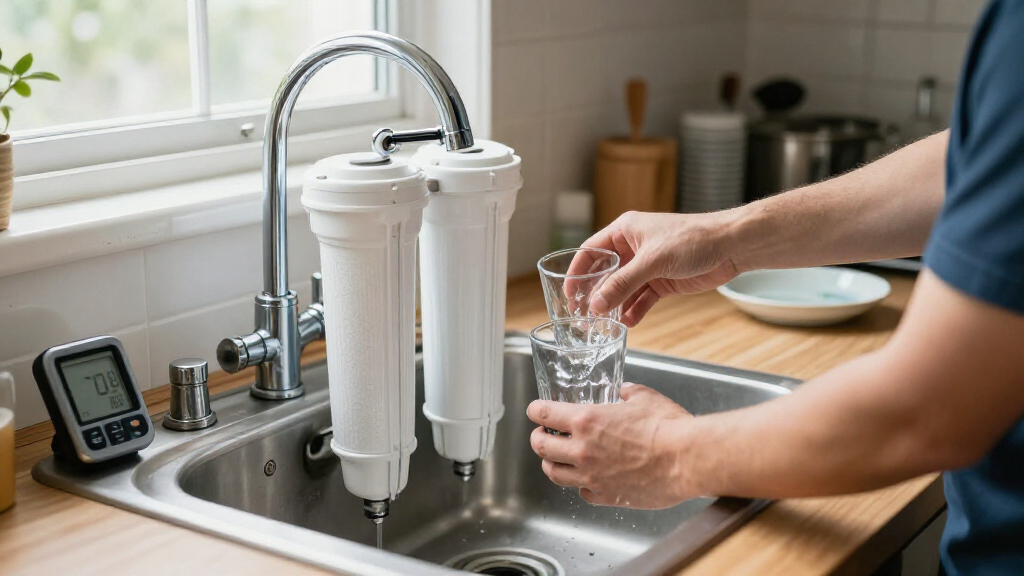
The report describes RO systems as multi-stage filters that send water through a membrane before delivering treated water from a separate faucet. The article says these systems can reduce a range of substances, but the performance depends on the particular system and the contaminants in the water. It does not provide independent test results for every product or establish that every system removes every listed substance.
Purchase prices range from a few hundred dollars to over $1,000, according to the report. Homeowners with basic plumbing skills may install some systems themselves, though the work can involve drilling a countertop. Professional installation generally costs more than $300, with possible extra charges for refrigerator connections, leak protection, electrical outlets or plumbing changes.
Recurring expenses include replacement filters, listed at $30 to $100 every six to 12 months, and RO membranes, at $25 to $60 every couple of years. The report also estimates about $20 a year for tank sanitizing. It says water waste ranges from one-half to four gallons for each gallon produced, depending on the system; electricity use is described as modest for models that require power.
The Costs Beyond the Purchase
The price on the box is only part of the decision. Installation, replacement components and water use can change the total cost, while the benefit depends on whether an RO system addresses a household’s actual water-quality needs. A family that regularly buys bottled or jugged water may also weigh convenience and reduced reliance on purchased water against the system’s upfront and upkeep costs.
Water waste is a major variable in the report’s estimates. For a household using five gallons of RO water a day, it estimates that roughly 500 to 8,500 gallons could be sent to the drain over a year, depending on the system. That wide range means readers should check a product’s stated efficiency and compare it with local water charges, rather than assume all RO systems have the same operating cost.
Products Worth Considering

Blueair Blue Pure 511i Max Air Purifier for Home and Bedroom

Samsung 42-Inch Class OLED S90F 4K Smart TV (2025)

Dreame L50 Ultra Robot Vacuum and Mop
As an affiliate, we earn on qualifying purchases.
How the Report Assesses RO Systems
The article is part of Family Handyman’s consumer series, “The Upgrade,” and draws on comments from water filtration and plumbing specialists, as well as people who use RO systems. Its author describes switching from purchased water to an under-sink unit after living in places with reported water concerns, including a sewage incident, arsenic concerns and well-water contamination concerns. Those experiences are personal accounts, not a general finding about municipal or well water.
The report says a quality system may last 10 years or longer with proper maintenance. Plumbing expert Danielle Smith says components such as filters, membranes, faucets and tanks can be replaced individually, though she says replacement of an older system may make more sense than repeated repairs. The article also mentions alternatives, but the supplied material does not include enough detail to compare their prices or performance.
““Many parts, including filters, membranes, faucets and tanks can be replaced individually.””
— Danielle Smith, plumbing expert
What the Cost Estimates Leave Open
The estimates do not establish the total lifetime cost for a typical household. Prices vary by model, water use, installation needs and local utility rates, and the report does not provide a single average cost or a standardized comparison across brands. It also does not quantify the financial value of reduced bottled-water purchases.
Water quality is household-specific. The supplied report does not include local water test results, product-by-product certification details or a full comparison of RO with the alternatives it names. Its claims about contaminant removal and safety should not be read as proof that every RO product treats every contaminant effectively. Readers still need to identify what is in their water and check whether a particular system is rated for those substances.
Check Water and Model Costs
Before buying, households can review available local water-quality information or arrange testing when they use a private well or have a specific concern. They can then check a system’s certifications and contaminant claims, compare its water-use ratio, and price replacement filters and membranes. Homeowners unsure about countertop drilling, plumbing connections or electrical requirements can seek professional installation estimates.
The report does not announce a new product, policy or follow-up test. Its practical next step for prospective buyers is to compare the full costs and product specifications against their own water concerns; the source material provides no later milestone or further reporting date.
Key Questions
How much does an under-sink reverse osmosis system cost?
Family Handyman reports prices from a few hundred dollars to more than $1,000. Professional installation generally costs more than $300, before possible add-ons or plumbing changes.
What are the ongoing maintenance costs?
The report estimates $30 to $100 for filters every six to 12 months, $25 to $60 for a membrane every couple of years, and about $20 a year for tank sanitizing. Actual expenses vary by model.
How much water can an RO system waste?
According to the report, systems send between one-half and four gallons to the drain for each gallon of treated water produced. The amount depends on the unit, so buyers should check model-specific specifications.
Is an RO filter worth it for every household?
The report does not say it is right for everyone. Its value depends on a household’s water-quality concerns, water use, installation needs, local costs and the price of alternatives such as purchased water.
Source: rss