
TL;DR
House Beautiful’s fall decor report describes “cushcore” as a designer-led preference for plush, inviting seating and tactile materials, balanced with considered layouts. Designers say the look can be created without buying a new sofa, but the report does not establish how widely the trend is spreading among households.
Interior designers interviewed by House Beautiful are describing “cushcore” as a fall decor look built around plush seating, tactile fabrics and warm lighting. The report presents it as an approach to making rooms feel comfortable yet polished, not as a measured surge in home makeovers or furniture sales.

Get cleaning gear delivered free with Prime
- Fast, free delivery on millions of items
- Prime Video, Amazon Music and more included
- Member-only deals all year
The report contrasts the look with recent preferences for sleek, low-slung sofas, describing cushcore’s central piece as a substantial, deeply cushioned sofa. Los Angeles- and Minnesota-based designer Julia Newman connects the style to the layered, rounded furniture popular in the 1990s, while arguing that comfort itself is not tied to a particular era.
McLean, Virginia, designer Tracy Morris says a room should feel refined without becoming too precious to use. She advises balancing an attention-grabbing sofa with proportion and restraint, rather than filling every corner or surface. Smaller homes can adapt the idea with a stuffed armchair, including in a dining space or home office.
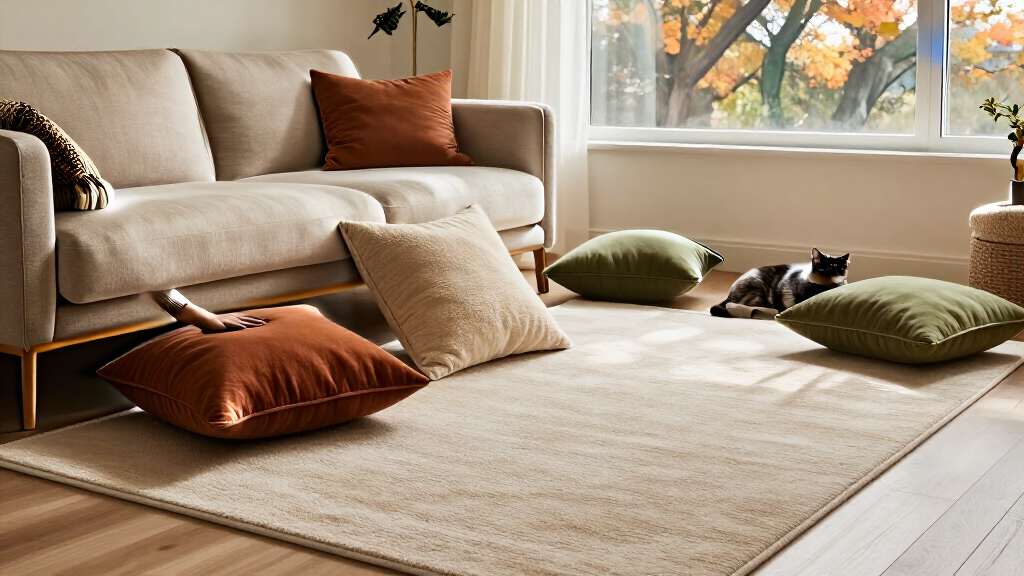
Designers also point to durable upholstery and varied textures as ways to achieve the effect. Morris recommends washable velvet options, while HollandGreen designer Tori Young suggests keeping the palette to about three colors and mixing materials such as velvet, linen and wool. Warm wood, rugs with substantial pile and layered lighting can add comfort without making the room look overly upholstered.
Comfort Without a Full Redesign
The advice matters to readers because it frames cushcore as a set of choices rather than a requirement to replace a living room. A single upholstered ottoman, armchair or rug may bring in some of the same softness, while using what is already in the room can keep costs down.
The designers’ cautions also address a practical trade-off: oversized seating can make a small room feel crowded, and delicate materials can demand frequent care. Their emphasis on scale, durable fabrics and a limited color scheme gives readers a way to pursue a cozy look while keeping the space usable. These are recommendations from the designers quoted, not evidence that the style suits every home or budget.
Products Worth Considering

Philips Hue Amarant Outdoor Smart Light Bar, Black

Philips Hue Play Gradient Light Tube, Large, Black

Levoit Vital 100S-P Air Purifier with Washable Pre-Filter
As an affiliate, we earn on qualifying purchases.
From Sleek Sofas to Soft Seating
House Beautiful situates cushcore against a period of interest in streamlined, low-profile sofas and midcentury-inspired seating. Newman likens the newer preference for plumper furniture to the rounded sofas seen in 1990s television interiors, including the sets of Friends, but says welcoming rooms are not bound to a decade.
Young describes comfort at home as especially appealing during uncertain times, when people may want their spaces to feel personal and secure. That is her interpretation of the mood behind the look; the supplied report includes no survey, sales figures or broader market data to confirm how common the preference is.
““Inviting, comfortable environments never go out of style.””
— Julia Newman, interior designer
How Broad Is the Trend?
The report does not provide sales data, survey results or adoption figures, so it cannot establish that cushcore is “taking over” homes or show how many households are following it. The phrase is presented as a design label used by the article and its interviewed designers, not as a formally tracked industry category.
It is also unclear how the look will change across different room sizes, climates, budgets and household needs. The article offers styling recommendations, but does not compare furniture costs, test fabric performance or report whether retailers are seeing increased demand for oversized seating.
Practical Choices for Fall Rooms
For readers considering the look, the designers’ guidance points first to measuring the room and choosing seating in proportion, then building softness through a restrained mix of fabrics and warm accents. A new sofa is not presented as essential: a chair, a textured rug, an upholstered ottoman or warmer bulbs can make a smaller change.
The source offers no scheduled follow-up, market forecast or next industry milestone. Whether cushcore becomes a sustained furniture trend, rather than a seasonal design preference described by the interviewed experts, remains to be seen.
Key Questions
What does “cushcore” mean?
Cushcore is the label House Beautiful uses for a comfortable, polished decor approach centered on plush seating, tactile fabrics and warm details. The report does not identify it as a formally measured industry category.
Do I need to buy a new sofa to get the look?
No. The designers say a well-stuffed armchair, upholstered ottoman, textured rug or layered lighting can introduce some of the same qualities without replacing a sofa.
How can I keep plush furniture from overwhelming a room?
Morris recommends paying attention to proportion and restraint. Pair substantial seating with more tailored pieces, leave space around furniture and avoid filling every corner.
Which materials and colors do the designers recommend?
Young suggests limiting the palette to about three colors and combining tactile materials such as velvet, linen and wool. Morris favors durable, forgiving upholstery and mentions washable velvet options.
Is cushcore proven to be a widespread fall trend?
The supplied report does not include survey or sales evidence showing how widely households are adopting it. It reports the views and recommendations of interior designers.
Source: rss