TL;DR

Get cleaning gear delivered free with Prime
- Fast, free delivery on millions of items
- Prime Video, Amazon Music and more included
- Member-only deals all year
An Ideal Home report says tightly packed wardrobes and drawers can restrict airflow, allowing moisture to build up and potentially contribute to condensation, damp and mould. Professional organisers recommend leaving room between clothes, improving ventilation and checking behind large furniture; the report does not present new testing or quantify the risk.
An Ideal Home report warns that tightly packed wardrobes and drawers can restrict airflow and trap moisture, potentially contributing to condensation, damp and mould in bedrooms. Professional organisers quoted in the report recommend leaving space between clothes, keeping rooms ventilated and checking behind large furniture, particularly during the colder months.
Shannon Murphy, professional organiser and founder of Simpl Living Co, said that when clothes are packed tightly inside a wardrobe or chest of drawers, airflow is restricted and moisture can become trapped. The report says this may raise humidity in the enclosed space and contribute to condensation and damp, which can lead to mould. It does not provide measurements or research quantifying how often this happens.
Kate Dufton, professional organiser and declutterer at Ace Your Space, recommends keeping a wardrobe no more than 80% full, leaving room between garments. The report suggests rotating clothes by season rather than disposing of items: out-of-season clothing can be stored elsewhere, including in vacuum bags, under a bed or in a suitcase. It also mentions drawer organisers and space-saving hangers as ways to arrange clothing and free up room.
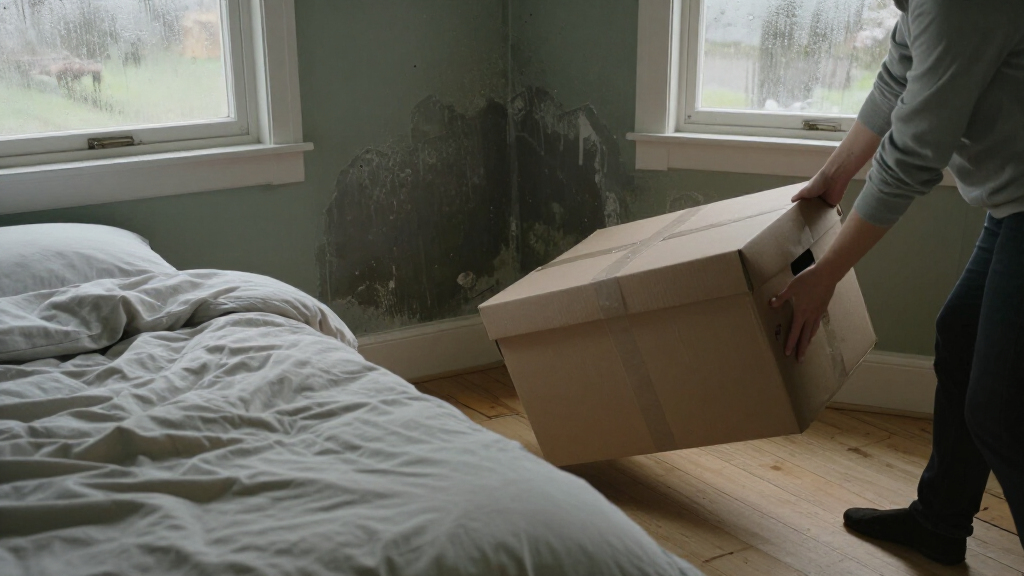
Storage position matters as well as how much a wardrobe holds. Murphy cautioned that a room can look tidy while damp develops unnoticed behind a chest of drawers or wardrobe. Large furniture placed flush against a cold external wall can restrict circulation and make condensation or mould harder to spot, she said. The report advises leaving a gap where possible, ventilating the room and checking concealed areas occasionally.
How Wardrobe Airflow Affects Bedrooms
The advice matters because wardrobes and drawers can conceal moisture problems, while bulky furniture may hide early signs on a wall. In bedrooms, where large items may remain in one place for long periods, a lack of airflow can make it harder to notice damp until it has developed. The report links the risk to autumn and winter, when homes are used differently and people bring out thicker clothing, but does not claim that an overfilled wardrobe alone causes mould.
For renters and homeowners, the proposed steps are mostly about changing storage habits and checking the room: reduce crowding, create space around furniture and ventilate. These are preventive suggestions, not a substitute for investigating a persistent damp problem or addressing its underlying cause.
As an affiliate, we earn on qualifying purchases.
The report frames the issue around the shift to colder weather in the UK. Winter clothes take up space, and wardrobes that also hold summer items may become crowded. Its central recommendation is a seasonal clothing swap, moving clothes not currently in use to another storage area so garments in the wardrobe are less tightly packed.
It also describes moisture-absorbing products for wardrobes and bedrooms, including hanging absorbers and room dehumidifiers, as possible measures for excess moisture. The source presents these as options alongside airflow and checks, not as proof that a particular product will prevent mould. It gives no comparative test results for the products listed.
As an affiliate, we earn on qualifying purchases.
What the Report Does Not Measure
The source is a home-storage report offering expert advice, not a published scientific study. It supplies no data on the frequency of mould linked to crowded wardrobes, the level of moisture involved or how much leaving space reduces risk. The 80% figure is attributed to a professional organiser and is presented as guidance, not a tested threshold.
It is also unclear from the report how much any individual bedroom’s mould risk depends on storage density compared with other conditions, such as ventilation, heating or an underlying building defect. Moisture absorbers and dehumidifiers are mentioned, but the article gives no independent comparison of their performance. Readers with persistent damp or visible mould may need to identify the source rather than rely on storage changes alone.
As an affiliate, we earn on qualifying purchases.
Practical Checks for the Colder Months
The report recommends starting with a wardrobe check: make space between garments, consider moving seasonal items elsewhere and avoid placing large furniture tightly against cold external walls where it can be moved. It also advises keeping the bedroom ventilated and checking hidden wall areas from time to time. Where furniture is fixed or too heavy to move, the report suggests occasional wardrobe-door opening and considering a bedroom dehumidifier.
No follow-up research, official guidance or product-testing results are provided in the source. The next step for readers who find damp is to monitor whether it returns and seek appropriate advice if the problem persists; the report does not specify a diagnostic process or establish that reorganising storage will resolve existing mould.
As an affiliate, we earn on qualifying purchases.
Key Questions
Can an overfilled wardrobe cause mould?
The report says tightly packed clothes can restrict airflow and trap moisture, which may contribute to condensation, damp and mould. It does not establish that crowding is the sole cause or quantify the risk.
How full should a wardrobe be?
Professional organiser Kate Dufton recommends keeping it at a maximum of 80% full, with some space between clothes. This is advice quoted in the report, not a formal standard.
Should furniture be moved away from bedroom walls?
The report recommends leaving a gap behind large furniture where possible, especially against cold external walls, and checking the hidden area periodically. Murphy says furniture can restrict air circulation and conceal damp.
Will a dehumidifier prevent mould in a wardrobe?
The report suggests moisture absorbers or a bedroom dehumidifier as possible ways to manage excess moisture, but it provides no product-performance evidence or guarantee that these measures will prevent mould.
Source: rss
Halloween Picks
halloween
As an affiliate, we earn on qualifying purchases.