
To dispose of old robot vacuum parts responsibly, avoid tossing them in regular trash. Instead, take unused parts, especially batteries, to nearby recycling centers or collection events. Many stores and community facilities offer e-waste drop-off points. Be sure to remove batteries or hazardous materials first. Proper recycling helps prevent pollution, conserves resources, and follows local regulations. Continuing your efforts can ensure you’re making environmentally wise choices—details on how to do this effectively are just ahead.
Key Takeaways
- Do not throw robot vacuum parts in regular trash; use designated e-waste recycling facilities or collection events.
- Remove batteries and hazardous components before disposal, and recycle them separately at appropriate centers.
- Check local regulations and recycling programs for electronic waste disposal options in your area.
- Utilize manufacturer take-back programs or drop-off points at electronics stores for responsible disposal.
- Reuse or donate functional parts when possible to reduce electronic waste and promote sustainability.

When your robot vacuum parts reach the end of their lifespan, disposing of them responsibly is essential to protect the environment. Many of these components, especially batteries, contain hazardous materials that can harm ecosystems if thrown away improperly. To guarantee you’re doing your part, focus on proper electronic waste disposal and battery recycling methods. Starting with the batteries, which are often the most critical parts to recycle, you should never toss them in regular trash. Instead, look for local recycling centers or collection events that accept rechargeable and single-use batteries. Many electronics stores and community facilities offer designated drop-off points for battery recycling. Properly recycling batteries prevents the release of toxic chemicals like lead, mercury, and cadmium into the environment, reducing pollution and conserving valuable resources.
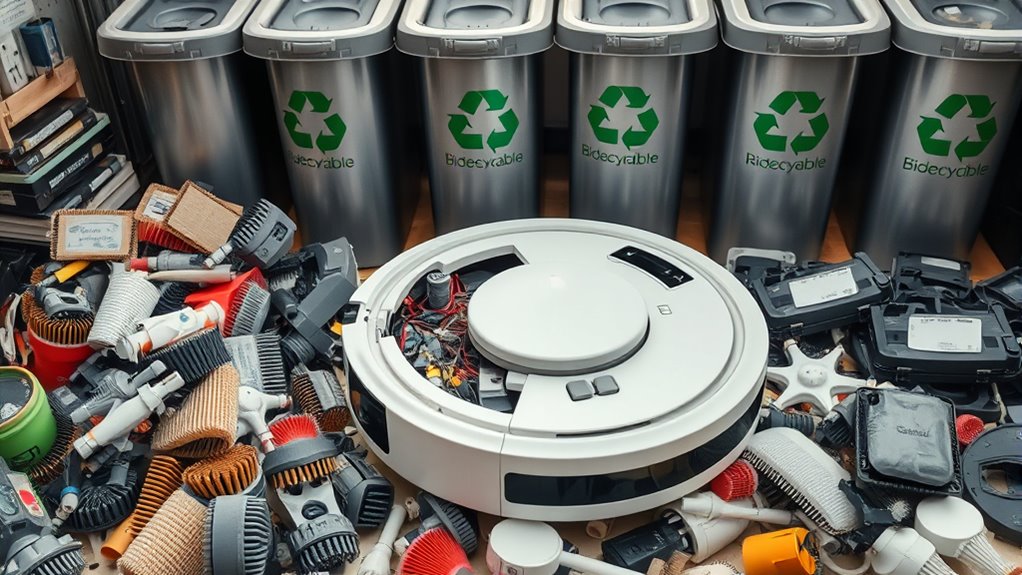
For other robot vacuum parts like plastic casings, brushes, or motors, electronic waste disposal is the way to go. You should avoid simply throwing these components in the trash, as they may contain materials that require specialized handling. Many cities have e-waste recycling programs or facilities designed to safely process electronic components. Check your local regulations or waste management services to find the nearest e-waste drop-off site. When preparing your parts for disposal, make sure to remove any batteries or hazardous materials to guarantee safe handling and recycling. Some parts can be repurposed or donated if they’re still functional, helping extend their life and minimize waste.
If you’re unsure about how to dispose of specific parts, reach out to the manufacturer or retailer for guidance. Many companies have take-back programs or partnerships with recycling centers to ensure their products are disposed of responsibly. Additionally, some organizations specialize in e-waste recycling and can handle complex components safely. Always follow local regulations and guidelines for electronic waste disposal to avoid penalties and ensure environmental safety. By taking these steps, you contribute to reducing electronic waste and support sustainable practices in electronic product management.
Frequently Asked Questions
Are Robot Vacuum Parts Hazardous to the Environment?
You might wonder if robot vacuum parts are hazardous to the environment. Some parts contain batteries with toxic materials that can leach harmful substances if not disposed of properly. Improper battery disposal can lead to soil and water contamination. To protect the environment, always follow battery disposal guidelines and recycle robot vacuum parts responsibly. Proper disposal prevents environmental damage and keeps toxic materials out of landfills.
Can I Donate Old Robot Vacuum Parts?
You can definitely donate old robot vacuum parts, especially if they’re still functional or can be repurposed. This supports eco-friendly disposal and reduces waste. Check local charities, schools, or repair shops that might need spare parts for robot vacuum maintenance. Donating helps extend the life of the parts and keeps them out of landfills. Just make sure the parts are clean and safe before donating, making it a responsible way to recycle.
What Tools Are Needed to Disassemble Robot Vacuum Parts?
Did you know that improper disassembly can release hazardous materials? To disassemble your robot vacuum safely, you’ll need basic disassembly tools like screwdrivers and pliers. Don’t forget safety equipment such as gloves and eye protection to prevent injuries. These tools help you carefully remove parts without damaging components or risking exposure to harmful substances, making the process safer and more efficient. Always prioritize safety to handle your robot vacuum responsibly.
How Long Do Robot Vacuum Batteries Typically Last?
You’ll find that robot vacuum batteries usually last between one to three years, depending on usage and model. Keep an eye on the battery lifespan, as performance drops over time. It’s wise to follow the replacement schedule recommended by the manufacturer to maintain efficiency. When the battery no longer holds a charge well, it’s time to replace it, ensuring your robot vacuum continues to clean effectively.
Are There Specific Recycling Programs for Electronic Parts?
You should check if there are e waste collection programs or recycling centers nearby. Many communities offer specialized recycling services for electronic parts, including robot vacuum components. By taking your old parts to these centers, you guarantee they’re disposed of responsibly, preventing environmental harm. Look for local e waste collection events or certified recycling centers that accept electronic waste, so you can do your part in reducing e waste and supporting sustainable practices.
Conclusion
Just like passing a torch, responsibly disposing of your robot vacuum parts guarantees they don’t end up in landfills, polluting the earth. Imagine your old parts as tiny puzzle pieces—each one fitting into a bigger picture of sustainability. By recycling or donating, you’re not just clearing space; you’re contributing to a cleaner planet. So next time you upgrade, remember: every responsible disposal is a step toward a healthier, greener future for everyone.