
To protect privacy in camera-based mapping, you should use data anonymization methods like blurring faces and license plates to prevent individual identification. Make sure you inform people about data collection and obtain their explicit consent, allowing them to withdraw if needed. Combining these approaches helps balance detailed mapping with privacy rights. If you want to learn how to implement these protections effectively and stay compliant, there’s more to explore beyond this summary.
Key Takeaways
- Implement data anonymization techniques like blurring faces and license plates to prevent personal identification.
- Obtain explicit user consent and provide clear information about data collection and usage.
- Use real-time processing to minimize stored data and reduce privacy risks.
- Establish strict access controls and secure storage practices for collected visual data.
- Continuously improve privacy measures and ensure compliance with relevant regulations and standards.

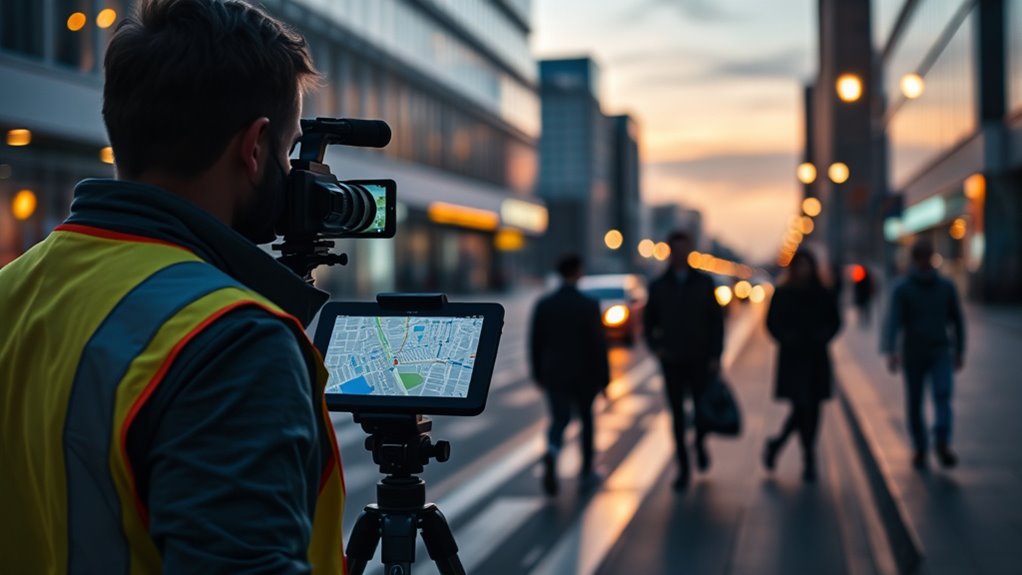
Have you ever wondered how camera-based mapping systems balance the need for detailed spatial data with the right to privacy? It’s a complex challenge. These systems gather extensive visual information to create accurate maps, but they also risk capturing personal details, raising serious privacy concerns. To address this, developers and operators implement strategies like data anonymization and consent management to protect individuals’ privacy while still delivering valuable mapping services.
Data anonymization plays a fundamental role in safeguarding privacy. When cameras record environments, they often capture faces, license plates, or other identifiable features. Instead of storing raw images that could compromise personal identities, the data undergoes anonymization processes. These techniques blur, pixelate, or mask sensitive details, ensuring that individual identities can’t be discerned from the stored data. By removing or obscuring personal identifiers, anonymization strikes a balance—allowing the system to analyze spatial features and generate accurate maps without exposing private information. This process isn’t just a technical convenience; it’s a necessary step to comply with privacy regulations and build trust with users and the public.
Anonymization blurs or masks sensitive data, protecting identities while enabling accurate mapping.
Alongside data anonymization, effective consent management is essential. When deploying camera-based mapping systems, especially in public or semi-private spaces, it’s important to inform individuals about data collection practices. Clear, transparent communication helps users understand what data is being collected, how it will be used, and their rights regarding that data. Consent management systems enable operators to obtain explicit permission before capturing images or videos. They also provide mechanisms for individuals to withdraw consent or request data deletion, empowering people to maintain control over their personal information. This proactive approach not only aligns with legal requirements but also demonstrates respect for individual privacy, fostering trust and acceptance of the technology.
Achieving privacy protection in camera-based mapping isn’t just about technical fixes; it involves establishing a framework that respects privacy rights at every stage. Combining data anonymization with robust consent management creates a system that is both effective in mapping and considerate of personal privacy. This integrated approach helps operators navigate the delicate balance between data utility and privacy protection. As technology advances, continuous improvements in anonymization techniques and transparent consent processes will be imperative. For instance, incorporating real-time data processing can enhance privacy by minimizing stored data and reducing potential exposure. By prioritizing these strategies, you can ensure that camera-based mapping serves its purpose without compromising the privacy of those captured within its scope.
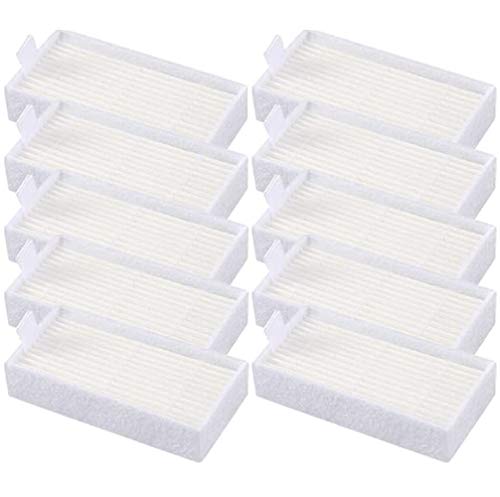
10pcs HEPA Filters Replacement for ILIFE V3s V3s pro V5 V5s V5s Pro V5s Pro 2 V5s Plus Noisz S5 Robotic Vacuum Cleaner ILIFE V3s pro Filters ILIFE Robot Vacuum Filter
- Compatible with Various ILIFE Models: Fits V3, V3s, V5, V5s, Pro versions
- High-Quality Filter Material: Made of efficient, durable filter material
- 100% Compatible with Original Filters: Ensures perfect fit and performance
As an affiliate, we earn on qualifying purchases.
Frequently Asked Questions
How Do Privacy Laws Vary Across Different Countries?
You’ll find that international regulations differ widely; some countries have strict privacy laws, while others are more lenient. Cultural differences shape these rules, affecting how camera-based mapping is regulated and accepted. You need to stay informed about each country’s laws, as what’s legal in one place might breach privacy in another. By understanding these variations, you can better navigate compliance and respect local privacy expectations when working globally.
What Are the Technical Limitations of Current Privacy Protections?
Think of privacy protections as a fragile shield—you might think it’s foolproof, but obfuscation techniques and anonymization challenges reveal cracks. Current measures often struggle to fully anonymize data, leaving room for re-identification. Technical limitations include difficulty in balancing data utility with privacy, and evolving technology makes it hard to stay ahead. So, while protections improve, they still fall short of guaranteeing complete privacy.
How Can Users Opt Out of Camera-Based Mapping Data Collection?
You can opt out of camera-based mapping data collection by using user controls provided by the app or service. Check for privacy settings that allow you to disable camera access or data sharing. Additionally, guarantee that data anonymization is enabled, which helps protect your identity. Regularly review privacy options and updates, so you maintain control over your data and prevent your images from being used without your consent.
Are There Ethical Concerns Beyond Legal Compliance?
You might wonder if there’s more at stake than just following laws. Ethical concerns, like ensuring informed consent and effective data anonymization, matter deeply. Imagine your neighborhood captured without your permission, even if the data is anonymized. This raises questions about respect, trust, and fairness. Beyond legal compliance, you’re challenged to contemplate whether your actions honor individual rights and foster transparency, shaping a responsible approach to camera-based mapping.
What Future Technologies Might Improve Privacy in Mapping?
Future technologies could substantially improve your privacy in mapping by using advanced privacy enhancing techniques and anonymization methods. These innovations might include real-time data masking, AI-driven blurring, or secure multi-party computation, ensuring your personal information stays protected. As these technologies develop, you’ll benefit from more secure, private mapping experiences that respect your privacy while still providing accurate, useful data for navigation and analysis.

Filter Replacement for iRobot Roomba e, i and j Series i7 i7+/plus i3 i3+ E5 E6 E7 i4 i6 i6+ i8 i8+ Robot Vacuum Cleaners parts, 9 Pack High Efficiency 4639161 Filters
- Compatible with Roomba E, I, J Series: Fits various Roomba models including i7, i3, i6, i8, and J series
- High Efficiency Filtration: Filters 99.9% of dust, pet hair, and particles
- Effective Particle Capture: Captures particles as small as 0.3 microns
As an affiliate, we earn on qualifying purchases.
Conclusion
Just like Odysseus navigated treacherous waters with caution, you must tread carefully when mapping with cameras. Protecting privacy isn’t just about avoiding storms; it’s about respecting the unseen, much like Homer’s heroes honored the gods. By implementing thoughtful safeguards, you ensure your mapping journey remains ethical and secure. Remember, in this digital odyssey, safeguarding privacy is your guiding star—leading you safely through uncharted territories.

iRobot Roomba 415X Robot Vacuum & Mop Combo, 2.3X Suction, 90 Days Self-Emptying, Multifunction Dock Self-Cleaning & Hot Dry, Smart Obstacle Avoidance, Lifting Spinning Mops, Ideal for Pet Hair
- Powerful Suction: 20,000Pa for deep cleaning
- Combined Vacuum & Mop: Vacuum and mop in one run
- Self-Emptying Dock: 90 days of maintenance-free operation
As an affiliate, we earn on qualifying purchases.

iRobot Roomba 505X Robot Vacuum & Mop Combo, 70x More Suction, Multifunction Dock, 75 Day Self-Emptying, Self-Cleaning & Hot Dry, Lifting Spinning Mop Pads, AI Obstacle Avoidance, Ideal for Pet Hair
- Deeper Clean with Advanced Technology: Cleans corners and walls thoroughly
- Self-Emptying AutoWash Dock: Empties debris for 75 days
- Refreshed Mop Pads: Washes and heats pads for fresh mopping
As an affiliate, we earn on qualifying purchases.