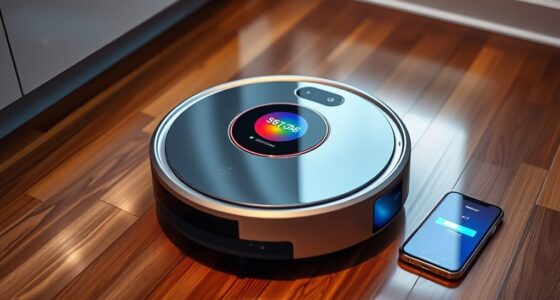
The future of smart home integration is set to become more intuitive and personalized, with robots serving as central platforms that connect and automate devices seamlessly. Voice control and AI will anticipate your needs, adjusting lighting, temperature, and routines automatically. Advanced robots will coordinate multiple tasks, enhancing convenience and efficiency. As privacy concerns grow, smarter security measures will protect your data while still offering a smooth experience. Keep exploring to discover how these innovations will transform your living space.
Key Takeaways
- Robots will serve as central platforms, integrating multiple smart home devices for seamless automation and control.
- AI-enabled robots will personalize routines based on user preferences and behaviors, enhancing convenience.
- Future robots will coordinate with voice assistants for intuitive, hands-free management of home systems.
- Privacy and security measures will evolve to protect data as robots handle increasingly sensitive home information.
- Robots as platforms will enable complex, automated routines across devices, creating smarter, more responsive living environments.

The future of smart home integration is poised to transform the way you live by making your environment more intuitive, efficient, and responsive. Imagine walking into your home and having it automatically adjust the lighting, temperature, and even play your favorite music—all through simple voice commands. Voice control is becoming the central interface for managing your smart devices, offering a seamless and hands-free experience. Instead of fiddling with apps or switches, you speak, and your home responds instantly. This convenience is a significant step forward, but it also raises important privacy concerns. When you use voice assistants like Alexa, Google Assistant, or Siri, you’re sharing more than just commands—you’re trusting these systems to handle sensitive information. That data can be stored, analyzed, and potentially accessed by third parties, which makes privacy a top priority for many users. As smart home tech advances, companies are working harder to implement robust security measures, but the risk of breaches or unauthorized access remains. You need to stay vigilant about what you share and how your devices are protected.
Looking ahead, the integration of voice control will become even more sophisticated, with AI learning your routines and preferences to anticipate your needs. The system might recognize your voice and adjust settings based on who’s home, offering a personalized experience that feels almost like having a dedicated assistant. This intelligent adaptation will make managing your smart home effortless, but it also emphasizes the importance of privacy safeguards. You’ll want to ensure your voice data isn’t stored longer than necessary and that your devices are encrypted. Manufacturers are increasingly offering customizable privacy settings, giving you control over what information is collected and stored. Additionally, advancements in home automation technology will enable the creation of more complex routines that seamlessly coordinate multiple devices, enhancing convenience and efficiency.
Furthermore, as smart homes become more interconnected, voice control will extend beyond simple commands to include complex routines, such as coordinating multiple devices with a single voice prompt. Imagine saying, “Good night,” and having your home lock the doors, turn off lights, and set the alarm—all automatically. This interconnectedness enhances convenience but puts a spotlight on data security and privacy. You’ll need to stay informed about how your devices handle your data, and you should regularly update privacy settings to keep your information secure. As the technology matures, expect innovations that balance seamless voice control with stronger privacy protections, giving you the best of both worlds. The future promises smarter, more intuitive homes, but it also requires you to be proactive in safeguarding your privacy while enjoying the benefits of automation.
Frequently Asked Questions
How Secure Are Robot Platforms for Smart Home Data?
Robot platforms for smart homes generally offer good security, but your data’s safety depends on proper measures. They use data encryption to protect your information during transmission and storage, making it harder for hackers to access. Additionally, robust user authentication ensures only authorized users control your devices. Stay vigilant by keeping firmware updated and using strong passwords to maximize security and safeguard your smart home data effectively.
Will Robots Replace Human Caregivers in Smart Homes?
Imagine walking into your home, where a caregiver robot gently offers a comforting smile. While robots with emotional intelligence can assist with daily tasks, they won’t fully replace human caregivers, especially for emotional support. Ethical concerns about caregiver robot ethics and the limits of emotional understanding mean humans remain essential for genuine connection. Robots will complement, not replace, human caregivers, providing support while respecting the depth of human empathy.
Can Robots Learn User Preferences Over Time Autonomously?
Yes, robots can learn your preferences over time through machine learning, enabling them to adapt their behavior automatically. As you interact with your smart home, these robots analyze data and recognize patterns, allowing them to personalize tasks like adjusting lighting or temperature. This adaptive behavior makes your devices more intuitive and efficient, giving you a seamless experience without needing to manually reprogram or adjust settings constantly.
What Is the Cost of Integrating Robots Into Existing Smart Homes?
Integrating robots into your smart home can cost between $500 and $2,500, depending on features and complexity. You’ll need to budget for ongoing robot maintenance, such as replacing parts and troubleshooting issues. Keep in mind, software updates are essential to keep your robot functioning smoothly and securely, which may involve subscription fees or manual updates. Overall, expect initial investment plus ongoing costs for maintenance and updates.
How Do Robots Handle Privacy Concerns in Shared Spaces?
You can rest assured that robots handle privacy concerns in shared spaces by using robust data encryption to protect your information. They’re designed to minimize privacy breaches by only collecting necessary data and avoiding sensitive areas unless authorized. Additionally, you can customize privacy settings, ensuring that your shared spaces stay private while the robot performs its tasks efficiently. This proactive approach helps maintain your home’s privacy and security.
Conclusion
As you imagine your future home, it’s incredible to think that robots as platforms might just be the missing piece that makes life smoother and more connected. Coincidentally, as technology advances, you could wake up to a perfectly cleaned home and start your day effortlessly. It’s almost poetic how these innovations blend seamlessly into everyday moments, turning what once seemed distant into a comforting reality. The future of smart homes isn’t just coming — it’s already beginning to reshape your life.