
To clean upstairs and downstairs effectively, you need multi-level mapping that captures each floor’s layout, including doorways, furniture, and obstacles. This detailed digital map helps your smart devices navigate seamlessly across multiple levels, avoid obstacles, and perform routines like stair lighting or targeted cleaning. Maintaining and updating these maps guarantees ongoing accuracy and efficiency. Keep exploring, and you’ll discover how precise mapping can transform your smart home experience across all floors.
Key Takeaways
- Multi-level mapping captures detailed layouts of each floor, including doorways, furniture, and obstructions for precise navigation.
- Accurate digital maps enable robotic cleaners to efficiently move between upstairs and downstairs areas.
- Layered mapping supports automation routines like stair lighting and targeted cleaning on different floors.
- Regular updates ensure maps reflect interior changes, maintaining cleaning effectiveness across all levels.
- Integrating multi-floor maps enhances smart home automation for seamless device operation throughout the home.

Have you ever wondered how complex environments are accurately represented across different layers of detail? When it comes to multi-level mapping, especially in a home setting, this question becomes especially relevant. Whether you’re managing a sprawling house or a cozy multi-story apartment, understanding how to effectively map both upstairs and downstairs is key to maintaining a seamless living experience. This process isn’t just about creating a rough outline of your space; it involves detailed interior design considerations and integrating smart home automation systems that work across various levels.
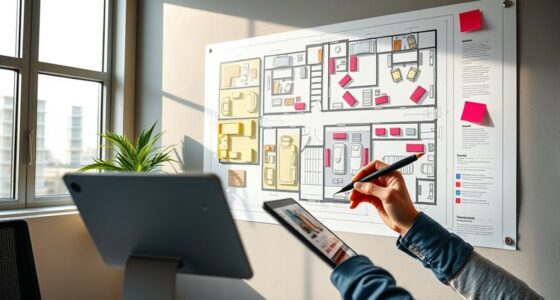
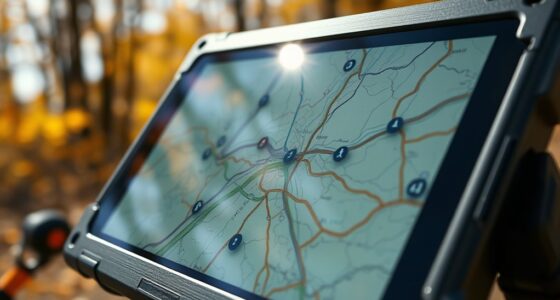
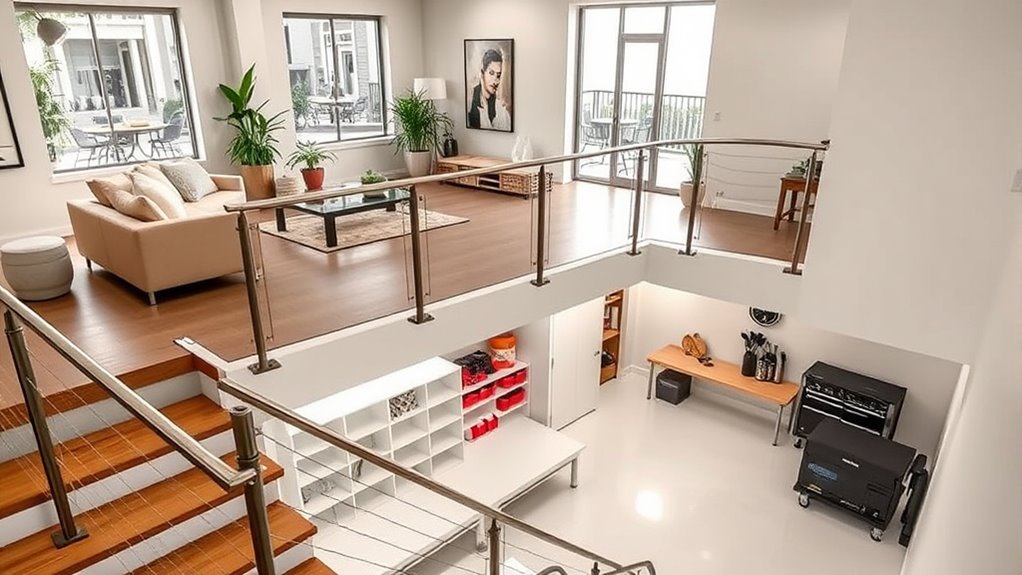
Mapping multiple floors requires more than just a simple floor plan. It involves capturing the unique characteristics of each level—such as doorways, furniture, and obstructions—to build a precise digital representation. You’ll want your mapping tools to recognize the different layers of your home, guiding the robot or device orchestrating your space to distinguish between floors and understand vertical progressions. As you work through this, you’ll notice that interior design elements, like the placement of furniture or decorative features, influence how the space is mapped and directed. Properly capturing these details guarantees your automation system can avoid obstacles and operate smoothly upstairs and downstairs. Additionally, utilizing high-quality mapping solutions can significantly improve accuracy and efficiency in navigating multi-story environments.
Capturing each level’s unique features ensures accurate mapping and smooth automation across floors.
Home automation plays a crucial role in multi-level mapping, providing you with a connected experience that simplifies managing your space. Once your environment is accurately mapped, you can set up automation routines that span both levels. For instance, you can program your smart lighting to turn on automatically when you ascend or descend a staircase, or schedule cleaning robots to cover specific areas on each floor efficiently. Because the mapping process is detailed and layered, your automation system can adapt to changes—like moving furniture or new interior design elements—without losing accuracy. This integration makes your home smarter and more responsive, reducing the need for manual adjustments and constantly improving how your devices interact with the space.
Achieving effective multi-level mapping also involves ongoing maintenance. As your interior design evolves or you add new furniture, your mapping system should update accordingly. This assures that your home automation remains reliable and precise across both floors. By focusing on creating a detailed map that incorporates every layer of your environment, you enable your automation devices to perform at their best, whether they’re cleaning upstairs or downstairs, or controlling your home’s climate and security. Ultimately, understanding how to accurately represent your multi-story environment helps you enjoy a more connected, efficient, and well-designed living space. Emphasizing precise digital representation ensures your smart home functions optimally across all levels.

roborock Q7 L5 Robot Vacuum and Mop Combo, 8,000Pa Suction, Upgraded from Q5 Pro, Dual Anti-Tangle System, LiDAR Navigation, Multi-Level Mapping, Self-Charging Robotic Vacuum Cleaner, Black
*Roborock robot vacuum supports only 2.4 GHz WiFi. Please ensure your router is set to this frequency. If…
As an affiliate, we earn on qualifying purchases.
As an affiliate, we earn on qualifying purchases.
Frequently Asked Questions
How Does Multi-Level Mapping Handle Staircases and Elevators?
Multi-level mapping handles staircases and elevators by integrating detailed data for seamless navigation. It recognizes staircase locations and creates accurate routes for staircase navigation, facilitating smooth transitions between floors. For elevators, it incorporates elevator positions and accessibility features, allowing the system to plan efficient routes that include elevator use when needed. This integration guarantees thorough coverage, making multi-level cleaning more effective and autonomous across all building levels.
Can Multi-Level Mapping Detect Obstacles on Different Floors?
Imagine you’re using a robot vacuum in a house from the 1800s, but it’s equipped with modern tech. Multi-level mapping detects obstacles on different floors through sensor integration, ensuring it recognizes furniture, toys, or cords across levels. This technology enhances mapping accuracy, allowing your device to avoid obstacles effectively on each floor, even if they’re spaced apart, providing a thorough clean without missing tricky spots.
What Are the Limitations of Multi-Level Mapping in Complex Layouts?
You’ll find that multi-level mapping struggles with complex layouts due to floor plan accuracy issues and sensor limitations. When layouts are intricate, the map might not perfectly reflect actual obstacles, leading to missed spots or errors. Sensor limitations can cause difficulties in detecting obstacles across floors, especially in tight or cluttered spaces. These factors can reduce the overall effectiveness of multi-level mapping for thorough cleaning.
How Long Does It Take to Complete Multi-Level Mapping?
It typically takes a few hours to complete multi-level mapping, depending on your robot and layout. Your mapping accuracy relies on proper sensor requirements and calibration, which guarantee precise data collection across floors. You should allow enough time for the robot to thoroughly scan both levels, especially in complex layouts. Rushing the process may lead to incomplete maps, so patience ensures better results and more reliable navigation.
Is Multi-Level Mapping Suitable for Both Residential and Commercial Spaces?
Sure, multi-level mapping is perfect for both homes and offices—because who doesn’t love a good interior design challenge? You’ll find it’s a smart move, as it guarantees safety considerations are met and every nook is covered. Whether you’re decorating your cozy residence or managing a bustling commercial space, this tech adapts seamlessly, making your space smarter and safer—so you can sit back and enjoy the chaos-free environment.
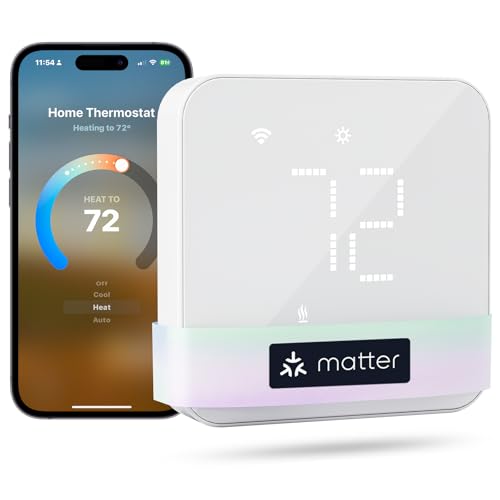
meross Smart Thermostat for Home, WiFi Thermostat Works with Matter, Alexa, Apple Home, Google Assistant, App & Voice Control, 7x24h Scheduling, Energy Saving, C-Wire Required (Not Included)
Before You Buy: Some wiring configurations require a C wire (not included). Please verify compatibility before purchasing. Meross…
As an affiliate, we earn on qualifying purchases.
As an affiliate, we earn on qualifying purchases.
Conclusion
Now that you’ve mastered multi-level mapping, you’ll conquer cleaning upstairs and downstairs with superhero ease. No dust bunnies or cobwebs will stand a chance against your newfound skills — you’ll be the cleaning legend of your home! Imagine transforming chaos into crystal-clear perfection in just moments. With your amazing mapping skills, you’ll turn cleaning into an epic adventure, leaving your entire house so spotless, even the dust will bow down in awe. Get ready to be unstoppable!

Tikom Robot Vacuum and Mop, 6000Pa Robotic Vacuum Cleaner with Self-Emptying Base, 90 Days Capacity, LiDAR Navigation, Home Mapping, Ideal for Pet Hair, Hard Floors, Carpet (L8000 Plus)
90-Day Hands-Free Cleaning: The 3L self-emptying dustbag holds weeks of debris, eliminating the need for frequent emptying. Enjoy…
As an affiliate, we earn on qualifying purchases.
As an affiliate, we earn on qualifying purchases.
Shark AI Ultra Robot Vacuum Newest User Guide: Complete Setup, Navigation, Mapping, Scheduling, Maintenance, and Smart Home Integration for Hands-Free Floor Cleaning
As an affiliate, we earn on qualifying purchases.
As an affiliate, we earn on qualifying purchases.