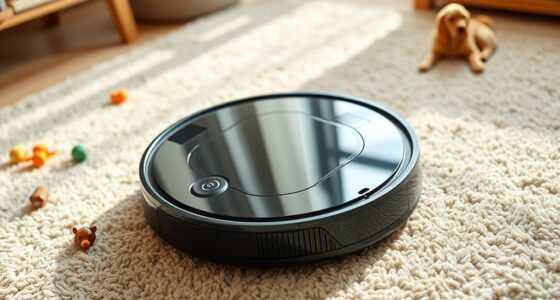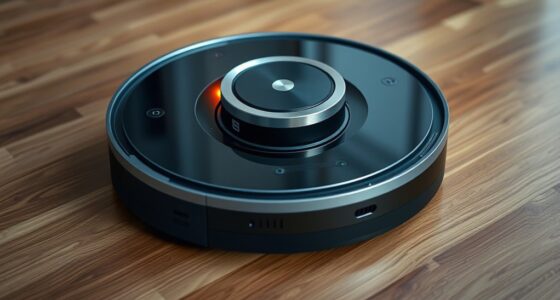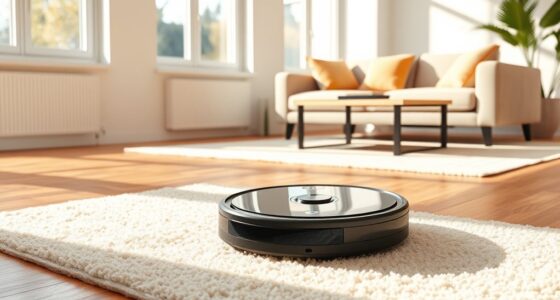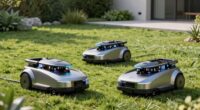
Robot vacuums in commercial settings help you streamline cleaning with autonomous, efficient solutions. They save time and reduce labor costs by steering systematically, avoiding obstacles, and returning to charging stations when needed. Equipped with smart sensors and strong batteries, these vacuums can cover large areas with minimal supervision. Their advanced features ensure consistent cleanliness, especially during off-hours. Keep exploring to discover how these devices can transform your cleaning routines and boost productivity.
Key Takeaways
- Robot vacuums automate cleaning, saving time and reducing labor costs in commercial environments.
- Advanced navigation features enable systematic coverage and obstacle avoidance for efficient cleaning.
- Long battery life ensures extensive coverage and minimizes recharging interruptions during operation.
- Scheduled cleaning allows for off-hours maintenance, maintaining high cleanliness standards effortlessly.
- Integration of smart navigation and strong batteries supports reliable, autonomous cleaning with minimal supervision.

Have you ever wondered how businesses keep large commercial spaces spotless with minimal effort? The answer often lies in the advanced technology of robot vacuums. These devices are transforming cleaning routines by offering efficient, automated solutions that save time and labor costs. When selecting a robot vacuum for a commercial setting, two critical features to consider are smart navigation and battery life. Smart navigation allows the vacuum to move systematically through the space, avoiding obstacles and ensuring thorough coverage without missing spots. This technology uses sensors, cameras, or LIDAR to map the area, enabling the robot to plan ideal cleaning paths. With smart navigation, there’s no need to supervise or manually direct the vacuum, making it perfect for busy environments like offices, retail stores, or warehouses. It adapts to changing layouts, detects obstacles, and can even return to its charging station when the battery runs low. Speaking of battery life, this feature is equally crucial because it determines how long the vacuum can operate before needing a recharge. In large commercial spaces, a vacuum with a long-lasting battery ensures extensive coverage in a single run, reducing the number of times it has to return to recharge. Modern robot vacuums often come with batteries that last anywhere from 60 to 120 minutes, depending on the model and cleaning mode. This extended runtime means fewer interruptions and more efficient cleaning sessions, especially in expansive areas. Additionally, some models automatically resume cleaning after recharging, further maximizing coverage without manual intervention. Battery management becomes even more significant when you’re dealing with high-traffic areas or spaces that need frequent cleaning. Choosing a robot vacuum with a trustworthy battery life helps maintain cleanliness standards without constantly monitoring the device. Combining smart navigation with strong battery performance ensures that your commercial space remains tidy with minimal oversight. These features work in tandem to deliver a seamless cleaning experience, allowing your staff to focus on other tasks while the vacuum handles the dirt. Moreover, many commercial-grade robot vacuums offer scheduled cleaning, so you can set them to operate during off-hours, ensuring the space stays clean and presentable every day. The integration of intelligent navigation and robust battery life not only boosts efficiency but also extends the lifespan of the device by reducing unnecessary wear and tear. In addition, battery longevity plays a significant role in minimizing operational disruptions and ensuring consistent cleaning coverage. Overall, investing in a robot vacuum with these capabilities means you get a reliable, autonomous cleaning solution that adapts to your space’s needs, saves time, and maintains a high standard of cleanliness with minimal fuss.
Frequently Asked Questions
How Do Robot Vacuums Handle Large Debris?
Robot vacuums handle large debris by adjusting their suction power and using specialized brushes to pick up bigger debris, regardless of debris size or floor type. They often have wider intake openings to accommodate larger debris and sensors to detect obstacles. On different floor types, they adapt their cleaning methods, ensuring that large debris is effectively collected without damaging the vacuum or floor surface.
What Are the Best Models for High-Traffic Areas?
You might think high-traffic areas need the most advanced robot vacuums, and that’s partly true. The best models for these spaces offer extensive floor coverage and long battery life, allowing them to clean continuously without frequent recharges. Brands like iRobot and Eufy excel in this domain, providing durable, efficient cleaning. Their robust sensors and powerful suction ensure thorough cleaning, making them ideal for maintaining cleanliness in busy environments.
Can Robot Vacuums Be Integrated With Existing Cleaning Systems?
Yes, robot vacuums can be integrated with your existing cleaning systems, but watch out for integration challenges and compatibility issues. You’ll need to verify the models you choose are compatible with your current infrastructure, like scheduling software or control systems. Sometimes, you may face compatibility issues that require additional hardware or software updates. Proper planning and consulting with providers can help you seamlessly incorporate robot vacuums into your commercial cleaning routine.
How Often Should Commercial Robot Vacuums Be Serviced?
You should service your commercial robot vacuums every 1 to 3 months, depending on usage and environment. Regular maintenance schedules include cleaning filters, brushes, and sensors to guarantee peak performance. Keep an eye on repair considerations; address issues promptly to prevent downtime. Routine servicing helps extend the lifespan of your devices, maintains efficiency, and reduces costly repairs. Consistent upkeep is key to keeping your cleaning system running smoothly.
Are There Safety Features to Prevent Accidents With Staff?
Think of safety features like a fortress protecting your staff. Commercial robot vacuums come equipped with sensors and obstacle detection that prevent accidents. You should provide staff training and establish clear emergency protocols to guarantee everyone knows how to respond if needed. These measures create a safe environment, turning the robot into a reliable ally rather than a hazard, and allowing your team to focus on their work confidently.
Conclusion
So, next time you see a robot vacuum whizzing around your office or store, don’t worry—you’re just witnessing the future of cleanliness. Who needs humans to do the dirty work when these tiny bots can sweep, mop, and maybe even file your reports someday? Just sit back and enjoy the show, because clearly, the age of spotless, robot-led commercial spaces is here to stay—whether you like it or not. Resistance is futile, after all.