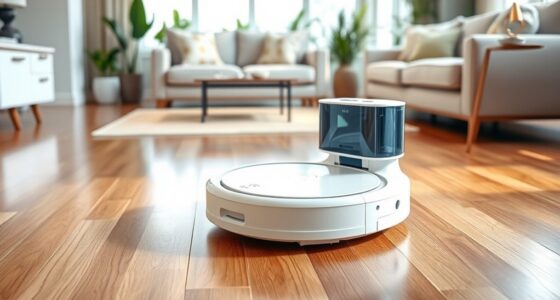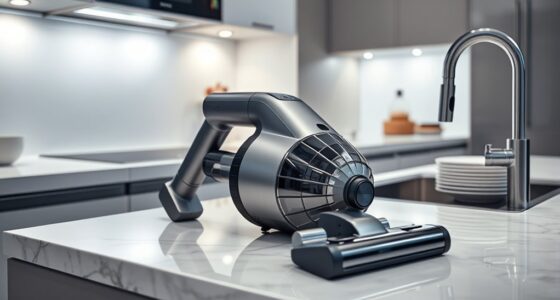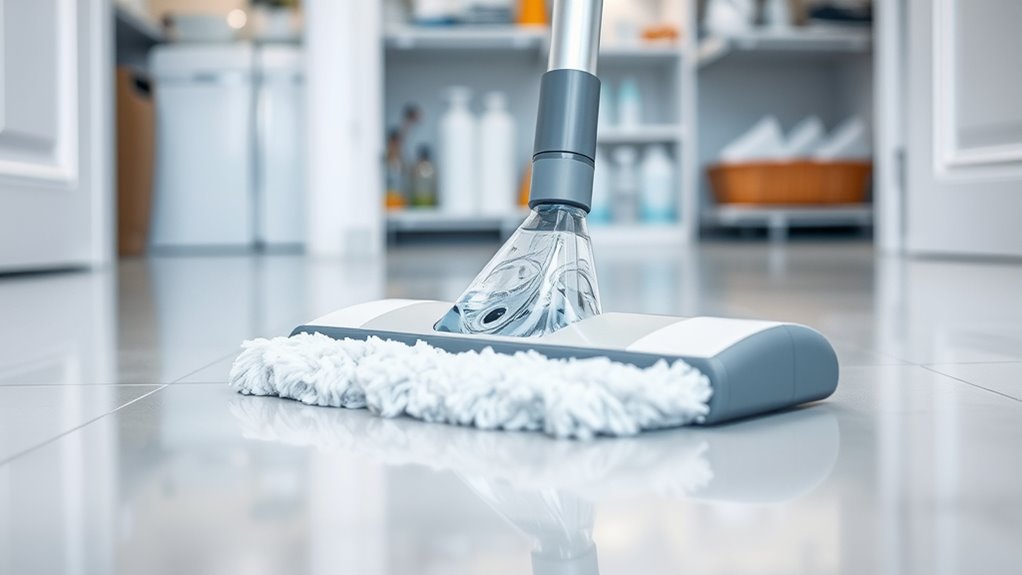
Water recycling in mopping systems uses advanced filtration and smart sensors to keep water clean by removing dirt, debris, and residues as you clean. This technology allows you to reuse water multiple times, reducing waste and water consumption, while maintaining high cleaning efficiency. It also helps you cover larger areas without frequent refills, ensuring consistent results. If you’re curious about how these systems optimize your cleaning process, there’s more to discover ahead.
Key Takeaways
- Water recycling in mopping systems filters and purifies water continuously for repeated use, improving cleaning efficiency.
- Advanced sensors monitor water quality in real-time, ensuring optimal dirt removal and preventing dirty water recirculation.
- Water recycling reduces fresh water consumption, lowers operational costs, and promotes sustainable cleaning practices.
- Automated filtering processes minimize manual intervention, enhancing user convenience and maintaining consistent cleaning results.
- Overall, water recycling technology boosts productivity, extends cleaning sessions, and ensures high-quality, streak-free surfaces.
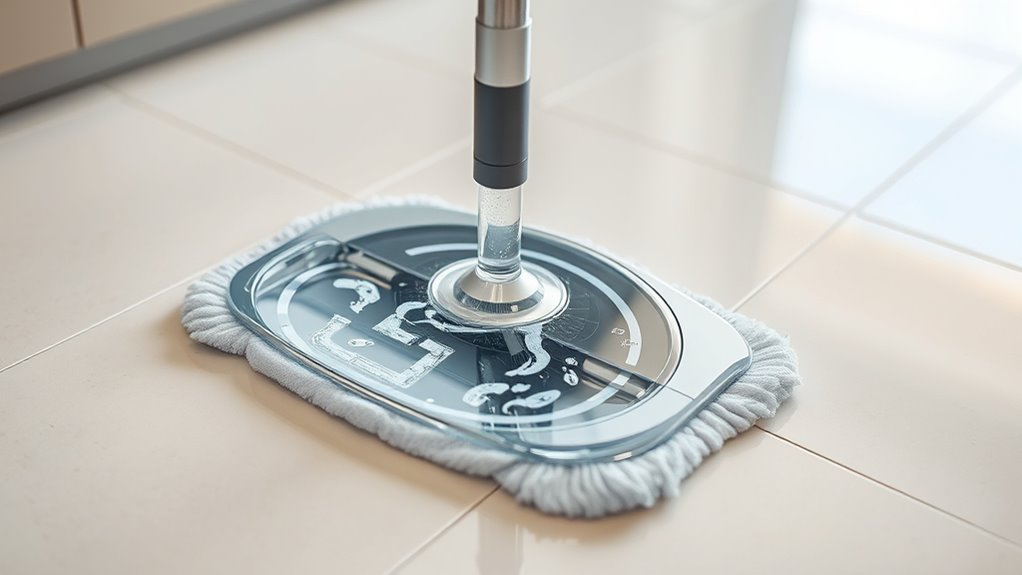
Water-recycling in mopping systems is transforming how we clean by reducing water waste and improving efficiency. When you use a recycling system, you’re not just saving water—you’re also enhancing the overall cleaning process. These systems incorporate advanced water filtration techniques that remove dirt, debris, and residues from used water, allowing you to reuse it multiple times. This continuous filtering process ensures that the water remains clean enough to effectively lift dirt off surfaces, eliminating the need for fresh water with each pass. As a result, you can cover larger areas without constantly refilling, which boosts your productivity and conserves resources.
Efficiency optimization is at the core of water-recycling mopping systems. By recycling water, you minimize the amount of fresh water needed, which not only conserves this essential resource but also reduces your operational costs. The systems are designed to maximize water reuse without sacrificing cleaning performance. They often feature smart sensors that monitor water quality in real-time, prompting you to change or filter the water only when necessary. This proactive approach ensures you’re always working with the best possible water quality, maintaining consistent cleaning results. Plus, many systems come with integrated filtration stages that trap fine particles, oils, and other residues, preventing them from recirculating and creating a dirty cycle.
You’ll notice that these systems are also user-friendly, equipped with intuitive controls that streamline the cleaning process. Instead of manually changing water or dealing with dirty buckets, you simply operate the system, which automatically filters and recycles water as needed. This automation helps reduce the physical effort involved and cuts down on downtime. Additionally, because the water remains cleaner longer, you’re less likely to encounter streaks or spots, which means a better finish on your floors and surfaces.
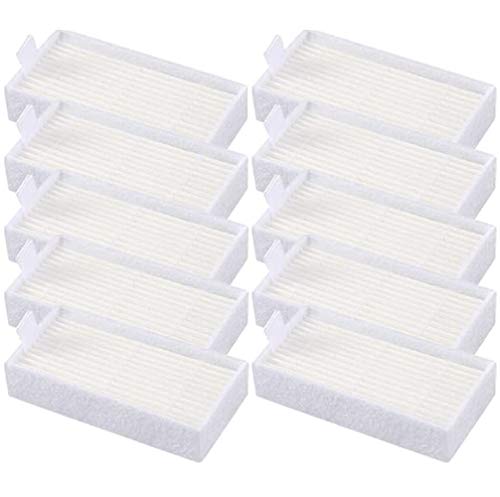
10pcs HEPA Filters Replacement for ILIFE V3s V3s pro V5 V5s V5s Pro V5s Pro 2 V5s Plus Noisz S5 Robotic Vacuum Cleaner ILIFE V3s pro Filters ILIFE Robot Vacuum Filter
- Compatible with Various ILIFE Models: Fits V3, V3s, V5, V5s, Pro versions
- High-Quality Filter Material: Made of efficient, durable filter material
- 100% Compatible with Original Filters: Ensures perfect fit and performance
As an affiliate, we earn on qualifying purchases.
Frequently Asked Questions
How Long Can Water Be Reused Safely in Recycling Mopping Systems?
You can typically reuse water in recycling mopping systems for about 3 to 4 cycles, but it depends on water purity and contamination control. Keep an eye on water clarity and smell; if it becomes murky or develops an odor, it’s time to change it. Regularly cleaning the system helps prevent contamination, ensuring safe reuse and maintaining effective cleaning. Always follow manufacturer guidelines for ideal results and safety.
What Types of Contaminants Are Removed During Water Recycling?
During water recycling in mopping systems, filtration efficiency removes various contaminant types, including dirt, dust, hair, and bacteria. These filters trap larger particles and some microbes, ensuring cleaner water for reuse. As a result, your floors stay hygienic while reducing water waste. Regular maintenance of the filtration system is essential to keep filtration efficiency high and prevent the buildup of contaminants that could compromise cleaning quality.
Are Recycled Water Systems Suitable for Commercial or Industrial Use?
Recycled water systems are absolutely perfect for commercial and industrial use, revolutionizing industrial efficiency and water conservation. You’ll find these systems handle massive cleaning tasks with ease, removing even the toughest contaminants efficiently. They’re designed for heavy-duty environments, ensuring sustainability and cost savings. By choosing recycled water systems, you’re making a bold statement about eco-friendliness while optimizing your operations—no other solution matches their power to transform your cleaning processes.
How Often Should the Water in a Recycling System Be Replaced or Filtered?
You should replace or filter the water in a recycling system regularly to maintain water purity. Typically, this means checking the system daily and performing a complete water change weekly, depending on usage intensity. Filtration frequency depends on how dirty the water gets; if you notice cloudiness or debris, it’s time for a filter change or water replacement. Consistently maintaining filtration guarantees peak cleaning performance and prolongs system life.
What Maintenance Is Required to Keep a Recycling Mopping System Effective?
To keep your recycling mopping system effective, you should regularly perform filter maintenance by cleaning or replacing filters as recommended. Additionally, schedule system calibration to ensure peak water flow and cleaning performance. Check for any clogs or buildup, and keep all components in good condition. Regular maintenance helps prevent issues, extends the lifespan of your system, and ensures consistently clean floors.

Filter Replacement for iRobot Roomba e, i and j Series i7 i7+/plus i3 i3+ E5 E6 E7 i4 i6 i6+ i8 i8+ Robot Vacuum Cleaners parts, 9 Pack High Efficiency 4639161 Filters
- Compatible with Roomba E, I, J Series: Fits various Roomba models including i7, i3, i6, i8, and J series
- High Efficiency Filtration: Filters 99.9% of dust, pet hair, and particles
- Effective Particle Capture: Captures particles as small as 0.3 microns
As an affiliate, we earn on qualifying purchases.
Conclusion
So, next time you’re marveling at those sparkling floors, remember the water-recycling system working behind the scenes. It’s ironic, isn’t it? We trust these devices to keep things spotless while they secretly recycle every drop, saving water and effort. What’s more impressive—clean floors or the clever technology that makes it all possible? Maybe it’s time to appreciate the unseen hero in your cleaning routine, quietly doing its job while you stay oblivious.

roborock Qrevo Series Robot Vacuum and Mop, 8000Pa Suction, Upgraded from Qrevo S, Anti-Tangle Brushes, Smart Obstacle Avoidance, Auto Mop Washing, All-in-One Dock, 200RPM Spinning Mops, Black(QV 35A)
- High Suction Power: 8000Pa for deep cleaning
- All-in-One Dock: Automatic dust emptying and water refilling
- Tangle-Free Brush System: Anti-tangle side and main brushes
As an affiliate, we earn on qualifying purchases.

DREAME D30 Ultra CE Robot Vacuum and Mop with Auto Dust Emptying, 25,000Pa Suction, 0.41in Mop Lifting, Multifunctional Base Station, Mop Self-Washing, Smart Obstacle Avoidance, White
- High Suction Power: 25,000Pa suction for tough debris
- Customizable Cleaning: 5 suction levels via app
- Self-Maintenance System: Auto-washing, emptying, and detangling
As an affiliate, we earn on qualifying purchases.