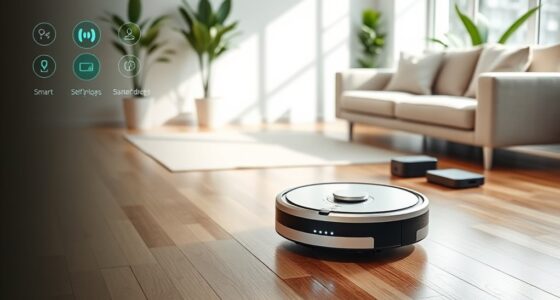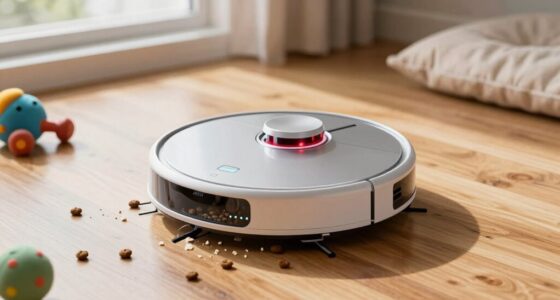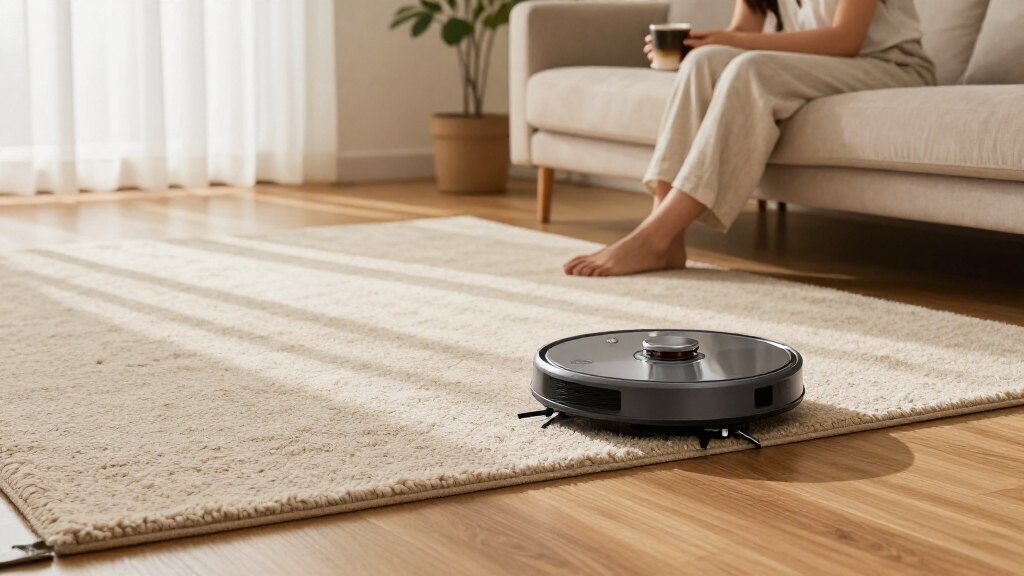

For carpet edges, a robot vacuum needs more than strong suction: it must reach close to borders, handle the carpet-to-floor change, and avoid leaving a strip of debris along the wall. My best overall pick is the Roborock Qrevo S Pro, whose 18,500 Pa suction gives it a strong spec-led case for carpet pickup, while the Roborock Q7 L5 offers a simpler vacuum-and-mop approach and the Roborock Q10 S5+ adds a self-emptying dock. The main tradeoff is between edge-focused cleaning and convenience features such as mopping and hands-off maintenance. Suction figures alone cannot tell you how well a robot cleans a carpet border, so brush design, navigation, and your room layout matter too. Read on for the full breakdown of all 15 options and guidance on choosing for your floors.

Get cleaning gear delivered free with Prime
- Fast, free delivery on millions of items
- Prime Video, Amazon Music and more included
- Member-only deals all year
Complete the kit


Key Takeaways
- The Roborock Qrevo S Pro leads on the published suction figure: its 18,500 Pa rating makes it the strongest spec-led choice here, though suction alone does not prove how well it cleans tight carpet edges.
- Self-emptying is a convenience advantage, not an edge-cleaning guarantee: the Q10 S5+, Q7 M5+, Roomba Max 715, and Kilgone SDL40 add dock-based maintenance but still need to match your floor plan and carpet type.
- The lineup spans a wide suction range: the ROPVACNIC‘s 5,200 Pa and the Qrevo 2 Pro’s 20,000 Pa represent very different spec profiles, but brush contact and navigation also shape pickup at borders.
- Mop features add tradeoffs around carpeted rooms: combo models can cover hard floors too, but buyers should check how each handles carpet when its mop is attached or active.
- Edge cleaning is a fit problem as much as a power problem: wall clearance, rug fringe, room clutter, and carpet thickness can matter more to your results than choosing the highest suction number.
| Roborock Q7 L5 Robot Vacuum and Mop Combo, 8,000 Pa Suction |  | Best Overall for Mapped Edge Cleaning | Suction power: 8,000 Pa | Navigation: LiDAR; multi-floor mapping | Water tank capacity: 270 ml | VIEW LATEST PRICE | See Our Full Breakdown |
| iRobot Roomba 105 Robot Vacuum with Charging Base |  | Best for Simple Edge-Sweeping | Cleaning system: Three-stage | Suction levels: 4 | Navigation: ClearView LiDAR | VIEW LATEST PRICE | See Our Full Breakdown |
| Roborock Q10 S5+ Robot Vacuum and Mop with Self-Emptying Station |  | Best for Low-Maintenance Carpet Edges | Maximum suction: 10,000 Pa | Dust bag capacity: 2.7 L | Claimed bag interval: Up to 70 days | VIEW LATEST PRICE | See Our Full Breakdown |
| iRobot Roomba Max 715 Robot Vacuum with AutoEmpty Dock |  | Best for Pet Hair and Automatic Carpet Boost | Dock: AutoEmpty dock | Dust storage: Odor-control AllergenLock bag | Claimed hands-free interval: Up to 90 days | VIEW LATEST PRICE | See Our Full Breakdown |
| Roborock Q7 M5+ Robot Vacuum and Mop with Self-Emptying Dock |  | Best Value Self-Emptying Combo | Maximum suction: 10,000 Pa | Dust bag capacity: 2.7 L | Stated emptying interval: Up to 7–9 weeks | VIEW LATEST PRICE | See Our Full Breakdown |
| Roborock Qrevo Edge 3 Pro Robot Vacuum and Mop |  | Best Overall for Carpet Edges | Suction power: 36,000 Pa | Battery life: 180 minutes | Carpet clearance: Up to 1.81 inches with automatic mop detachment | VIEW LATEST PRICE | See Our Full Breakdown |
| ROPVACNIC Robot Vacuum and Mop Combo with 5200Pa Suction |  | Best Value for Low-Pile Carpet | Maximum suction: 5,200 Pa | Battery life: 120 minutes | Mopping: Electronically controlled with four-stage water adjustment | VIEW LATEST PRICE | See Our Full Breakdown |
| ECOVACS DEEBOT T90 PRO OMNI Robot Vacuum and Mop |  | Best for Reaching Carpet Edges | Suction power: 30,000 Pa | Edge cleaning: TruEdge 3.0 roller extends 0.6 inches beyond the body | Mop system: OZMO ROLLER 3.0, 10.6-inch self-washing roller | VIEW LATEST PRICE | See Our Full Breakdown |
| Tikom G8000 Max Robot Vacuum and Mop Combo |  | Best Budget Pick for Short and Medium-Pile Rugs | Suction power: 5,000 Pa | Dustbin capacity: 450 ml | Water tank capacity: 300 ml | VIEW LATEST PRICE | See Our Full Breakdown |
| Kilgone SDL40 Robot Vacuum and Mop with Self-Emptying Dock |  | Best for Pet Hair and Scheduled Edge Routes | Navigation: LiDAR | Self-emptying capacity: 2.5 L | Self-emptying duration: Up to 13 weeks | VIEW LATEST PRICE | See Our Full Breakdown |
| Roborock Qrevo S Pro Robot Vacuum and Mop, 18,500 Pa Suction |  | Best for Mixed Carpet-and-Hard-Floor Homes | Suction power: 18,500 Pa | Battery life: 180 minutes | Navigation: LiDAR | VIEW LATEST PRICE | See Our Full Breakdown |
| Roborock Qrevo 2 Pro Robot Vacuum and Mop with 20,000 Pa Suction |  | Best for Wall-Edge Mopping | Suction power: 20,000 Pa | Battery life: 253 minutes | Edge cleaning distance: As close as 1.85 mm along walls | VIEW LATEST PRICE | See Our Full Breakdown |
| eufy C30 Edge Robot Vacuum and Mop |  | Best for Strong Edge-Focused Cleaning | Suction power: 35,000 Pa | Battery life: 105 minutes | Navigation: iPath 2.0 laser navigation | VIEW LATEST PRICE | See Our Full Breakdown |
| DREAME D20 Air Plus Robot Vacuum and Mop |  | Best for Low-Maintenance Vacuuming | Suction power: 20,000 Pa | Dust bag capacity: 4 L | Battery life: 150 minutes | VIEW LATEST PRICE | See Our Full Breakdown |
| DREAME X60 Max Ultra Complete Robot Vacuum and Mop |  | Best Premium Pick for Low Furniture | Height: 3.13 in (7.95 cm) | Suction power: 35,000 Pa | Mop pad pressure: 15 N | VIEW LATEST PRICE | See Our Full Breakdown |
| robot vacuum cleaners for carpet edge | Navigation | Battery life | Suction power |
|---|---|---|---|
| Roborock Q7 L5 Robot Vacuum an | LiDAR; multi-floor mapping | 150 minutes | 8,000 Pa |
| iRobot Roomba 105 Robot Vacuum | ClearView LiDAR | — | — |
| Roborock Q10 S5+ Robot Vacuum | LiDAR with 360° scanning and multi-level mapping | 150 minutes | — |
| iRobot Roomba Max 715 Robot Va | ClearView Pro LiDAR with 3D mapping | — | — |
| Roborock Q7 M5+ Robot Vacuum a | PreciSense LiDAR | 150 minutes | — |
| Roborock Qrevo Edge 3 Pro Robo | Retractable LDS, LiDAR, structured light, RGB camera, multi-floor mapping | 180 minutes | 36,000 Pa |
| ROPVACNIC Robot Vacuum and Mop | — | 120 minutes | — |
| ECOVACS DEEBOT T90 PRO OMNI Ro | — | 200 minutes | 30,000 Pa |
| Tikom G8000 Max Robot Vacuum a | — | — | 5,000 Pa |
| Kilgone SDL40 Robot Vacuum and | LiDAR | — | — |
| Roborock Qrevo S Pro Robot Vac | LiDAR | 180 minutes | 18,500 Pa |
| Roborock Qrevo 2 Pro Robot Vac | LiDAR | 253 minutes | 20,000 Pa |
| eufy C30 Edge Robot Vacuum and | iPath 2.0 laser navigation | 105 minutes | 35,000 Pa |
| DREAME D20 Air Plus Robot Vacu | LiDAR | 150 minutes | 20,000 Pa |
| DREAME X60 Max Ultra Complete | — | 180 minutes | 35,000 Pa |
More Details on Our Top Picks
Roborock Q7 L5 Robot Vacuum and Mop Combo, 8,000 Pa Suction
The Roborock Q7 L5 is my balanced pick for homes where mapped routes and defined no-go zones matter as much as carpet-edge pickup. Its LiDAR mapping can organize cleaning across rooms and floors, while 8,000 Pa suction and dual anti-tangle brushes are aimed at lifting debris and reducing hair wrap along carpet borders. Compared with the iRobot Roomba 105, it adds mopping and multi-floor maps; the Roomba instead has a dedicated edge-sweeping brush and a simpler vacuum-only setup. The Q7 L5’s tradeoff is its combined water-tank and dustbin component, which means handling the mop setup even when the job is carpet-focused. It also requires 2.4 GHz Wi-Fi, and its suction figure alone cannot guarantee a perfect pass along every edge.
Pros:- LiDAR mapping supports room-based routes, multi-floor maps, and no-go zones.
- 8,000 Pa suction is designed to pull debris from carpets and floor cracks.
- Dual anti-tangle brushes can reduce hair buildup and brush maintenance.
- Vacuuming and mopping offer one-device coverage across mixed flooring.
Cons:- The integrated dustbin and water tank require handling the combo component for mop use.
- Wi-Fi connectivity is limited to 2.4 GHz.
- The provided details do not specify a dedicated edge-cleaning brush.
Best for: Homes with a mix of carpet and hard floors where owners want LiDAR room mapping, scheduled edge passes, and occasional mopping.
Not ideal for: Buyers who want separate vacuum and mop components, or households whose Wi-Fi network does not support 2.4 GHz.
- Suction power:8,000 Pa
- Navigation:LiDAR; multi-floor mapping
- Water tank capacity:270 ml
- Battery life:150 minutes
- Brushes:Dual anti-tangle brushes
- Controls:App, buttons, and voice control
- Wi-Fi:2.4 GHz
- Supported surfaces:Carpet, laminate, tile, vinyl, wood, and marble
Our verdict“Choose the Q7 L5 for mapped carpet-edge cleaning across mixed floors, provided its combined mop component and 2.4 GHz requirement suit your home.”
iRobot Roomba 105 Robot Vacuum with Charging Base
The Roomba 105 suits buyers who want carpet-edge attention without adding a mop system to their routine. Its edge-sweeping brush is a specific advantage for pulling loose debris inward from borders, while ClearView LiDAR maps rooms and the app supports targeted cleaning and keep-out zones. Against the Roborock Q7 L5, the Roomba gives up mopping and multi-floor mapping but makes its edge brush a clear part of the cleaning system. Four suction levels let owners adjust the approach for different surfaces, and recharge-and-resume helps it finish larger areas. The tradeoffs are a 2.4 GHz Wi-Fi requirement and no supplied self-emptying feature, so owners should expect to empty the robot themselves. It is a focused vacuum choice, not an all-in-one floor-care option.
Pros:- Dedicated edge-sweeping brush targets debris along carpet borders.
- ClearView LiDAR supports room mapping and obstacle-aware routes.
- App features include room targeting, scheduling, and keep-out zones.
- Recharge-and-resume supports cleaning larger spaces in stages.
Cons:- No self-emptying feature is specified, so bin emptying remains a manual task.
- Does not include a mop for hard-floor maintenance.
- Requires a 2.4 GHz Wi-Fi network.
Best for: Buyers in carpeted homes who prioritize a dedicated edge-sweeping brush, room targeting, and straightforward vacuum-only operation.
Not ideal for: People seeking self-emptying, mopping, or multi-floor map storage in the supplied product details.
- Cleaning system:Three-stage
- Suction levels:4
- Navigation:ClearView LiDAR
- Brushes:Multi-surface brush and edge-sweeping brush
- App functions:Scheduling, room targeting, and keep-out zones
- Recharge behavior:Recharges and resumes cleaning
- Voice compatibility:Compatible Alexa, Siri, and Google Assistant devices
- Wi-Fi:2.4 GHz
Our verdict“Pick the Roomba 105 if a dedicated edge brush matters more than mopping or hands-free dust disposal.”
Roborock Q10 S5+ Robot Vacuum and Mop with Self-Emptying Station
For households that want less frequent bin emptying alongside strong carpet pickup, the Roborock Q10 S5+ has the most substantial dust-disposal setup in this group: a 2.7 L self-emptying bag designed for up to 70 days between bag maintenance. Its 10,000 Pa suction, LiDAR mapping, and carpet detection with mop lifting make it more suited to mixed-floor homes than a vacuum-only option such as the Roomba 105. ReactiveTech obstacle avoidance and no-go settings can help keep mapped routes tidy around furniture and selected areas. The 8 mm mop lift is a meaningful limit: it may not provide enough clearance for every carpet, so users should plan where mopping is allowed. This model also needs 2.4 GHz Wi-Fi and has a wider stated cleaning path than the Q7 M5+.
Pros:- 10,000 Pa suction is specified for carpet and floor debris pickup.
- 2.7 L dust bag is designed for up to 70 days between bag maintenance.
- Carpet detection can lift the mop and increase suction.
- LiDAR mapping and ReactiveTech obstacle avoidance support organized routes.
Cons:- Mop lift is limited to 8 mm, which may not clear every rug.
- Requires 2.4 GHz Wi-Fi.
- The claimed bag interval depends on cleaning conditions and use.
Best for: Pet-owning households with carpet and hard floors that want strong suction, mapped cleaning, and less frequent dustbag attention.
Not ideal for: Homes with taller-pile rugs that need generous mop clearance, or networks without 2.4 GHz Wi-Fi.
- Maximum suction:10,000 Pa
- Dust bag capacity:2.7 L
- Claimed bag interval:Up to 70 days
- Navigation:LiDAR with 360° scanning and multi-level mapping
- Obstacle avoidance:ReactiveTech structured light
- Mop lift:Up to 8 mm
- Battery life:150 minutes
- Cleaning path width:13.9 inches
- Wi-Fi:2.4 GHz only
Our verdict“Choose the Q10 S5+ for mapped, lower-maintenance cleaning across carpet and hard floors, but check that its 8 mm mop lift suits your rugs.”
iRobot Roomba Max 715 Robot Vacuum with AutoEmpty Dock
The Roomba Max 715 is the focused choice for carpet edges in pet homes: its anti-tangle dual rubber brushes work with an edge-sweeping brush, while Carpet Boost and Dirt Detect can direct more cleaning effort toward carpets and dirtier patches. Its AutoEmpty dock stores debris in an odor-control bag for up to 90 days, a longer stated interval than the Q10 S5+’s up-to-70-day claim. Compared with the Roborock Q10 S5+, the Max 715 is vacuum-only, so it avoids mop-clearance questions but gives up hard-floor mopping. ClearView Pro LiDAR and PrecisionVision AI support mapped routes and obstacle recognition; app controls add repeat passes and suction adjustment. The tradeoff is ongoing bag replacement, and voice control depends on compatible assistant devices.
Pros:- Edge-sweeping brush complements anti-tangle dual rubber brushes.
- Carpet Boost and Dirt Detect adapt cleaning to floor type and messier areas.
- AutoEmpty dock uses an odor-control bag with a stated interval of up to 90 days.
- LiDAR mapping and PrecisionVision AI support room navigation around objects.
Cons:- Dock bags require replacement, with the stated interval reaching up to 90 days.
- Vacuum-only design does not mop hard floors.
- Voice control requires compatible Alexa, Siri, or Google Assistant devices.
Best for: Pet households with carpet borders that want automatic carpet suction adjustment, obstacle recognition, and dock-based debris disposal.
Not ideal for: Buyers who want mopping or prefer a robot without recurring dock-bag replacement.
- Dock:AutoEmpty dock
- Dust storage:Odor-control AllergenLock bag
- Claimed hands-free interval:Up to 90 days
- Brushes:Anti-tangle dual rubber brushes and edge-sweeping brush
- Navigation:ClearView Pro LiDAR with 3D mapping
- Obstacle avoidance:PrecisionVision AI Technology
- Carpet cleaning feature:Carpet Boost
- App features:Scheduling, no-go zones, suction adjustment, and repeat passes
Our verdict“Pick the Max 715 for pet hair and automated carpet-edge attention if you want a vacuum-only robot with a bagged AutoEmpty dock.”
Roborock Q7 M5+ Robot Vacuum and Mop with Self-Emptying Dock
The Roborock Q7 M5+ brings high stated suction and a self-emptying dock to a vacuum-and-mop combo, making it a practical fit for homes that want carpet-edge pickup without giving up hard-floor care. Its 10,000 Pa suction, dual anti-tangle brushes, and PreciSense LiDAR support debris cleaning and mapped routes, while a 2.7 L bag is specified for up to 7–9 weeks between emptying under stated conditions. Compared with the Q10 S5+, it has a narrower 12.8-inch cleaning path and adjustable water flow, but the provided details do not list carpet detection or mop lifting. That distinction matters for homes with rugs: users may need to manage mopping zones rather than rely on automatic clearance. It also uses 2.4 GHz Wi-Fi, and the bag interval varies with household use.
Pros:- 10,000 Pa maximum suction is designed for carpet and household debris.
- 2.7 L self-emptying bag has a stated interval of up to 7–9 weeks.
- PreciSense LiDAR supports mapped cleaning routes and scheduling.
- Three water-flow settings let users adjust mopping for hard floors.
Cons:- The supplied details do not specify carpet detection or mop lifting.
- Wi-Fi connectivity is limited to 2.4 GHz.
- The stated dustbag interval depends on use and cleaning conditions.
Best for: Mixed-floor households seeking a self-emptying vacuum-and-mop combo with mapped routes and anti-tangle brushes.
Not ideal for: Buyers who need specified automatic carpet detection and mop lifting, or who use a Wi-Fi network without 2.4 GHz support.
- Maximum suction:10,000 Pa
- Dust bag capacity:2.7 L
- Stated emptying interval:Up to 7–9 weeks
- Navigation:PreciSense LiDAR
- Mopping:Three adjustable water-flow settings
- Brush design:Dual anti-tangle
- Battery life:150 minutes
- Cleaning path width:12.8 inches
- Wi-Fi:2.4 GHz only
Our verdict“Choose the Q7 M5+ for self-emptying mapped cleaning across mixed floors, but favor the Q10 S5+ if automatic mop lifting over carpet is a priority.”
Roborock Qrevo Edge 3 Pro Robot Vacuum and Mop
The Qrevo Edge 3 Pro is my strongest fit for homes where carpet borders, thresholds, and mixed flooring all need attention. Its 36,000 Pa suction gives it the highest stated suction in this group, while automatic mop detachment allows carpet cleaning with up to 1.81 inches of clearance. That combination is more versatile for varied floors than the ROPVACNIC S1, which is recommended for low-pile carpets and lacks a listed carpet-clearance figure. Retractable LiDAR, structured light, and camera-based obstacle recognition also support more tailored routes around furniture and clutter. The tradeoff is a complex dock and limited connectivity: it works on 2.4 GHz Wi-Fi only, and the listing does not give dustbin or water-tank capacities. I’d skip it if edge cleaning on carpet is your only concern and you do not need the extensive mopping system.
Pros:- 36,000 Pa stated suction and a dual zero-tangle system target hair and debris on carpet.
- Automatic mop detachment and up to 1.81 inches of carpet clearance support mixed-floor cleaning.
- Multifunction dock washes and dries mops, refills water, dispenses detergent, and empties dust.
- Retractable LDS, LiDAR, structured light, and RGB camera support detailed mapping and obstacle recognition.
Cons:- Wi-Fi support is limited to 2.4 GHz.
- Dustbin and water-tank capacities are not specified.
- The broad dock and mop feature set may be unnecessary for buyers focused only on carpet edges.
Best for: Households with pets, mixed flooring, substantial thresholds, and carpet areas that need strong suction alongside automated mop care.
Not ideal for: Buyers seeking a simple carpet-only robot or those who require 5 GHz Wi-Fi and clearly stated bin and tank capacities.
- Suction power:36,000 Pa
- Battery life:180 minutes
- Carpet clearance:Up to 1.81 inches with automatic mop detachment
- Threshold crossing:Up to 1.77 inches single-layer; 3.46 inches double-layer
- Navigation:Retractable LDS, LiDAR, structured light, RGB camera, multi-floor mapping
- Obstacle recognition:Over 300 obstacles
- Dock features:Self-emptying, self-refilling, detergent dispensing, hot-water mop washing, dock self-cleaning, warm-air drying
- Wi-Fi:2.4 GHz
Our verdict“Choose the Qrevo Edge 3 Pro if you want powerful carpet pickup and automated mop care across a complicated mixed-floor home.”
ROPVACNIC Robot Vacuum and Mop Combo with 5200Pa Suction
The ROPVACNIC S1 is the straightforward pick for buyers who want vacuuming and adjustable mopping without relying on a large service dock. Its 5,200 Pa suction, brushless design, and dual electric side brushes are aimed at pet hair and debris, while three suction levels let you adjust cleaning for the room. That setup makes it a more accessible alternative to the dock-heavy Roborock Qrevo Edge 3 Pro, but the carpet recommendation is explicitly limited to low-pile surfaces. For carpet edges, the side brushes may help gather scattered debris along room boundaries, though the product data does not specify an extending edge-cleaning mechanism or carpet clearance. It also has a shorter listed runtime than the Tikom G8000 Max. I’d choose it for mostly hard floors with some low-pile carpet, not thick rugs or demanding carpet-edge work.
Pros:- Brushless design and dual rotating electric side brushes are intended to collect pet hair.
- Electronically controlled mopping includes four water-adjustment settings.
- App, remote, touchpad, and compatible voice controls offer several operating options.
- Obstacle avoidance and automatic return to the charging dock support routine cleaning.
Cons:- Recommended carpet coverage is limited to low-pile surfaces.
- The 120-minute listed battery life is shorter than the Tikom G8000 Max’s quiet-mode maximum.
- No dedicated extending edge-cleaning feature or carpet-clearance measurement is listed.
Best for: Budget-conscious households with mostly hard flooring, low-pile carpet, and pet hair that want adjustable mopping and simple controls.
Not ideal for: Owners of thick carpet or buyers who need documented carpet-edge extension, long runtime, or a self-maintaining dock.
- Maximum suction:5,200 Pa
- Battery life:120 minutes
- Mopping:Electronically controlled with four-stage water adjustment
- Suction levels:3
- Cleaning modes:Multiple modes
- Controls:App, remote, touchpad, and voice control
- Carpet recommendation:Low-pile carpets
- Pet-hair design:Brushless design with dual rotating electric side brushes
Our verdict“Pick the ROPVACNIC S1 for a simple, lower-complexity vacuum-and-mop routine in homes with only low-pile carpet.”
ECOVACS DEEBOT T90 PRO OMNI Robot Vacuum and Mop
The DEEBOT T90 PRO OMNI earns its place here for a specific reason: its TruEdge 3.0 roller extends 0.6 inches beyond the body, giving it a documented way to reach along boundaries that many round robots can leave untouched. It pairs that reach with 30,000 Pa suction and a self-washing roller, so it is better suited than the Tikom G8000 Max to buyers who want an explicit edge-cleaning feature and automated mop maintenance. A 15 mm mop lift and carpet-first mode help keep carpets dry, but the stated carpet recommendation is only low-pile, short carpet. That limits its appeal for deep rugs, despite the strong suction figure. The OMNI station also handles washing, drying, emptying, and refilling, adding convenience at the cost of a larger, more involved system. I’d prioritize it when edge reach matters more than carpet height versatility.
Pros:- TruEdge 3.0 roller extends 0.6 inches beyond the robot body for boundary cleaning.
- 30,000 Pa suction is specified for carpet and hard-floor pickup.
- Mop lifts 15 mm, with carpet-first mode to help protect carpet from the roller.
- OMNI station washes and dries the roller and handles dust emptying and water refilling.
Cons:- Carpet recommendation is limited to low-pile, short carpet.
- Connectivity supports 2.4 GHz Wi-Fi only.
- The self-maintaining OMNI station adds bulk and complexity compared with simpler options such as the ROPVACNIC S1.
Best for: Owners of homes with hard floors and low-pile carpets who want a robot with a specified extending edge-cleaning roller.
Not ideal for: Households with thick, plush, or long-pile carpets, or anyone who wants a compact setup with broad Wi-Fi compatibility.
- Suction power:30,000 Pa
- Edge cleaning:TruEdge 3.0 roller extends 0.6 inches beyond the body
- Mop system:OZMO ROLLER 3.0, 10.6-inch self-washing roller
- Mop lift:15 mm (0.6 inches)
- Battery life:200 minutes
- Mop washing and drying:Hot-water washing up to 167°F; hot-air drying at 145°F
- Capacity:3.2 liters
- Carpet recommendation:Low-pile short carpet
Our verdict“Choose the DEEBOT T90 PRO OMNI if reaching along carpet boundaries is your priority and your rugs are short-pile.”
Tikom G8000 Max Robot Vacuum and Mop Combo
The Tikom G8000 Max is the more carpet-flexible basic option in this group: its stated surface recommendations include short- and medium-pile carpets, while the ROPVACNIC S1 is listed for low-pile carpet only. Its 5,000 Pa suction and dedicated edge cleaning mode make it a reasonable fit for everyday debris around rug borders, though the listing does not describe an extending brush or specialized edge mechanism. At 2.99 inches tall, it may also reach under some low furniture, and the 450 ml dustbin is larger than its 300 ml water tank. The tradeoff is that its 150-minute maximum is specified for quiet mode, and the smaller water tank may mean more frequent refills during mopping. I’d favor it for practical mixed-floor coverage, not for buyers seeking the stronger suction or advanced boundary reach of the DEEBOT T90 PRO OMNI.
Pros:- Recommended for short- and medium-pile carpets, broader coverage than the ROPVACNIC S1’s low-pile recommendation.
- Edge cleaning mode provides a dedicated option for perimeter passes.
- 2.99-inch profile may fit beneath some low-clearance furniture.
- 450 ml dustbin and 300 ml water tank support combined vacuuming and mopping.
Cons:- The edge mode is listed without details of a brush or other mechanism that extends beyond the body.
- The 150-minute maximum runtime is specified for quiet mode.
- The 300 ml water tank is smaller than the 450 ml dustbin and may need more frequent refills.
Best for: Households with hard floors and short- or medium-pile rugs that want a modestly featured vacuum-mop with an edge mode.
Not ideal for: Buyers with deep-pile carpets or those who want a documented extending edge brush, advanced mapping, or an automated mop-washing dock.
- Suction power:5,000 Pa
- Dustbin capacity:450 ml
- Water tank capacity:300 ml
- Maximum runtime:150 minutes in quiet mode
- Cleaning modes:Spot, edge, zig-zag, and manual
- Height:2.99 inches
- Recommended surfaces:Hard floors, tiles, short- and medium-pile carpets, and rugs
- Controls:App, remote, voice, and onboard button
Our verdict“Choose the Tikom G8000 Max for everyday edge passes on short- or medium-pile rugs without paying for a complex dock system.”
Kilgone SDL40 Robot Vacuum and Mop with Self-Emptying Dock
The Kilgone SDL40 is the sensible pick for pet owners who want mapped, repeatable cleaning routes rather than a robot whose main selling point is raw suction. Its LiDAR navigation supports room mapping and low-light cleaning, while the app allows scheduling, spot cleaning, no-go zones, and suction adjustment—useful for directing routine passes toward carpet borders and keeping the robot away from areas where mop water is unwelcome. Dual anti-tangle brushes are designed to reduce hair wrap, and the self-emptying dock can hold dust for up to 13 weeks. Compared with the Tikom G8000 Max, it offers more specified mapping and a larger dust-handling setup, but Tikom provides an explicit edge mode and broader listed carpet recommendations. Kilgone’s surface recommendation is wood, and its mop is described for hard floors, so its carpet-edge case is less clearly supported. I’d favor it for mapped pet-hair maintenance, not carpet-first cleaning.
Pros:- LiDAR mapping supports organized room routes and operation in low light.
- Dual anti-tangle main and side brushes are designed to reduce pet-hair wrap.
- 2.5 L self-emptying capacity is listed for up to 13 weeks of use.
- App supports scheduling, spot cleaning, no-go zones, and suction adjustment.
Cons:- The listed surface recommendation is wood, and the mop function is described for hard floors.
- No suction-power or carpet-clearance figure is supplied.
- Unlike the Tikom G8000 Max, it does not list a dedicated edge cleaning mode or a stated carpet-pile range.
Best for: Pet owners with mostly wood and hard floors who want mapped schedules, no-go zones, and less frequent dustbin emptying.
Not ideal for: Buyers whose main need is documented carpet-edge cleaning or who have extensive carpet and want clear carpet-specific performance details.
- Navigation:LiDAR
- Self-emptying capacity:2.5 L
- Self-emptying duration:Up to 13 weeks
- Runtime:Up to 150 minutes
- Water-flow settings:3
- Filter:HEPA
- Connectivity:2.4 GHz and 5 GHz Wi-Fi
- Controls:App, push button, and voice control
Our verdict“Pick the Kilgone SDL40 for mapped, low-maintenance pet-hair cleaning on hard floors, but choose another option for carpet-edge performance as the main goal.”
Roborock Qrevo S Pro Robot Vacuum and Mop, 18,500 Pa Suction
The Qrevo S Pro is a balanced pick for homes where carpet borders hard flooring and mopping is part of the routine. Its liftable spinning mops and adaptive carpet settings help limit wet-mop contact with rugs, while LiDAR mapping supports room-by-room cleaning near walls. Compared with the Qrevo 2 Pro, it has less listed suction and a shorter 180-minute battery life, but its dock still handles dust disposal, mop washing and drying, and water refilling. The anti-tangle brush design also suits homes with shedding pets. Its edge-focused case is less specific than the Qrevo 2 Pro’s stated wall reach, and the listed noise figures conflict. I’d choose it for capable mixed-floor upkeep, not for buyers who want the clearest edge-cleaning specification.
Pros:- Liftable spinning mops and adaptive carpet settings suit mixed flooring.
- Multifunction dock empties dust, washes and dries mops, and supports self-refilling.
- LiDAR navigation and multi-floor mapping allow customized room cleaning.
- Anti-tangle side and main brushes are designed to reduce hair wrap.
Cons:- Less suction and shorter listed battery life than the Qrevo 2 Pro.
- Noise is listed as both 55 dB and 60 dB.
- Water tank capacity is not provided.
Best for: Households with rugs beside hard floors that want mapped vacuuming, liftable mops, and a dock that handles routine maintenance.
Not ideal for: Buyers whose main priority is documented close-to-wall mopping or who need consistent noise specifications.
- Suction power:18,500 Pa
- Battery life:180 minutes
- Navigation:LiDAR
- Mop lift:10 mm
- Dock dust bag capacity:2.7 L
- Mop washing temperature:167°F
- Hot-air drying:113°F
- Controls:App, button, and voice
Our verdict“Choose the Qrevo S Pro for hands-off cleaning across rugs and hard floors, but pick the Qrevo 2 Pro if closer-specified wall reach matters more.”
Roborock Qrevo 2 Pro Robot Vacuum and Mop with 20,000 Pa Suction
For buyers focused on carpet edges and the hard-floor strips beside them, the Qrevo 2 Pro provides the lineup’s clearest wall-coverage detail: its FlexiArm system is specified to mop as close as 1.85 mm along walls. Automatic carpet adjustment and a mop lift of up to 15 mm help it handle floor changes, while the dual zero-tangle brushes are aimed at homes with pet hair. Against the Qrevo S Pro, it adds stated edge reach, greater suction, and a longer 253-minute battery life. The tradeoff is that mop and carpet transitions may still call for some setup, and its Wi-Fi works only on 2.4 GHz. This is the more compelling edge-mopping choice, though buyers seeking vacuuming alone may not need its elaborate dock.
Pros:- FlexiArm system is specified to mop within 1.85 mm of walls.
- Automatic carpet adjustment and up-to-15 mm mop lift support mixed flooring.
- 253-minute battery life exceeds the Qrevo S Pro’s listed runtime.
- Dock empties dust, refills water, washes mops, and dries them.
Cons:- Wi-Fi support is limited to 2.4 GHz.
- Carpet and mopping transitions may require user management.
- Its mop-focused dock adds complexity for buyers who mainly need vacuuming.
Best for: Pet-owning households with rugs beside hard floors that want close wall-side mopping, automatic carpet adjustment, and long cleaning runs.
Not ideal for: Homes using only 5 GHz Wi-Fi or buyers who want a simpler vacuum without mop-transition management.
- Suction power:20,000 Pa
- Battery life:253 minutes
- Edge cleaning distance:As close as 1.85 mm along walls
- Mop lift:Up to 15 mm
- Navigation:LiDAR
- Mop washing temperature:149°F
- Mop drying:113°F warm air
- Wi-Fi compatibility:2.4 GHz only
Our verdict“Pick the Qrevo 2 Pro if close wall-side mopping and long mixed-floor runs matter more than a simpler setup.”
eufy C30 Edge Robot Vacuum and Mop
The eufy C30 Edge combines a stated 35,000 Pa suction level with an extending mop pad, making it the boldest pick here for buyers who want edge-oriented vacuuming and mopping in one machine. Its carpet detection lifts the mop automatically, a practical safeguard when a route moves from tile to rug. The all-in-one station washes and dries the mop and empties dust, while laser navigation supports mapped cleaning. Compared with the Qrevo 2 Pro, the C30 lists higher suction but has a much shorter 105-minute battery life and does not specify a wall-distance figure for its extending mop. That makes it less persuasive for large homes, despite its strong headline suction. I’d favor it for smaller mixed-floor spaces where automated mop lifting matters more than extended coverage.
Pros:- Extending mop pad targets edge and perimeter coverage.
- Automatically lifts the mop when carpet is detected.
- Listed 35,000 Pa suction is higher than the Qrevo 2 Pro’s 20,000 Pa.
- Station washes and dries the mop and empties dust into a 2.5 L bag.
Cons:- 105-minute battery life is shorter than the Qrevo models’ listed runtimes.
- No specific wall-distance figure is provided for the extending mop.
- The 2.5 L dust bag needs eventual replacement.
Best for: Owners of smaller mixed-floor homes who want an extending mop, automatic carpet detection, and a station that handles dust and mop care.
Not ideal for: Large homes needing long uninterrupted runs or shoppers who want a stated wall-clearance measurement for edge mopping.
- Suction power:35,000 Pa
- Battery life:105 minutes
- Navigation:iPath 2.0 laser navigation
- Mop rotation:180 RPM
- Mop pressure:10 N
- Carpet mop lift:0.47 in
- Dust bag capacity:2.5 L
- Controls:App, buttons, and voice
Our verdict“Choose the C30 Edge for strong suction and automatic carpet-safe mopping in a smaller home, not for long cleaning runs.”
DREAME D20 Air Plus Robot Vacuum and Mop
The DREAME D20 Air Plus is a practical choice for buyers who want routine carpet-edge vacuuming with less frequent dust-bag attention. Its 4 L auto-empty bag is larger than the 2.7 L capacity listed for the Qrevo S Pro, and LiDAR mapping supports room-specific schedules and no-go zones. Dual anti-tangle brushes are intended to reduce hair buildup, while adjustable water flow adds basic mopping for hard floors. Unlike the Qrevo 2 Pro, however, the D20’s supplied details do not specify a lifting mop, automatic carpet adjustment, or a close-wall reach. I would treat it as a vacuum-first option for perimeter dust and debris, with mopping as a hard-floor add-on rather than a rug-edge feature. Its 2.4 GHz-only Wi-Fi and USA-only use also narrow its fit.
Pros:- 4 L dust bag exceeds the Qrevo S Pro’s listed 2.7 L capacity.
- LiDAR mapping supports room-specific schedules and no-go zones.
- Dual anti-tangle brushes are designed for hair and pet fur.
- Adjustable water flow supports combined vacuuming and mopping.
Cons:- Product details do not specify mop lifting or automatic carpet adjustment.
- Wi-Fi support is limited to 2.4 GHz.
- Designed for use in the USA only.
Best for: US-based households wanting mapped, scheduled vacuuming around carpet edges, a large dust bag, and occasional hard-floor mopping.
Not ideal for: Buyers needing a documented liftable mop or automatic carpet adjustment, or households outside the USA.
- Suction power:20,000 Pa
- Dust bag capacity:4 L
- Battery life:150 minutes
- Navigation:LiDAR
- Brush design:Dual anti-tangle
- Cleaning modes:Vacuuming and mopping
- Wi-Fi support:2.4 GHz only
- Controls:App, button, and voice
Our verdict“Choose the D20 Air Plus for mapped, low-maintenance vacuuming and a large dust bag, but not when carpet-safe mop lifting is a must.”
DREAME X60 Max Ultra Complete Robot Vacuum and Mop
The DREAME X60 Max Ultra Complete pairs high listed suction with a notably slim 3.13-inch body, giving it a different edge-cleaning advantage from the Qrevo 2 Pro: it can target dust near perimeter furniture and beneath low sofas or beds. Dual AI cameras support obstacle detection, while the dock washes pads with 212°F water, dries them, and handles dust disposal. Its 35,000 Pa suction matches the eufy C30 Edge’s listed figure, but the X60 offers a longer 180-minute battery life and a more detailed dock setup. That premium feature set comes with a substantial 52 lb listed item weight, so relocating the unit and dock may be awkward. The supplied details also do not give a carpet-specific mop-lift measurement, making it less straightforward than the Qrevo models for frequent rug transitions.
Pros:- 3.13-inch height can reach beneath some low furniture near room edges.
- Dual AI cameras support obstacle detection and adaptive navigation.
- 35,000 Pa suction and 180-minute battery life support substantial cleaning runs.
- Dock uses 212°F water to wash mop pads and also dries pads and disposes of dust.
Cons:- Listed item weight of 52 lb may make moving the unit and dock difficult.
- Wi-Fi support is limited to 2.4 GHz.
- No carpet-specific mop-lift measurement is provided.
Best for: Buyers with low-clearance furniture and mixed flooring who want a slim robot, camera-based obstacle detection, and an advanced mop-washing dock.
Not ideal for: People who need to move the dock often or want a clearly specified mop lift for cleaning across carpet and hard-floor edges.
- Height:3.13 in (7.95 cm)
- Suction power:35,000 Pa
- Mop pad pressure:15 N
- Mop pad speed:230 RPM
- Mop washing temperature:212°F (100°C)
- Obstacle crossing height:Up to 3.47 in (8.8 cm)
- Battery life:180 minutes
- Item weight:52 lb
Our verdict“Choose the X60 Max Ultra Complete for low-clearance access and a feature-rich dock, but favor the Qrevo models if documented carpet-transition handling is your priority.”
How We Picked
I ranked these models around the specific challenge of cleaning carpet edges: getting close enough to borders, carrying useful suction and brush capability onto carpet, and navigating changes between rugs, walls, and hard flooring. I also weighed practical ownership factors—such as a self-emptying dock, mop functions, and the likely effort of routine maintenance—because a robot that is awkward to manage may be a poor fit even if its headline specifications look strong.
The order reflects the information available for this lineup, not claims of hands-on testing. Models with higher stated suction or useful dock features earned attention, but I did not treat a suction figure as proof of edge pickup. I also considered whether a product’s feature mix suits a clear buyer need: a premium multi-function system, a simpler starter option, or a lower-complexity pick. Since product names and specifications cannot confirm performance at every carpet border, buyers should verify brush design, mapping controls, and carpet-handling details for the exact model before choosing.
Factors to Consider When Choosing Robot Vacuum Cleaners For Carpet Edges
Carpet-edge cleaning depends on how a robot meets the room, not just how much power it advertises. I would match the machine to your carpet construction, border layout, and tolerance for maintenance before paying extra for a dock or mop system.
Start With Carpet Pile, Not the Suction Number
Low-pile carpet and thick, plush carpet place different demands on a robot. Higher suction can help lift embedded dust, but it does not guarantee that the brush makes good contact or that the robot can cross a raised edge. Check whether the manufacturer describes carpet-specific suction behavior and brush design for the exact model. If you have dense rugs, prioritize evidence of carpet handling over a large Pa figure on its own. A robot that struggles to climb onto a rug cannot clean its perimeter effectively. For mixed flooring, also check whether it can recognize carpet and change its behavior without relying on manual settings.
Think About the Border Shape and Wall Clearance
A straight carpet edge against an open floor is easier to approach than a rug tucked beneath furniture or pressed into a narrow corner. Measure the space around the carpet and note where chair legs, baseboards, and cables interrupt the route. A round robot may leave a small crescent-shaped gap at corners, while side-brush reach and navigation choices can affect debris along straight walls. Do not assume a feature called edge cleaning means the robot will reach every border; look for a clear description of how the side brush or body handles walls. Rug fringe can tangle in brush rolls, so check whether your rugs have loose fibers and whether the robot offers settings or no-go zones. Mapping control is useful when a carpet edge sits beside delicate objects or fringe.
Decide Whether a Mop Is Worth the Added Complexity
A vacuum-and-mop combo can make sense in a home with both carpet and hard floors, but mopping does not improve carpet-edge pickup by itself. The key question is how the robot manages the mop around rugs: some designs may require removing a pad, setting a restricted zone, or relying on carpet detection. Read the model’s instructions for its exact mop and carpet behavior rather than assuming every combo handles the change automatically. If nearly all your floor area is carpet, a vacuum-focused setup may be easier to maintain. If hard floors make up a large share of your home, a combo may save a separate cleaning step. Factor in the extra pad washing and water handling when deciding whether that convenience is useful.
Pay for a Dock Only If Its Maintenance Fits Your Routine
Self-emptying docks reduce how often you need to empty the robot’s onboard bin, which can help in homes with shedding pets or frequent cleaning runs. They do not remove every maintenance task: brushes can collect hair, filters need care, and mop systems may need cleaning. Dock size and placement also matter, since a large station can be hard to fit near the area where the robot needs to return. Consider how often you want to handle dust and whether the dock’s added parts suit your household. A simpler charging base may be the better choice if you have limited floor space or prefer fewer components. Treat the dock as a convenience feature rather than a promise of better edge cleaning.
Check Navigation Needs Before Choosing Automation
Carpet borders near dining chairs, cords, or toys demand more than basic movement across an open room. Mapping and no-go controls can help you keep the robot away from fringe, delicate rug corners, or spots where it repeatedly gets stuck. If your layout changes often, consider how easy it is to edit maps or set room boundaries in the companion controls. A feature-rich system may take more setup than a simple start-and-clean model, so match its learning curve to your comfort with app controls. Avoid assuming that obstacle avoidance will identify every small cable or loose rug edge. Clearing recurring hazards still improves the odds of a consistent route.
Choose a Buying Priority You Can Actually Verify
Product listings often emphasize suction, dock functions, or mop features, while specific results at carpet borders can be harder to compare. Before buying, check the exact model documentation for brush layout, edge-cleaning behavior, carpet detection, and included dock components. Confirm that the listed variant matches the product name, since similar model families can have different accessories or specifications. If edge cleaning is your main concern, look for credible demonstrations or detailed documentation that shows the robot approaching a wall-to-carpet boundary. When that evidence is unavailable, favor a return policy that gives you time to assess fit in your own rooms. This keeps a headline feature from becoming your only basis for the decision.
Frequently Asked Questions
Does a higher Pa rating mean a robot will clean carpet edges better?
Not by itself. Pa ratings describe suction, but edge pickup also depends on how the brush reaches the border, whether the robot tracks close to the wall, and how the carpet fibers respond to the brush. In this lineup, the Qrevo 2 Pro lists 20,000 Pa and the Qrevo S Pro lists 18,500 Pa, yet those figures do not establish which one leaves less debris along your particular rug. Check brush details and carpet-handling information for the exact model. If you cannot find a direct edge-cleaning comparison, treat suction as one clue rather than a final verdict.
Should I choose a self-emptying model for a home with carpet?
A self-emptying dock can reduce how often you handle the dustbin, which is useful when carpet and pets create frequent debris. It does not improve the robot’s reach along carpet borders, and it will not eliminate brush, filter, or mop maintenance. Models such as the Roborock Q10 S5+ and Q7 M5+ make dock convenience a central part of their appeal, while simpler options may take less space and have fewer parts. Choose the dock if reduced bin handling matters to you and you have a suitable place for the station. Otherwise, put that budget and floor space toward the cleaning and navigation features that matter most in your rooms.
Can a vacuum-and-mop robot clean carpet without getting it wet?
That depends on the model’s mop design and carpet behavior, not merely on whether it is sold as a combo. Some robots may lift or avoid the mop around carpet, while others can require you to remove a pad or set restricted areas; check the exact instructions before relying on automatic handling. This matters most when a rug sits directly beside a hard floor the robot mops. For a mostly carpeted home, a vacuum-only model can simplify setup and care. If you want both functions, confirm how the robot responds to your carpet type and whether its controls let you set reliable boundaries.
What should I do if my carpet has fringe or a raised border?
Loose fringe can catch in a brush roll, and a raised border can challenge a robot’s ability to climb onto the carpet or clean close to its edge. Check the manual for rug and fringe guidance, then use a no-go zone or barrier if the robot cannot safely handle that area. You can also tuck or secure loose fringe where the rug’s material permits. Do not assume a higher suction rating will solve a snagging or climbing problem. If the rug is valuable or has delicate fibers, favor controllable mapping and keep the robot away from the risky edge unless the maker specifically supports that use.
Which features matter most if my main complaint is a dusty strip beside the wall?
Look beyond suction and check the side-brush design, how close the body can travel to a baseboard, and whether the navigation pattern follows room boundaries. The shape of the carpet matters too: a robot may handle a long straight side differently from a tight corner or a border blocked by furniture. Mapping controls can help you send the machine along a problem area, though they cannot compensate for a brush that does not reach it. Before choosing, look for documentation or demonstrations showing the robot cleaning near both a wall and carpet. If that evidence is limited, keep expectations measured and plan for occasional manual touch-ups.
Conclusion
For the strongest spec-led all-around choice, I would start with the Roborock Qrevo S Pro, while keeping in mind that its suction rating does not settle how it will perform at your carpet borders. For best value, the Roborock Q7 L5 is a simpler combo to compare if you want vacuuming and mopping without making a self-emptying dock the main priority. For best premium, consider the DREAME X60 Max Ultra Complete or Roborock Qrevo 2 Pro if you want a more feature-forward system and have room for its added complexity. For beginners, the iRobot Roomba 105’s charging-base setup may be a more straightforward starting point than a dock-heavy combo. If routine bin handling is your main concern, look at the Roborock Q10 S5+ or Q7 M5+; if carpet edges are the priority, verify brush reach, carpet behavior, and rug clearance before choosing any model.