
TL;DR

Get cleaning gear delivered free with Prime
- Fast, free delivery on millions of items
- Prime Video, Amazon Music and more included
- Member-only deals all year
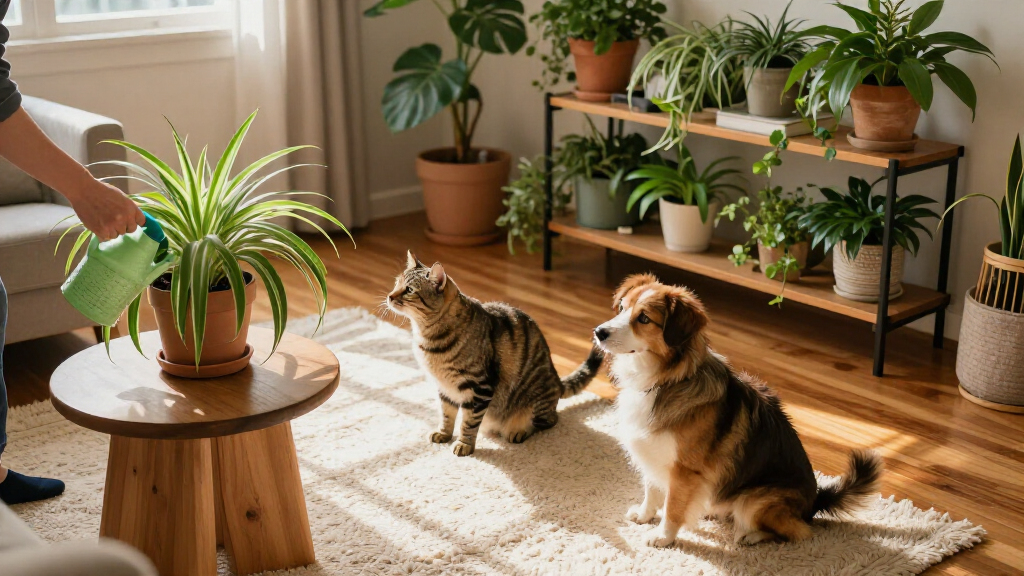
An Ideal Home report lists spider plants, Kentia palms, calatheas, Chinese money plants, Boston ferns and polka dot plants as options for homes with cats and dogs. The report cites plant specialists but cautions that no plant is entirely pet-proof and eating large amounts can upset an animal’s stomach.
Ideal Home has highlighted six houseplants it describes as suitable for homes with cats and dogs: spider plants, Kentia palms, calatheas, Chinese money plants, Boston ferns and polka dot plants. The report cites plant specialists for the selections, while warning that “pet-friendly” does not mean pet-proof and that eating a large amount of any plant can cause stomach upset or irritation.
The list combines plants chosen for their appearance and growing conditions. A spider plant is presented as an easy-care option that can produce small offshoots, while a Kentia palm offers tall, arching fronds and can cope with lower-light areas, according to Jo Lambell, founder of Beards & Daisies, as quoted in the report.
The report also recommends calatheas for their patterned leaves and says the Chinese money plant prefers bright, indirect light and soil that dries slightly between waterings. Gardening Express plant expert Nick Wood is cited on the plants’ appearance and care. The source describes Boston ferns as a choice for humid rooms such as bathrooms and polka dot plants as a colorful option that prefers bright, indirect light and lightly moist soil.
The article’s safety caveat applies to all six: large amounts of plant material may upset a pet’s stomach, and individual animals may chew or dig. Lambell advises watching pets that repeatedly chew plants. The report does not provide veterinary testing details or quantify the risk from eating each species.
Safer Greenery for Pet Homes
For people who share their homes with cats or dogs, plant choice can affect both indoor greenery and pet safety. The six suggestions give readers a starting point for choosing plants that the cited specialists describe as pet-friendly, without requiring them to forgo houseplants altogether.
The distinction between a plant described as non-toxic and one that is safe to eat matters. As the report notes, chewing or consuming a substantial quantity can still cause physical irritation or digestive upset. Owners should supervise persistent plant-chewers and seek veterinary advice if an animal becomes unwell after eating a plant.
pet-safe houseplants for cats and dogs
As an affiliate, we earn on qualifying purchases.
As an affiliate, we earn on qualifying purchases.
How the Six Plants Were Selected
The source is an Ideal Home houseplant guide, not a new veterinary study or a formal safety assessment. It draws on comments from Lambell of Beards & Daisies and Wood, identified as a Gardening Express plant expert, and pairs their suggestions with basic care advice.
The plants span different settings: the report says Kentia palms can suit lower-light corners, Boston ferns favor humid rooms, and Chinese money plants and polka dot plants do best with bright, indirect light. These are care considerations rather than safety guarantees. The guide also suggests hanging planters or barriers as ways to keep plants away from pets, but does not claim those measures prevent all access.
“Even pet-safe plants can upset a tummy if they’re eaten in bulk, so it’s worth keeping an eye on any serial chewers.”
— Jo Lambell, founder of Beards & Daisies, as quoted by Ideal Home
As an affiliate, we earn on qualifying purchases.
Limits of the Pet-Safety Advice
The source does not identify the date of the guide or cite a veterinary organization, toxicity database, or species-by-species test results. It also does not specify how much of any listed plant would trigger symptoms, or whether risk differs between cats and dogs. Its description of the plants as pet-friendly is attributed guidance, not a guarantee that every animal can chew them without consequences.
Pets may react differently, and plant identification can be difficult when varieties look similar. The report does not address every cultivar or the safety of fertilizers, pesticides, or other products used on plants. Readers should confirm a plant’s identity and contact a veterinarian or animal poison service if a pet eats a plant and shows signs of illness.
As an affiliate, we earn on qualifying purchases.
Check Plants Before Bringing Them Home
The report offers no announced follow-up or scheduled next development. For readers acting on its recommendations, the practical next step is to check the plant’s exact name and care needs with the seller, then place it where a curious pet is less likely to chew or dig in the soil. Hanging pots and pot grids are among the barriers mentioned in the guide, though they do not make a plant inaccessible in every home.
Owners should continue to monitor pets around indoor plants. If a pet eats a large amount or develops symptoms, contact a veterinarian for advice rather than relying on a general houseplant list.
As an affiliate, we earn on qualifying purchases.
Key Questions
Which six plants does the report recommend?
Ideal Home lists the spider plant, Kentia palm, calathea, Chinese money plant, Boston fern and polka dot plant as pet-friendly options.
Are these plants completely safe for pets to eat?
No. The report warns that no plant is entirely pet-proof; eating a large amount can cause stomach upset or physical irritation, even if a plant is described as pet-friendly.
Which plants suit lower-light or humid rooms?
The report says a Kentia palm can cope with lower light, while a Boston fern likes the humidity of a bathroom. Individual care needs and room conditions still matter.
What should I do if my pet eats a houseplant?
Monitor the animal and contact a veterinarian for advice, especially if it ate a large amount or develops symptoms. The guide does not provide species-specific treatment advice.
Source: rss
Halloween Picks
halloween
As an affiliate, we earn on qualifying purchases.