
TL;DR
A Hunker report describes YouTuber Mireyak’s DIY hanging planters made from empty tuna cans, paint and string. The small containers are intended to hold existing potted plants, such as succulents or cuttings, rather than soil directly.
A Hunker report describes how YouTuber Mireyak turns empty tuna cans into painted hanging planters by adding decoration and string. The low-cost reuse project is designed for small potted plants, including succulents, mini cacti and cuttings, and offers an alternative to buying a new decorative plant holder.

Get cleaning gear delivered free with Prime
- Fast, free delivery on millions of items
- Prime Video, Amazon Music and more included
- Member-only deals all year
In the method outlined by Hunker, Mireyak first paints the can white, lets it dry, then applies a chosen color and decorative details. Her example uses a green base with white splatters and light-green botanical leaves. Other patterns and color schemes are possible; Hunker suggests options such as polka dots or a two-tone black-and-gold finish. The report recommends adding a clear sealer to protect the painted surface.
After the paint and sealer have dried, three evenly spaced holes are made around the can’s rim. Three lengths of string are attached through the holes and knotted, then brought together at their other ends to form a hanger. Hunker says a drill can be used for the holes, or a hammer and nail as an alternative. The listed supplies include an empty can, craft paint, brushes, string and clear sealer.
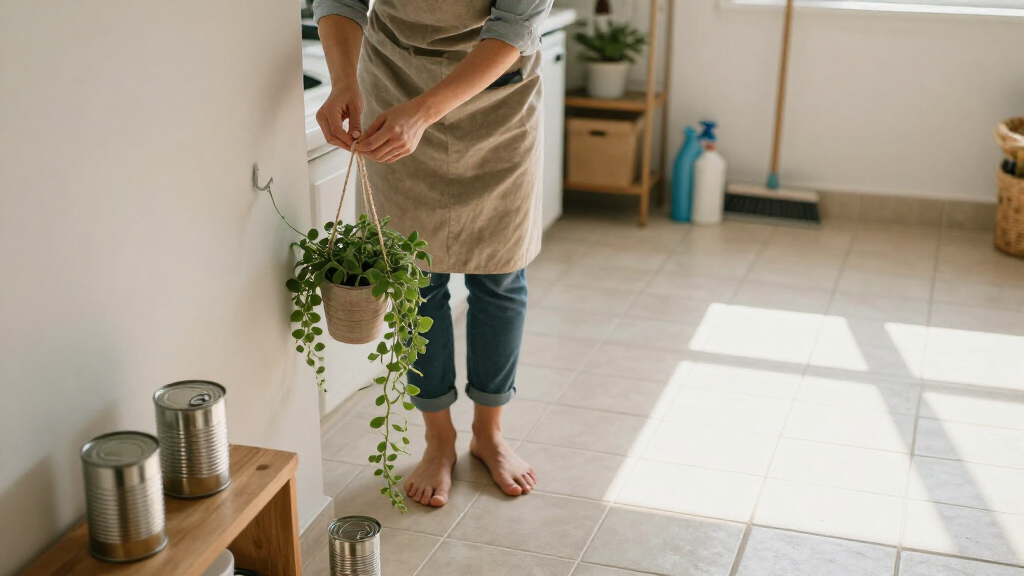
The report advises placing a plant in its own pot inside the can rather than adding soil directly. That arrangement allows the plant to drain after watering. The finished holder can be hung from a hook in a well-lit area; several cans placed at different heights by a window could make a small display.
A Reuse Project for Small Plants
The project gives an ordinary food container a second use as a decorative holder, and relies on materials many people may already have at home. For plant owners, it is a way to add a personal touch without purchasing a separate planter. The appeal is practical as well as visual: the can supports a small pot, while the plant remains removable for watering and drainage.
Its scale is a limitation. Tuna cans are small, so the idea is best suited to compact plants or propagation cuttings, not larger specimens. Hunker notes that the approach could be adapted to larger food cans, but the report does not provide tested load limits or instructions for choosing a suitable hanging hook. Readers would need to account for the weight of the container and plant, particularly once the pot has been watered.
Products Worth Considering

Arlo Pro 2K HDR Wireless Security Camera, 6th Generation, 4-Camera Pack

Bose Home Speaker 500 Smart Bluetooth Speaker with Alexa, Black

eufy Security 5-Piece Home Alarm Kit
As an affiliate, we earn on qualifying purchases.
How the Can Becomes a Planter
The Hunker article presents the idea as a simple upcycling project by Mireyak, a YouTuber, rather than as a commercial product or a formally tested gardening method. It describes an existing empty can being decorated and suspended, with the can functioning as an outer holder rather than the plant’s growing pot.
That distinction matters because a container holding soil needs to manage excess water. In this design, the potted plant can drain separately before being returned to the can. Hunker also mentions using the same concept with larger food cans for bigger plants, but its specific step-by-step instructions and materials focus on tuna cans and small plants.
““Since the cans are small, they’re best suited for small houseplants like succulents or mini cacti, as well as for propagating plants with small cuttings.””
— Hunker report
Weight, Drainage and Safe Hanging
The report does not state how much weight the can, string or a chosen hook can safely support, or whether the holes were tested for durability. It also does not specify the type of paint or sealer used, how long each coat takes to dry, or whether the finished holder is suitable for outdoor use. These details may depend on the products and materials selected.
Hunker’s description is not a controlled test of plant health or long-term wear. Readers should keep the plant in a pot with appropriate drainage, check that the string knots and hanging point are secure, and avoid placing the holder where a fall could injure someone or damage property. The source does not give a publication date, and it does not report any follow-up from Mireyak about how the holders perform over time.
Making and Displaying a Holder
The next step for anyone following the project is to prepare a clean, empty can, decorate it and allow the coatings to dry before making the hanging holes. Once the strings are secured and joined, a small potted plant can be placed inside. The can should be checked for sharp edges, and the assembled holder should be tested at a low height before being hung above furniture or a walkway.
Hunker’s report does not announce a product launch, event or scheduled follow-up. The idea remains a do-it-yourself project that readers can adapt with their own colors and patterns. Anyone using a larger can or heavier plant will need to judge the container, string and mounting point for that specific load; the source provides no weight rating.
Key Questions
What plants are suitable for a tuna-can hanging planter?
Hunker recommends small plants such as succulents, mini cacti and small cuttings. The can’s size makes it less suitable for larger plants.
Should soil go directly into the tuna can?
No. The report advises placing an existing potted plant inside the can, so the plant can drain after watering.
What materials does the project require?
The described materials include an empty tuna can, craft paint, paintbrushes, string and a clear sealer. A drill can make the holes; Hunker also suggests a hammer and nail as an alternative.
How is the hanging string attached?
Make three evenly spaced holes around the rim, thread one length of string through each hole and knot it. Bring the free ends together and tie them to create the hanger.
Can the idea be used for larger plants?
Hunker says the concept could be adapted to larger food cans, but it gives no load rating or tested instructions for heavier plants. The can, string and hanging point would need to suit the weight.
Source: rss