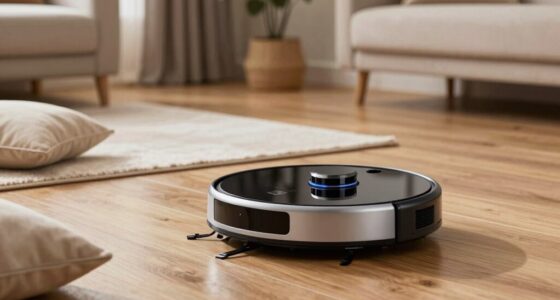
For a minimalist home, the best overall pick is the Roborock Q7 M5+: its self-emptying dock reduces routine upkeep, while mapping helps keep cleaning orderly. The eufy 11S MAX is a standout for buyers who value a slim, quiet vacuum without a bulky dock, and the Tikom L8000 Plus suits homes that want mapping and self-emptying in one setup. The main tradeoff is between a discreet, simple machine and a more capable model that needs space for its dock and more setup. Mopping adds convenience but can also mean extra parts to clean and store. Continue reading for the full breakdown and picks for different home layouts and cleaning priorities.

Get cleaning gear delivered free with Prime
- Fast, free delivery on millions of items
- Prime Video, Amazon Music and more included
- Member-only deals all year
Complete the kit


Key Takeaways
- The Roborock Q7 M5+ leads this lineup for buyers who want mapped cleaning and less frequent bin emptying; its dock takes more floor space than a basic charger.
- The eufy 11S MAX and Lefant M210 favor a smaller, simpler footprint, but they lack the mapped, dock-based routine offered by higher-feature options.
- The Tikom L8000 Plus and Wrydao S6-Pro pair LiDAR navigation with self-emptying, showing that hands-off operation usually means accepting a larger station.
- Combo models such as the Roomba Plus 415X and Tikom G8000 Max add mopping, but that function brings pads and ongoing maintenance rather than a completely hands-off clean.
- The lineup splits between straightforward vacuums like the iRobot Roomba 105 and the feature-heavy options; a minimalist home may benefit more from a compact routine than from the longest feature list.
| iRobot Roomba Plus 415X Robot Vacuum and Mop Combo |  | Best for Low-Maintenance Mopping | Suction power: 20,000 Pa | Navigation: LiDAR mapping and obstacle recognition | Cleaning modes: Vacuum-only, mop-only, vacuum and mop, vacuum then mop | VIEW ON AMAZON | See Our Full Breakdown |
| iRobot Roomba 105 Vac Robot Vacuum |  | Best for Beginners | Navigation: ClearView LiDAR | Cleaning system: 3-stage system with multi-surface and edge-sweeping brushes | Suction levels: 4 | VIEW ON AMAZON | See Our Full Breakdown |
| Tikom G8000 Max Robot Vacuum and Mop Combo |  | Best Slim Combo | Suction power: 5000 Pa | Runtime: Up to 150 minutes in quiet mode | Height: 2.99 inches | VIEW ON AMAZON | See Our Full Breakdown |
| ROPVACNIC Robot Vacuum and Mop Combo, 5200 Pa |  | Best for Roller-Free Pet-Hair Pickup | Suction power: 5200 Pa | Recommended surfaces: Hardwood floors and low-pile carpets | Battery life: 120 minutes | VIEW ON AMAZON | See Our Full Breakdown |
| Roborock Q7 M5+ Robot Vacuum and Mop with Self-Emptying Dock |  | Best for Mapped Cleaning with Less Emptying | Suction power: 10,000 Pa | Dust bag capacity: 2.7 L | Self-emptying interval: Up to 7–9 weeks | VIEW ON AMAZON | See Our Full Breakdown |
| Lefant M210 Robot Vacuum Cleaner |  | Best for Pet Hair in a Slim, Simple Setup | Model: M210 | Color: White | Dimensions: 11 in diameter × 2.99 in height | VIEW ON AMAZON | See Our Full Breakdown |
| eufy 11S MAX Robot Vacuum Cleaner, Super Thin, Quiet |  | Best for Quiet, App-Free Cleaning | Profile: 2.85 in | Battery life: Up to 100 minutes | Surface compatibility: Hardwood floors and more | VIEW ON AMAZON | See Our Full Breakdown |
| Tikom L8000 Plus Robot Vacuum and Mop with Self-Emptying Base |  | Best for Reducing Routine Maintenance | Model: L8000 Plus | Suction: Up to 6000 Pa | Self-emptying dustbag: 3 liters | VIEW ON AMAZON | See Our Full Breakdown |
| Wrydao S6-Pro Robot Vacuum and Mop with LiDAR, 6000 Pa Suction, and Self-Emptying |  | Best for Homes with Mixed Flooring | Model: S6-Pro | Suction power: 6000 Pa | Dust bag capacity: 3 L | VIEW ON AMAZON | See Our Full Breakdown |
| Robot Vacuum and Mop with Self-Emptying Station, 6000Pa Suction, LiDAR Navigation, and Smart Mapping |  | Best for Multi-Floor Mapping and Large Dust Capacity | Suction power: 6000 Pa | Dust capacity: 4 L | Mapping technology: LiDAR | VIEW ON AMAZON | See Our Full Breakdown |
| ILIFE V2 Robot Vacuum Cleaner |  | Best for Wi-Fi-Free Simplicity | Cleaning modes: Auto, spot, and edge | Runtime: Up to 120 minutes | Dust capacity: 300 ml | VIEW ON AMAZON | See Our Full Breakdown |
| Robot Vacuum and Mop, 6500Pa Suction, 2-in-1 Robotic Vacuum with Gyro Navigation, 200 Min Runtime, App/Remote/Voice Control, Suitable for Pet Hair, Hard Floors, and Carpet |  | Best for Extended Vacuum-and-Mop Runs | Suction power: 6500Pa | Runtime: Up to 200 minutes | Battery capacity: 2600mAh | VIEW ON AMAZON | See Our Full Breakdown |
| robot vacuum for minimalist home | Suction power |
|---|---|
| iRobot Roomba Plus 415X Robot | 20,000 Pa |
| iRobot Roomba 105 Vac Robot Va | — |
| Tikom G8000 Max Robot Vacuum a | 5000 Pa |
| ROPVACNIC Robot Vacuum and Mop | 5200 Pa |
| Roborock Q7 M5+ Robot Vacuum a | 10,000 Pa |
| Lefant M210 Robot Vacuum Clean | — |
| eufy 11S MAX Robot Vacuum Clea | — |
| Tikom L8000 Plus Robot Vacuum | — |
| Wrydao S6-Pro Robot Vacuum and | 6000 Pa |
| Robot Vacuum and Mop with Self | 6000 Pa |
| ILIFE V2 Robot Vacuum Cleaner | — |
| Robot Vacuum and Mop | 6500Pa |
More Details on Our Top Picks
iRobot Roomba Plus 415X Robot Vacuum and Mop Combo
For a minimalist home, the AutoWash Dock is the main draw: it empties debris, washes mop pads, and heat-dries them, reducing the chores that can make a cleaning setup feel like more clutter. The 20,000 Pa suction, LiDAR mapping, obstacle recognition, and automatic mop lifting give it a broader cleaning toolkit than the simpler Roomba 105, which vacuums but does not mop. Four cleaning modes also let you separate vacuuming from wet cleaning when rugs or floor types call for it. The tradeoff is a substantial dock that needs its own space and occasional upkeep; the Tikom G8000 Max has a slimmer 2.99-inch profile, though it lacks this dock’s pad-washing system. I’d choose the 415X for hands-off floor care, not for a home that prioritizes the smallest possible footprint.
Pros:- AutoWash Dock empties debris and washes and heat-dries mop pads
- Four modes accommodate different vacuuming and mopping routines
- LiDAR mapping and obstacle recognition support organized navigation
- Automatic 10 mm mop lift helps keep mop pads off rugs
Cons:- Dock occupies more floor space than a basic charging base
- Dock and robot still require periodic maintenance
- The supplied information does not establish independent performance or reliability
Best for: People with mostly hard flooring and some rugs who want vacuuming, mopping, and mop-pad care handled by one system.
Not ideal for: Residents of small apartments with little dock space, or buyers who want a simple vacuum without extra mop and dock maintenance.
- Suction power:20,000 Pa
- Navigation:LiDAR mapping and obstacle recognition
- Cleaning modes:Vacuum-only, mop-only, vacuum and mop, vacuum then mop
- Dock debris interval:Up to 90 days
- Mop pad drying temperature:113°F
- Mop lift height:10 mm
- Brush type:Tangle-free rubber brushes
Our verdict“Choose the Roomba Plus 415X if automated mop care matters more than keeping the dock footprint and upkeep to a minimum.”
iRobot Roomba 105 Vac Robot Vacuum
The Roomba 105 is the straightforward pick for a minimalist home that needs reliable scheduled vacuuming without adding a mop tank or wash dock. ClearView LiDAR maps rooms for neat-row cleaning, while app controls let you target rooms or zones instead of running a full-home cycle every time. It can recharge and resume, which is useful when one charge does not cover the planned area. Compared with the Roomba Plus 415X, it gives up mopping and automatic debris emptying, but also avoids the larger dock and its maintenance. The tradeoff is that this is a vacuum-only setup, and its Wi-Fi connection requires a 2.4 GHz network. I’d pick it over the Tikom G8000 Max when simpler operation matters more than mopping, but skip it if wet cleaning is part of the brief.
Pros:- ClearView LiDAR maps rooms and supports neat-row cleaning
- App scheduling and room or zone targeting help avoid unnecessary whole-home runs
- Recharge-and-resume cleaning can cover larger areas across a cycle
- App, button, and voice controls offer several ways to start cleaning
Cons:- Vacuum-only design cannot mop hard floors
- No self-emptying dock is specified, so the dustbin needs manual attention
- Wi-Fi setup and operation require a 2.4 GHz network
Best for: First-time robot-vacuum owners who want mapped room cleaning, scheduling, and voice control without a mop system.
Not ideal for: Buyers who want mopping or automatic bin emptying, or households whose Wi-Fi setup does not support 2.4 GHz.
- Navigation:ClearView LiDAR
- Cleaning system:3-stage system with multi-surface and edge-sweeping brushes
- Suction levels:4
- Surfaces:Carpet and hard floor
- Controls:App, button, and voice control
- Connectivity:2.4 GHz Wi-Fi
- Special features:Anti-fall sensors, dirt detection sensor, eco mode, bagless
Our verdict“Choose the Roomba 105 for mapped, scheduled vacuuming with fewer accessories, and skip it if you expect one robot to mop as well.”
Tikom G8000 Max Robot Vacuum and Mop Combo
At 2.99 inches tall, the Tikom G8000 Max is the most compelling fit here for a home where dust gathers under low furniture and storage space is tight. It vacuums and mops in one pass, offers four cleaning modes, and runs for up to 150 minutes in quiet mode. Those basics make it a more space-conscious combo than the dock-heavy Roomba Plus 415X, although the Tikom does not offer that model’s automatic mop-pad washing or debris emptying. Its app, remote, voice, and button controls also suit households that prefer a physical remote over app-only routines. The main limitation is carpet reach: the supplied floor guidance covers hard floors and short- to medium-pile carpet, not high-pile carpet. I’d favor it for compact, mixed-floor homes, but not for plush carpeting or hands-off dock care.
Pros:- 2.99-inch height helps it reach under low furniture
- Vacuums and mops in one pass
- Up to 150 minutes of runtime in quiet mode
- App, remote, voice, and button controls accommodate different routines
Cons:- High-pile carpet is not listed as a supported surface
- No self-emptying or automatic mop-pad washing system is specified
- The supplied product details do not provide independent performance information
Best for: Apartment dwellers with low-clearance furniture who want a slim vacuum-and-mop robot and flexible controls.
Not ideal for: Households with high-pile carpet or buyers who want a self-emptying dock and automatic mop-pad washing.
- Suction power:5000 Pa
- Runtime:Up to 150 minutes in quiet mode
- Height:2.99 inches
- Dustbin capacity:450 ml
- Water tank capacity:300 ml
- Cleaning modes:Spot, Edge, Zig-zag, and Manual
- Floor compatibility:Hard floors, tiles, short- and medium-pile carpets, and rugs
- Controls:App, remote, voice, and button
Our verdict“Choose the Tikom G8000 Max if a low profile and combined vacuuming and mopping matter more than automated dock maintenance.”
ROPVACNIC Robot Vacuum and Mop Combo, 5200 Pa
The ROPVACNIC takes a different route from the Roomba Plus 415X and Roborock Q7 M5+: its brush-free design is intended to collect pet hair without a roller brush, so there is no roller listed to untangle. It pairs that approach with adjustable mopping, three suction levels, and app, remote, touchpad, and voice control. That mix is useful in a pared-back home where one machine should handle routine hard-floor cleaning without a complex dock. The tradeoff is narrower floor guidance: it is recommended for hardwood and low-pile carpets, while the Roborock lists wood, tile, marble, and carpet. The supplied details also do not include mapping, a dustbin size, or self-emptying. I’d pick it for pet hair on suitable floors, but not for buyers who need detailed room mapping or broader carpet coverage.
Pros:- Brush-free design is intended to collect pet hair without a roller brush
- Adjustable mopping pairs with three suction levels
- App, remote, touchpad, and voice control provide multiple operating options
- Obstacle detection and automatic return-to-charge are specified
Cons:- Recommended surfaces are limited to hardwood and low-pile carpets
- No LiDAR mapping or room-targeting feature is listed
- No self-emptying dock or dustbin capacity is specified
Best for: Pet owners with hardwood or other hard floors who want a roller-free design and several control options.
Not ideal for: Homes with high-pile carpet or buyers who want LiDAR room maps, a self-emptying dock, or clearly specified bin capacity.
- Suction power:5200 Pa
- Recommended surfaces:Hardwood floors and low-pile carpets
- Battery life:120 minutes
- Power levels:3
- Controls:App, remote, touchpad, and voice
- Voice compatibility:Amazon Echo and Google Home
- Filtration:Multi-layer high-efficiency filtration
Our verdict“Choose the ROPVACNIC for roller-free pet-hair pickup on hard floors, not for mapped cleaning or varied carpet types.”
Roborock Q7 M5+ Robot Vacuum and Mop with Self-Emptying Dock
The Roborock Q7 M5+ balances mapped cleaning with a dock that reduces how often you handle dust: its 2.7 L dust bag is rated for up to 7–9 weeks of hands-free emptying. PreciSense LiDAR and app controls support scheduled runs and no-go zones, which can keep cleaning focused rather than sending the robot everywhere by default. Its 10,000 Pa suction and dual anti-tangle brush design also make it a stronger fit for pet hair than the Roomba 105, which has no self-emptying dock listed. Compared with the Roomba Plus 415X, it offers a longer stated dust-bag interval but not automatic mop-pad washing or heat drying. Mopping is limited to three water-flow settings, and setup needs 2.4 GHz Wi-Fi. I’d choose it for mapped vacuuming and reduced bin chores, not fully unattended mop care.
Pros:- 2.7 L dust bag supports up to 7–9 weeks of hands-free emptying
- PreciSense LiDAR and app controls support mapped schedules and no-go zones
- 10,000 Pa suction and dual anti-tangle brushes are designed for pet hair
- Three adjustable water-flow settings allow some control over mopping
Cons:- Mopping has three water-flow settings but no automatic pad-washing system is specified
- App connectivity requires 2.4 GHz Wi-Fi
- The self-emptying dock adds a separate component and dust bags to manage
Best for: Pet households that want LiDAR-mapped routines, no-go zones, mopping, and fewer dustbin-emptying chores.
Not ideal for: Buyers who need automatic mop-pad washing and drying, or whose Wi-Fi network does not support 2.4 GHz.
- Suction power:10,000 Pa
- Dust bag capacity:2.7 L
- Self-emptying interval:Up to 7–9 weeks
- Navigation:PreciSense LiDAR
- Battery life:150 minutes
- Mopping:Three adjustable water-flow settings
- Brush design:Dual anti-tangle
- Connectivity:2.4 GHz Wi-Fi
Our verdict“Choose the Q7 M5+ if you want mapped vacuuming, basic mopping, and less frequent dust handling without the Roomba 415X’s pad-washing dock.”
Lefant M210 Robot Vacuum Cleaner
The Lefant M210 is a practical pick for minimalist homes where the goal is to keep hard floors and low-pile rugs tidy without adding a large dock or complicated mapping system. Its 2.99-inch profile can reach beneath more furniture than the taller Tikom L8000 Plus, while the brushless suction design is intended to reduce hair tangles—a useful distinction for homes with shedding pets. App scheduling and voice controls make routine cleaning easier to set and forget than with the remote-only eufy 11S MAX.
The tradeoff is a more basic cleaning setup: it lacks the room maps and no-go zones offered by the self-emptying models here, and the advertised 120-minute runtime applies in low-suction mode. Carpet owners should also note that zigzag mode is not recommended for carpet. Choose it for accessible floors and a compact footprint, not detailed room-by-room control.
Pros:- Brushless suction design helps limit hair tangling
- Slim 2.99-inch body can reach beneath many furnishings
- App scheduling and Alexa or Google Assistant control
- Six cleaning modes, including edge and spot cleaning
Cons:- The 120-minute runtime is specified for low-suction mode
- Zigzag mode is not recommended for carpet
- No smart mapping or self-emptying dock
Best for: Pet owners in smaller homes with mostly hard floors who want app scheduling and a slim robot without a self-emptying base.
Not ideal for: Homes with substantial carpet or buyers who want LiDAR maps, room-specific routines, or no-go zones.
- Model:M210
- Color:White
- Dimensions:11 in diameter × 2.99 in height
- Runtime:Up to 120 minutes in low-suction mode
- Dustbin capacity:500 ml
- Noise level:52 dB
- Surface recommendation:Wood, hard floors, and low-pile carpet
- Controls and modes:App, Alexa, and Google Assistant; zigzag, random, spot, edge, scheduled, and manual
Our verdict“Choose the Lefant M210 for a slim, schedule-friendly cleaner focused on pet hair and hard floors, but skip it if you need mapped carpet cleaning.”
eufy 11S MAX Robot Vacuum Cleaner, Super Thin, Quiet
The eufy 11S MAX suits a minimalist home where fewer connected features are a benefit, not a compromise. At just 2.85 inches tall, it can slip under furniture more readily than the Lefant M210, and its quiet operation is a good fit for daytime cleaning while people work or relax. BoostIQ adjusts suction across surfaces, so the robot can respond to changing floor conditions without requiring a series of app settings.
Its pared-back controls are also its main limitation. The eufy uses a remote and has no Wi-Fi or app connectivity, unlike the Lefant M210 and the mapped Tikom L8000 Plus. That means less convenient scheduling and no room-specific cleaning or no-go zones. Pick it for straightforward upkeep on hardwood and similar surfaces; skip it if managing routines from a phone is part of the appeal of a smart home.
Pros:- 2.85-inch profile fits under many low-clearance furnishings
- Quiet operation is suited to cleaning around people at home
- BoostIQ adapts suction to surface conditions
- Self-recharging helps keep the robot ready for another run
Cons:- Remote control only, with no Wi-Fi or app
- No room mapping or no-go zones
- Surface information emphasizes hardwood and similar floors rather than a broad carpet range
Best for: People in compact, mostly hardwood homes who prioritize quiet cleaning and a low profile over app features.
Not ideal for: Buyers who want phone control, voice commands, smart mapping, or targeted room schedules.
- Profile:2.85 in
- Battery life:Up to 100 minutes
- Surface compatibility:Hardwood floors and more
- Control:Remote control
- Suction technology:BoostIQ adaptive suction
- Obstacle protection:Obstacle avoidance sensors
- Top panel:Anti-scratch tempered glass
- Recharging:Self-recharging
Our verdict“Choose the eufy 11S MAX if quiet, low-profile cleaning matters more than app control or mapped routines.”
Tikom L8000 Plus Robot Vacuum and Mop with Self-Emptying Base
The Tikom L8000 Plus is the maintenance-minimizing choice for a home where keeping counters and cleaning supplies out of sight matters as much as keeping floors tidy. Its 3-liter self-emptying bag reduces how often debris needs attention, while LiDAR mapping supports room selection and no-go zones—more control than the simpler Lefant M210 or remote-operated eufy 11S MAX. It also vacuums and mops, letting one device handle two kinds of hard-floor upkeep.
That convenience comes with a larger station and a bit more floor-care management. The mop holder must be removed or carpet zones blocked to avoid wetting carpet, so mixed-floor homes need setup before mopping. Its 150-minute maximum runtime is listed for gentle suction mode, not necessarily its strongest cleaning setting. This is a better match for homes that value automation and mapping than for buyers seeking the smallest, simplest robot.
Pros:- Three-liter self-emptying bag cuts down on routine bin maintenance
- LiDAR mapping enables room selection and no-go zones
- Vacuuming and mopping are combined in one device
- Automatically recharges and resumes cleaning
Cons:- Mop holder must be removed or carpet zones blocked to prevent wet carpets
- Maximum 150-minute runtime is specified for gentle suction mode
- A self-emptying base takes more space than the compact Lefant or eufy setups
Best for: Households with extensive hard floors that want mapped cleaning, mopping, and fewer dustbin-emptying chores.
Not ideal for: Minimalist spaces with little room for a base, or mixed carpet-and-hard-floor homes unwilling to manage mop zones.
- Model:L8000 Plus
- Suction:Up to 6000 Pa
- Self-emptying dustbag:3 liters
- Navigation:360° LiDAR
- Saved floor maps:Up to 5
- Runtime:Up to 150 minutes
- Cleaning modes:Vacuuming and mopping
- Controls and Wi-Fi:App and voice control; 2.4 GHz and 5 GHz Wi-Fi
- Noise level:60 dB
Our verdict“Choose the Tikom L8000 Plus if mapped vacuuming, mopping, and less frequent emptying justify making room for its base.”
Wrydao S6-Pro Robot Vacuum and Mop with LiDAR, 6000 Pa Suction, and Self-Emptying
The Wrydao S6-Pro stands out for buyers who want one mapped cleaner to handle sealed hard floors and low- to mid-pile carpet. LiDAR room mapping, scheduling, and no-go zones provide more tailored control than the eufy 11S MAX, and automatic carpet boost lets the robot raise suction when it reaches carpet. Its 3-liter self-emptying bag also brings the low-maintenance appeal of the Tikom L8000 Plus, while adjustable water flow gives users some control over mopping.
The extra flexibility does not make it a carefree choice for every floor plan. Mopping is intended for sealed hard floors, carpet use is limited to low- and mid-pile surfaces, and the app requires 2.4 GHz Wi-Fi. Compared with the Tikom, its stated 160-minute battery life is longer, but both still need the mop and carpet setup handled thoughtfully. Pick it for mapped mixed-floor cleaning, not deep-pile rugs or a fully hands-off mop routine.
Pros:- LiDAR mapping supports room scheduling and no-go zones
- Automatic carpet boost adjusts suction when it reaches carpet
- Three-liter dust bag reduces frequent manual emptying
- Adjustable water flow offers control over hard-floor mopping
Cons:- Requires 2.4 GHz Wi-Fi
- Mopping is intended for sealed hard floors
- Carpet compatibility is limited to low- and mid-pile
Best for: Households with sealed hard floors and low- to mid-pile carpets that want room scheduling, carpet boost, and self-emptying.
Not ideal for: Homes with deep-pile carpet, unsealed floors, or Wi-Fi networks that do not provide 2.4 GHz connectivity.
- Model:S6-Pro
- Suction power:6000 Pa
- Dust bag capacity:3 L
- Battery life:160 minutes
- Navigation:LiDAR
- Dimensions:12.35 × 3.87 × 12.35 in
- Controls and Wi-Fi:App and Alexa; 2.4 GHz Wi-Fi required
- Surface recommendations:Hardwood, low- to mid-pile carpet, tile, and marble
- Warranty:1-year manufacturer warranty plus 1-year extended protection; registration may be required
Our verdict“Choose the Wrydao S6-Pro for mapped cleaning across sealed floors and low- to mid-pile carpet, provided its Wi-Fi and mop limits fit your home.”
Robot Vacuum and Mop with Self-Emptying Station, 6000Pa Suction, LiDAR Navigation, and Smart Mapping
This self-emptying vacuum-and-mop is geared toward homes where a larger debris capacity and saved floor plans can reduce repeated upkeep. Its 4-liter dust capacity exceeds the 3-liter bags listed for the Tikom L8000 Plus and Wrydao S6-Pro, while LiDAR mapping, no-go zones, and multi-floor support give it more floor-plan flexibility than either compact, non-mapping pick, the Lefant M210 or eufy 11S MAX. App and voice controls also suit households that want routines managed from a phone or assistant.
The drawback is limited operating detail: battery life and maximum runtime are not specified, so it is harder to judge whether it can finish a large floor in one run. The mop cloth must be removed to disable mopping, which adds a manual step when switching to carpet. Choose this model for capacity and multi-floor mapping, but favor the Tikom or Wrydao if published runtime information matters to your decision.
Pros:- Four-liter dust capacity supports less frequent emptying
- LiDAR mapping includes no-go zones and multi-floor support
- 6000 Pa suction is specified for carpet, hard floors, and pet hair
- App and Alexa or Google Assistant controls support customized routines
Cons:- Battery life and maximum runtime are not specified
- The mop cloth must be removed to disable mopping
- Multi-floor and mop features add setup needs compared with simpler robots
Best for: Multi-floor households seeking LiDAR maps, no-go zones, and a larger self-emptying capacity for routine floor care.
Not ideal for: Buyers who need a stated runtime before choosing, or who want mopping to disengage without removing the cloth.
- Suction power:6000 Pa
- Dust capacity:4 L
- Mapping technology:LiDAR
- Battery life:Not specified
- Maximum runtime:Not specified
- Water flow settings:3 levels
- App compatibility:Yes
- Voice control:Amazon Alexa and Google Assistant
- Mapping features:No-go zones and multi-floor mapping
Our verdict“Choose this model if multi-floor mapping and a 4-liter dust capacity matter most, but look elsewhere if runtime certainty or easy carpet-and-mop switching is a priority.”
ILIFE V2 Robot Vacuum Cleaner
The ILIFE V2 suits minimalist homes where a robot should handle routine floor pickup without adding app setup or connected-home management. Its remote control works without Wi-Fi, and scheduled cleaning plus automatic docking reduce the need for daily input. At just 2.99 inches tall, it can reach beneath furniture that taller models may miss, while tangle-free suction is designed to collect pet hair.
Compared with the 6500Pa vacuum-and-mop model, the V2 is far simpler but gives up mopping, app control, and a stronger stated suction figure. It is also limited to hard floors and low-pile carpet, with a single power level and a modest 300 ml dustbin. Choose it for uncomplicated maintenance, not for customizable cleaning or mixed, thick-pile flooring.
Pros:- Remote control and scheduling work without Wi-Fi
- Slim 2.99-inch profile can reach under many low-clearance furnishings
- Tangle-free suction is designed to pick up pet hair
- Automatically returns to its charging dock
Cons:- Designed for hard floors and low-pile carpet, limiting its fit for homes with thicker rugs
- One power level offers little flexibility for different messes or surfaces
- 300 ml dust capacity may call for frequent emptying
Best for: People with mostly hard floors or low-pile rugs who want scheduled cleaning and remote operation without Wi-Fi or an app.
Not ideal for: Homes with thick carpet, varied floor-cleaning needs, or buyers who want mopping, adjustable power, or app-based control.
- Cleaning modes:Auto, spot, and edge
- Runtime:Up to 120 minutes
- Dust capacity:300 ml
- Control:Remote control; no Wi-Fi required
- Dimensions:12.2 × 12.2 × 2.99 in
- Weight:3.21 kg
- Noise level:69 dB
- Filter:Sponge
Our verdict“Choose the ILIFE V2 if you want a low-profile, scheduled cleaner that avoids app and Wi-Fi setup, and skip it if your floors need mopping or stronger surface-specific control.”
Robot Vacuum and Mop, 6500Pa Suction, 2-in-1 Robotic Vacuum with Gyro Navigation, 200 Min Runtime, App/Remote/Voice Control, Suitable for Pet Hair, Hard Floors, and Carpet
This vacuum-and-mop combo is the more capable pick for a minimalist home that needs one device to cover more routine floor care. Its listed 6500Pa suction, gyro-based systematic navigation, and up-to-200-minute runtime make it better suited than the ILIFE V2 to longer cleaning sessions across multiple rooms. A 200 ml water tank adds a light mopping function, while app, remote, and Google Assistant controls give households several ways to start a run.
That flexibility brings extra setup: app control requires 2.4GHz Wi-Fi, and the listed modes offer limited customization. Unlike the V2’s Wi-Fi-free remote approach, this model is a better match for connected homes, not for buyers seeking the simplest controls. Its 300 ml dustbin and 200 ml water tank also mean it is not a hands-off substitute for a self-emptying system.
Pros:- Up-to-200-minute runtime supports longer cleaning sessions
- Vacuuming and mopping combine routine floor care in one device
- Gyro inertial navigation is designed for systematic cleaning
- App, remote, and Google Assistant controls provide several operation options
Cons:- App connectivity requires 2.4GHz Wi-Fi and does not support 5GHz networks
- Cleaning-mode customization is limited
- The 300 ml dustbin and 200 ml water tank require manual attention
Best for: Households with several hard-floor rooms that want long scheduled runs, basic mopping, and app or voice control in one machine.
Not ideal for: Buyers who want Wi-Fi-free operation, extensive map or mode customization, or a self-emptying dock to reduce upkeep.
- Suction power:6500Pa
- Runtime:Up to 200 minutes
- Battery capacity:2600mAh
- Water tank capacity:200 ml
- Dustbin capacity:300 ml
- Navigation system:Gyro inertial navigation
- Control options:App, remote, and Google Assistant voice control
- Cleaning modes:Zigzag, spot, and edge
- Obstacle crossing:15°
Our verdict“Pick this model over the simpler ILIFE V2 if you want a longer-running vacuum-and-mop with connected controls, but avoid it if Wi-Fi setup and manual bin or tank care undermine your minimalist routine.”

How We Picked
I ranked these models around what makes a robot vacuum fit a minimalist home: how much visible equipment it adds, how much routine work it removes, and how reliably its navigation can support scheduled cleaning. I weighed mapping and obstacle-aware route planning against simpler bump-and-go operation, then considered whether a self-emptying dock earns the space it occupies. Vacuum-and-mop combos received credit for versatility, but not automatically for being better; pads, water handling, and extra cleaning steps can work against a low-clutter routine.
The ranking favors a useful balance of orderly cleaning, manageable upkeep, and a footprint that makes sense for the home. That places the Roborock Q7 M5+ first for its mapped, self-emptying setup, while the eufy 11S MAX ranks as a strong fit for buyers who prize slimness and simplicity. Models with less detailed navigation or unclear model-specific capabilities rank lower, even when their listed suction or runtime looks competitive. I treat broad feature claims as a starting point, not proof that a model will suit every floor plan.
Factors to Consider When Choosing Robot Vacuum For Minimalist Homes
A minimalist setup is not just about buying the smallest robot. The right choice depends on where the machine and dock will live, how often you want to intervene, and whether extra functions reduce effort or add more things to maintain.
Decide How Much Floor Space the Dock Can Take
Measure the planned parking spot, including room for the robot to leave and return to its station. A self-emptying base can reduce bin handling, but it is a more visible fixture than a simple charging dock. Buyers who want the floor to look open may prefer a slim, dock-light model even if it needs more frequent manual emptying. Check access to a power outlet and keep the station away from narrow passages where the robot could struggle to dock. Do not choose a larger base solely to avoid a small task if storage space is already tight. The best fit is the one whose maintenance routine you will actually keep up with.
Match Navigation to Your Floor Plan
Mapped navigation matters most when rooms connect, furniture is dense, or you want to direct cleaning to selected areas. In an open, uncomplicated space, a simpler robot may be adequate and can mean less app setup. Think about whether you need room-by-room control, repeatable routes, or just regular floor pickup. A map is less useful if you do not plan to use its controls, and a basic model can frustrate when it repeatedly misses areas or wanders. Before buying, check which mapping and scheduling functions are supported by the exact model and its app. Keep cables and small objects off the floor, since no navigation system makes clutter disappear.
Treat Mopping as a Separate Maintenance Decision
A combo vacuum can reduce the number of cleaning devices, but it does not make mopping maintenance-free. Pads need washing, water tanks need attention, and some floors require different care from others. If you mainly want dust and crumbs picked up, a vacuum-only model may be the tidier choice. If you want occasional light wiping on sealed hard floors, a combo can earn its place, provided you are willing to handle its accessories. Do not assume a robot mop replaces a proper manual clean for stuck-on messes. Consider where damp pads will dry and where the robot’s water-related parts will be stored.
Choose Simplicity or Automation Deliberately
More automation can mean fewer chores, but it often comes with a larger station, app settings, and more components to maintain. A basic robot with a remote or straightforward controls may suit someone who wants predictable operation without managing maps. App-based scheduling is useful if you want cleaning to happen while the home is empty, though notifications and settings can add digital clutter. Decide which recurring task you most want to remove: starting a clean, emptying the bin, or wiping floors. Paying for features you will not use can leave you with a bulkier machine and no meaningful change in your routine. A short list of must-haves helps keep the purchase aligned with the room, not the spec sheet.
Plan Around Rugs, Thresholds, and Furniture Clearance
Measure the clearance beneath sofas and cabinets before focusing on a robot’s advertised profile. A slim machine can reach under more furniture, but it still needs enough room to move and turn. Check how the floors alternate between hard surfaces and rugs, and whether thresholds divide the space into separate zones. A robot that suits a mostly open hard-floor plan may be a less natural fit for rooms with thick rugs or many transitions. Move lightweight mats and loose cords if they are likely to shift or snag. A quick floor-plan check can prevent buying a feature-rich model that cannot clean the areas you care about.
Pay for Reduced Upkeep, Not Just More Features
A higher-feature model makes sense when its dock, mapping, or scheduling removes a task you would otherwise do often. It is harder to justify if the station has nowhere discreet to sit or the app controls will go unused. For a small home with uncomplicated rooms, a compact basic vacuum may cover the essentials without adding a large base. For a busy household, the time saved by a self-emptying station may outweigh its footprint. Compare replacement and cleaning needs for bins, filters, brushes, and mop pads before committing. The best value is the option that fits your routine over time, not the one with the longest feature list.
Frequently Asked Questions
Is a self-emptying robot vacuum worth the extra space in a small minimalist home?
It can be, if emptying the robot’s bin is the chore you most want to reduce and you have a suitable place for the base. The station trades visible floor space for fewer manual bin cleanouts. In a compact home, measure the dock and its access area before deciding; a base that blocks a walkway can undermine the uncluttered feel you are trying to keep. If you do not mind emptying a smaller bin regularly, a simpler charging dock may suit the room better. Think of this as a space-versus-maintenance decision, not an automatic upgrade.
Should I choose a mapped model or a slim bump-and-go vacuum?
Choose mapping when your home has several rooms, furniture that changes the robot’s route, or areas you want to clean selectively. Mapping can make repeated cleaning more orderly and give you more control over where the robot goes. A simpler vacuum can be a reasonable fit for a small, open layout where you mainly want routine pickup and do not need room-level direction. Slimness is useful for reaching under low furniture, but it does not replace route control. Let your floor plan and preferred level of app involvement decide between them.
Does a robot vacuum and mop combo reduce clutter or add more upkeep?
A combo can reduce the number of appliances, but it adds consumables and chores such as rinsing pads and managing water. It is a good match if light wiping is a regular need and you have a convenient place for those parts to dry. It may be a poor fit if you want a machine you can run and forget or if most of your floors should stay dry. The mopping function should be treated as a supplement, not a substitute for deeper floor care. Decide whether fewer devices matter more to you than a simpler vacuum-only maintenance routine.
What should I check before buying a robot vacuum for a home with rugs and low furniture?
Measure the lowest furniture clearance and compare it with the robot’s listed height, leaving room for movement rather than assuming a close fit will work. Check how your rugs sit at their edges and whether thresholds divide the rooms, since snags and transitions can interrupt a cleaning route. Consider whether the robot will need to cross from hard floors onto rugs as part of a normal run. Keep cords, tassels, and lightweight objects out of its path where possible. A simple layout check is often more useful than choosing by suction figures alone.
When is it worth paying for a self-emptying model instead of a basic robot?
A self-emptying model makes more sense when frequent bin emptying would interrupt your routine, especially if the robot will run often or pick up substantial everyday debris. It is less compelling when you have a small area, infrequent cleaning needs, or no good place for the station. Mapping may matter just as much as the dock if you want repeatable room coverage or scheduled area cleaning. Consider the extra station’s footprint and maintenance alongside the task it removes. Pay for automation when it solves a repeated annoyance, not simply because the feature is available.
Conclusion
For most buyers seeking a capable, orderly routine, I would start with the Roborock Q7 M5+ as the best overall choice, provided its self-emptying dock has a sensible home. The eufy 11S MAX is my best pick for a slim, quiet, straightforward setup, while the Tikom G8000 Max is a value-minded option for shoppers who want both vacuuming and mopping without making a self-emptying dock the priority. For a more automated premium-style setup, compare the mapped, self-emptying Tikom L8000 Plus and Wrydao S6-Pro, checking their exact app and station details before choosing. Beginners who prefer fewer settings may find the iRobot Roomba 105 easier to approach than a feature-heavy combo. If reaching beneath low furniture is your specific need, favor the slim eufy; if reduced bin handling matters more, favor a self-emptying model. The best minimalist fit is the one that earns its footprint by removing a task you genuinely want gone.